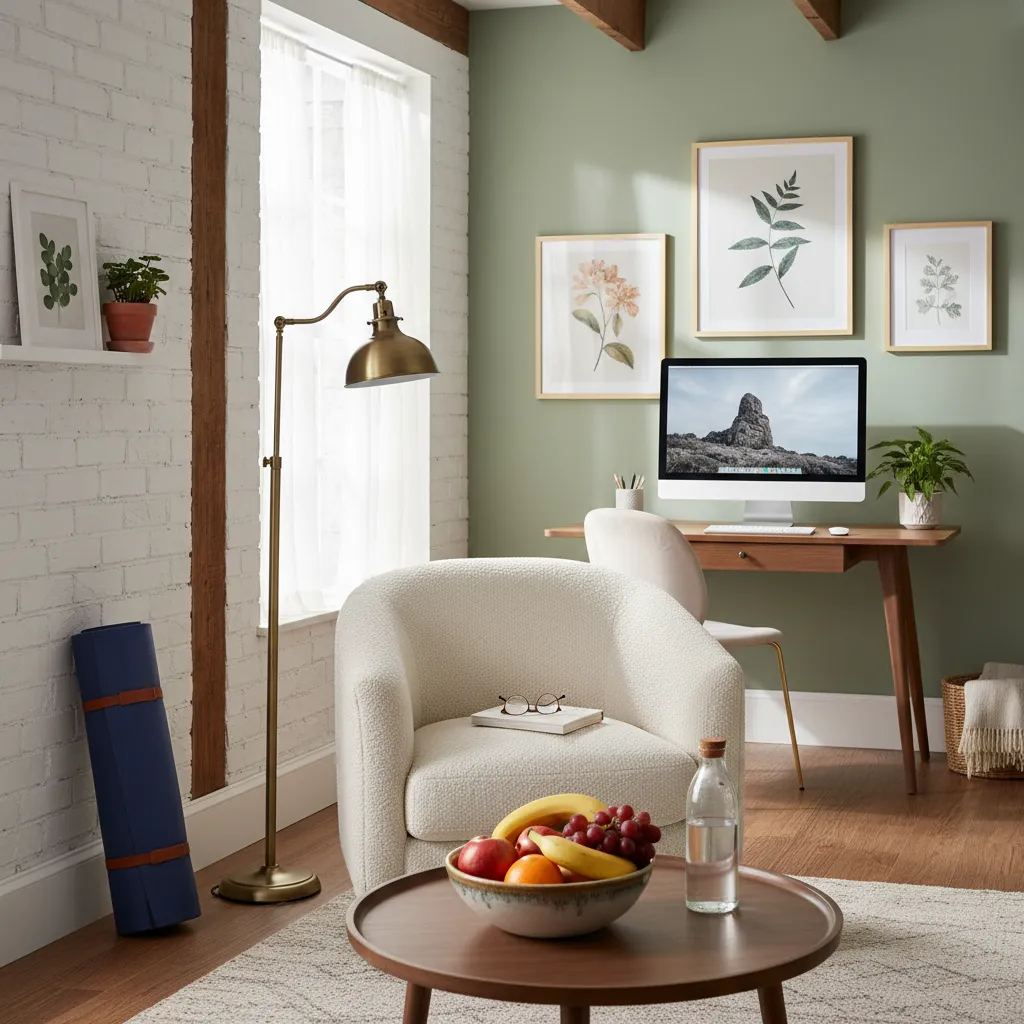
The Undeniable Impact of Your Surroundings on Behavior
Our environment is a silent architect of our daily lives, subtly dictating our choices long before we consciously make them. From the food items visible in your kitchen to the apps present on your phone's home screen, external cues constantly influence our actions.
Psychological research consistently demonstrates that human behavior is often a product of context rather than just internal resolve. A cluttered workspace, for instance, can lead to increased stress and reduced focus, making productive work less likely.
Conversely, an environment optimized for a specific task can dramatically lower the barrier to entry for that activity. Placing your running shoes by the door makes going for a jog an easier decision than having them buried in the closet.
This principle extends beyond physical objects to digital spaces as well. The notifications we receive, the default settings on our devices, and the organizational structure of our digital files all contribute to our behavioral patterns.
Understanding this profound influence shifts the burden from relying solely on willpower to strategically engineering your surroundings. It's about designing a world where good choices are the path of least resistance.
The cumulative effect of these small environmental tweaks is significant. Over time, they transform aspirational goals into deeply ingrained, effortless routines, fostering sustainable progress in any area of life.
Empirical Evidence: The Science Behind Environmental Nudges
Behavioral science provides a rich foundation for the effectiveness of environmental design. Seminal work by B.J. Fogg and James Clear highlights how tiny changes in our surroundings can lead to monumental shifts in behavior.
The concept of 'choice architecture' illustrates how the way options are presented can steer individuals toward certain decisions. For instance, making healthy food the default option in a cafeteria significantly increases its consumption.
Studies on 'friction' reveal that even minuscule increases in effort can deter action. If a desirable behavior requires an extra step, like finding a password, it's less likely to occur than if it's readily accessible.
Research into 'cue management' demonstrates that visible triggers are powerful instigators of habits. A study showing that simply placing fruit in a visible bowl increased fruit consumption exemplifies this principle.
The power of 'defaults' is another critical finding. When people are automatically enrolled in a program, such as organ donation or retirement savings, participation rates soar compared to opt-in systems, showcasing the inertia of human behavior.
These scientific insights provide a compelling case for shifting focus from internal struggle to external structuring. By designing our environment, we leverage predictable human tendencies for our benefit.
Realistic Benefits of a Designed Environment
Implementing environmental design strategies offers a cascade of tangible benefits, moving beyond mere theoretical concepts to practical, everyday advantages. The primary gain is a significant reduction in decision fatigue.
When your environment is pre-configured for success, you spend less mental energy debating choices. This frees up cognitive resources for more complex problem-solving and creative endeavors, enhancing overall productivity.
Another crucial benefit is increased consistency in habit formation. By lowering the friction for desired actions, you're more likely to perform them even on days when motivation is low, building powerful streaks.
This approach also fosters a sense of effortless progress. Instead of feeling like you're constantly fighting against yourself, you'll experience a natural gravitational pull towards your goals, making the journey more enjoyable.
Over time, these consistent actions accumulate into substantial results, often surprising you with how much you've accomplished without significant struggle. It transforms the intimidating 'big goal' into manageable, daily routines.
Ultimately, environmental design empowers you to reclaim control over your behavior, making you the architect of your own habits rather than a passive recipient of environmental influences. It's a pathway to sustainable self-improvement.
Limits, Risks, and Common Misconceptions
While highly effective, environmental design is not a magic bullet and comes with certain limitations and potential pitfalls. It's crucial to approach it with a balanced understanding of its capabilities.
One common misconception is that environmental design completely removes the need for self-discipline. While it significantly reduces the reliance on willpower, it doesn't eliminate it entirely; initial setup and occasional adjustments still require effort.
A risk lies in over-optimization, leading to rigidity. Life is dynamic, and an environment designed too strictly might hinder spontaneity or adaptability to new circumstances, becoming counterproductive.
Another limitation is that external cues alone cannot solve underlying psychological barriers. If there's deep-seated resistance or trauma associated with a behavior, environmental tweaks might only offer superficial, temporary relief.
Furthermore, designing your environment for one habit might inadvertently create friction for another. For example, making your gym clothes visible might distract you from focusing on an urgent work task first.
It's also important to remember that not all environments are entirely within our control. Shared living spaces or rigid work environments might limit the extent to which you can implement personalized changes, requiring creative solutions.
Practical Protocol: Designing Your Environment Step-by-Step
The first step in environmental design is to identify the specific habits you wish to cultivate or eliminate. Be precise about the behavior, frequency, and desired outcome, connecting it to a core identity (e.g., 'I am a reader' instead of 'I want to read more').
Next, audit your current environment for friction points. For desired habits, identify anything that makes them harder. For undesired habits, pinpoint what makes them too easy. Walk through your day imagining each routine.
Implement 'friction reduction' for good habits. For instance, if you want to drink more water, place a full water bottle on your desk or carry it everywhere. To make exercise easier, lay out your workout clothes the night before.
Conversely, introduce 'friction increase' for bad habits. If you spend too much time on social media, delete apps from your phone, move them to a hard-to-find folder, or log out after each use to create a barrier.
Utilize 'cue engineering' to trigger desired actions. Place visual reminders in plain sight: a book by your bedside, a yoga mat unrolled, or healthy snacks pre-portioned and accessible. Consider using the Productivity Hub tools Habits feature to set up visual reminders and track your progress.
Create 'habit stacks' by linking new habits to existing, strong routines. After I brush my teeth (existing habit), I will meditate for five minutes (new habit). This provides an immediate and consistent trigger for the new behavior.
Regularly review and iterate on your environmental design. What worked last week might need adjusting this week. Use the Productivity Hub tools Data to review your habit streaks and adjust your environment accordingly for optimal results.
Timing, Dosage, and Adaptation for Sustainable Change
Effective environmental design requires an understanding of optimal timing and 'dosage' - how much of a change is sustainable. Small, consistent adjustments are often more impactful than drastic overhauls that are difficult to maintain.
Begin with one or two key habits to re-engineer your environment for. Attempting too many changes at once can overwhelm your system and lead to burnout. Focus on high-leverage habits first, those that will have a ripple effect.
The 'timing' of environmental interventions is critical. Implement friction reduction right before the moment you need to act. For example, prepare your breakfast ingredients the night before for a smoother morning routine.
Consider the 'dosage' of friction or ease. Don't make a habit impossibly hard, just hard enough to create a pause for reflection. Similarly, make good habits just easy enough that they require minimal effort, not zero effort.
Adaptation is key as your habits evolve. As a new behavior becomes more automatic, you might need less environmental support, or you might identify new areas where environmental design can further optimize your routines. Productivity Hub tools Habits can help you visualize your progress and adapt your strategies.
Recognize that perfection is not the goal. The aim is continuous improvement and adjustment. Life changes, and so too must your environmental design strategy to remain effective in supporting your evolving goals.
Integrating Environmental Design with Productivity Hub
Productivity Hub offers robust features that can significantly amplify your environmental design efforts, acting as a digital extension of your physical habit cues and friction points.
Utilize the Productivity Hub tools ToDo to list environmental adjustments as actionable tasks. For example, 'Rearrange desk for reading,' 'Set out gym clothes,' or 'Delete social media apps from home screen.'
Leverage the Productivity Hub tools Habits feature to track your environmental interventions. Not only can you track the core habit (e.g., 'Meditate'), but also the meta-habit of 'Environmental Setup for Meditation' to reinforce the process.
Employ Productivity Hub tools Data to analyze the impact of your environmental changes. Monitor if habit streaks improve after specific environmental adjustments, providing empirical feedback on what works best for you.
The Productivity Hub tools AI functionality can even suggest optimal times for habit cues or flag potential friction points based on your activity patterns, offering personalized insights for refinement.
Use Productivity Hub tools Settings to customize notifications and reminders for environmental cues, ensuring timely prompts for action. Set recurring tasks to audit your environment weekly, maintaining its efficacy over time.
By integrating your physical and digital design efforts within Productivity Hub, you create a cohesive system that supports consistent, identity-based behavior change, making your goals feel inevitable rather than merely aspirational.
Common Mistakes and How to Avoid Them
One frequent mistake is trying to change too much at once. Overhauling your entire environment can be overwhelming, leading to abandonment of the strategy altogether. Start small and build momentum.
Another pitfall is underestimating the power of subtle cues. People often focus only on large, obvious environmental factors, neglecting the tiny details that can collectively exert significant influence.
Failing to regularly audit and adjust your environment is a common error. What worked last month might become ineffective this month as your habits strengthen or external circumstances shift. Environmental design is an ongoing process.
Ignoring the 'bad' habits is another mistake. While making good habits easy is crucial, actively making bad habits harder is equally important for a truly optimized environment. Don't just add; subtract and obstruct.
Believing that environmental design eliminates the need for conscious effort entirely is a misconception. There will still be moments requiring choices, especially during the initial stages of habit formation. Design supports, it doesn't replace, personal agency.
Finally, failing to connect environmental changes to an identity can limit long-term success. Frame your changes around the person you want to become, reinforcing that 'I am someone who...' rather than 'I am doing...'
Mini Quantified Case Studies: Real-World Impact
Case Study 1: The 'Hydration Hero'. Sarah wanted to increase her daily water intake. She placed a large, clearly visible water bottle directly on her work desk and another next to her bed. Within three weeks, her average daily water consumption increased by 60%, from 1.2 liters to 2.0 liters, reducing her reliance on sugary drinks.
Case Study 2: The 'Morning Meditator'. David struggled with consistency in his meditation practice. He started placing his meditation cushion and a small candle next to his bed every night. The visual cue dramatically reduced the friction. He moved from meditating twice a week to five times a week, reporting increased calm and focus.
Case Study 3: The 'Reading Enthusiast'. Emily aimed to read more non-fiction. She removed her TV from the bedroom and kept only physical books on her nightstand. This simple environmental change led to her finishing an average of two books per month, up from less than one every two months, by simply making reading the easiest option before sleep.
Case Study 4: The 'Digital Detoxer'. Mark was constantly distracted by social media. He moved all social media apps from his phone's home screen to a rarely accessed folder and logged out after each use. This added friction resulted in a 45% reduction in screen time spent on those apps, freeing up time for productive work.
Case Study 5: The 'Exercise Enabler'. Lisa wanted to establish a consistent morning workout routine. She laid out her complete workout attire, including shoes and water bottle, beside her bed before sleeping. This small preparation saw her adherence to morning exercise jump from 30% to over 80% within a month, making her feel more energized throughout the day.
Frequently Asked Questions About Environmental Design for Habits
Q: How quickly can I expect to see results from environmental design? A: While some immediate shifts in behavior can be observed, the most significant and sustainable changes typically develop over several weeks or months. Consistency in your environmental adjustments is key.
Q: What if I share my living space and can't control everything? A: Focus on the areas you can control. Even small, personal zones like your desk, bedside table, or specific drawers can be optimized. Discuss with housemates or family members about shared areas, explaining the benefits of creating a supportive environment.
Q: Is environmental design only for physical habits, or can it help with mental ones too? A: It's highly effective for both. For mental habits like journaling or learning, placing the necessary tools (notebook, pen, learning apps on home screen) in plain sight and removing distractions is a powerful strategy.
Q: How do I know if my environmental design is working? A: Track your habits. Use a habit tracker, journal, or a tool like Productivity Hub tools Habits to monitor your consistency. If your adherence rate is improving, your design is likely effective. Regularly review and iterate.
Q: Can I use environmental design to break bad habits? A: Absolutely. The strategy of increasing friction for undesirable behaviors is extremely potent. Make it harder to access tempting items or engaging in distracting activities, and you'll find yourself doing them less often.
Sources & References
- 1
- 2
- 3