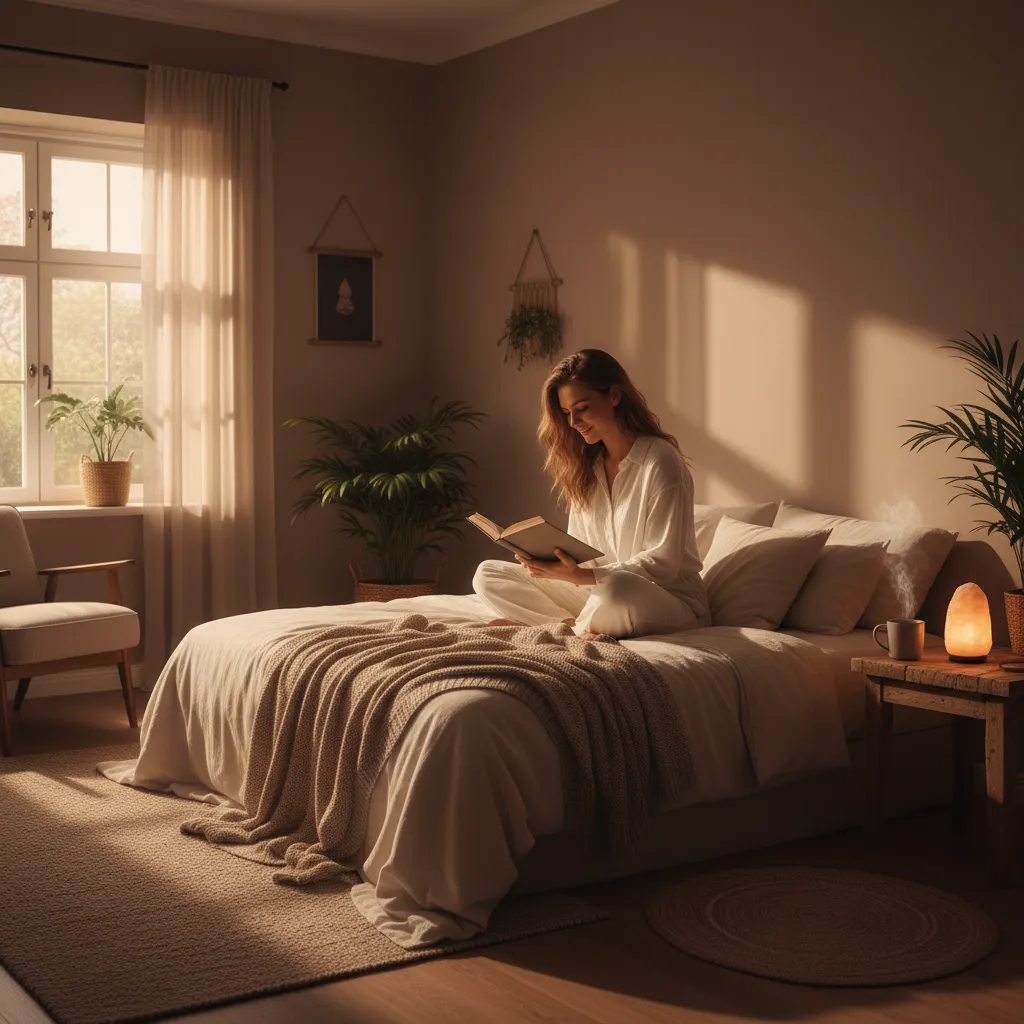
The Pervasive Threat of Evening Light to Sleep
In contemporary society, artificial lighting has become ubiquitous, extending our productive and entertainment hours far beyond natural daylight. While convenient, this constant illumination poses a significant challenge to our innate biological rhythms.
Our evolutionary biology is hardwired for a distinct day-night cycle, where darkness signifies the time for rest and repair. The introduction of bright, artificial light sources after sundown sends contradictory signals to our internal clock.
This persistent light exposure confuses the suprachiasmatic nucleus, the brain region responsible for governing our circadian rhythm. It interprets the evening light as an extension of daytime, thereby delaying the necessary physiological preparations for sleep.
The blue light spectrum, prevalent in LED lights, smartphones, tablets, and computer screens, is particularly disruptive. These wavelengths are most effective at suppressing melatonin production, the hormone crucial for signaling sleep onset.
Even moderate levels of evening light can significantly push back the natural melatonin release, making it difficult for the body to transition smoothly into sleep. This delay can accumulate over time, leading to chronic sleep debt.
The impact isn't just on falling asleep; it also affects the architecture of our sleep, reducing the duration and quality of crucial deep sleep and REM sleep stages. Consequently, our bodies miss out on vital restorative processes.
Scientific Evidence Linking Light, Melatonin, and Sleep
Extensive scientific research consistently demonstrates the potent inhibitory effect of evening light on melatonin secretion. Studies show that exposure to blue-enriched light for even a few hours before bedtime can drastically reduce melatonin levels.
One landmark study published in the Journal of Clinical Endocrinology & Metabolism found that exposure to room light before bedtime shortened melatonin duration by about 90 minutes. This illustrates a direct biological mechanism for sleep disruption.
Beyond melatonin suppression, evening light directly impacts the phase shifting of the circadian clock. Blue light exposure later in the day effectively pushes back the entire sleep-wake cycle, leading to a later natural bedtime and wake-up time.
Research utilizing polysomnography, the gold standard for sleep measurement, has revealed that individuals exposed to evening light exhibit delayed sleep onset and spend less time in restorative deep sleep. This translates to poorer sleep efficiency.
Furthermore, studies have linked chronic circadian misalignment, often exacerbated by evening light exposure, to various health issues including metabolic dysfunction, mood disorders, and impaired cognitive performance. The evidence is compelling.
The spectral composition of light is crucial, with shorter wavelengths (blue light) having the greatest impact on circadian regulation. Red and amber light, with longer wavelengths, have a much weaker effect on melatonin and the circadian clock.
Realistic Benefits of Evening Light Management
Implementing effective evening light management strategies can yield a cascade of benefits for both your sleep quality and overall daily functioning. These advantages are often noticeable within days or weeks of consistent practice.
One of the primary benefits is significantly improved sleep onset latency. By allowing natural melatonin production to commence unimpeded, you may find it easier to drift off to sleep without prolonged tossing and turning.
Enhanced sleep quality, particularly an increase in restorative deep sleep, is another key outcome. When your circadian rhythm is properly aligned, your body can cycle through sleep stages more effectively, maximizing recovery processes.
Better sleep translates directly into improved daytime alertness and cognitive function. You might experience greater focus, enhanced problem-solving abilities, and reduced mental fog throughout your waking hours.
Physical recovery is also profoundly affected. Athletes and active individuals can see faster muscle repair and reduced inflammation, as deep sleep is crucial for growth hormone release and cellular regeneration.
Furthermore, consistent quality sleep supports mood stability and emotional regulation. Reducing evening light exposure can lead to a more balanced mood and greater resilience to stress, improving overall well-being.
Limits, Risks, and Common Misconceptions
While managing evening light is highly beneficial, it's important to understand its limitations and avoid common misconceptions. Not all light is equally detrimental, and individual responses can vary significantly.
One common misconception is that all artificial light is equally bad. The impact is largely dependent on the intensity and spectral composition. Dim, warm-toned light (low in blue wavelengths) is far less disruptive than bright, cool-toned light.
Another limit is that blue light blocking glasses are not a magic bullet. While helpful, they don't block 100% of blue light, nor do they address ambient room lighting which can still impact the eyes and skin. A holistic approach is best.
Relying solely on external tools without behavioral changes can be ineffective. Simply wearing glasses while staring at a bright screen until bedtime will still likely cause some disruption due to visual stimulation and mental engagement.
There's also a risk of over-fixation, leading to orthosomnia or an unhealthy obsession with sleep perfection. The goal is improvement, not flawless execution every single night, which can create undue stress.
Individual variability plays a role; some people may be more sensitive to light's effects than others due to genetic factors or existing circadian disruptions. What works for one person might need slight adjustments for another.
Practical Protocols for Evening Light Management
Adopting a strategic approach to evening light exposure can dramatically improve your sleep hygiene. The goal is to gradually reduce light stimulation as bedtime approaches, signaling to your body that it's time to wind down.
Begin by dimming your household lights significantly starting 2-3 hours before your target bedtime. Replace bright overhead lights with warmer, lower-intensity lamps. Consider using smart bulbs that allow color temperature adjustments.
Minimize screen time during these evening hours. If screen use is unavoidable, activate night mode or blue light filters on your devices. For computers, software like F.lux can automatically adjust screen warmth based on time of day.
Invest in good quality blue light blocking glasses. Look for glasses that block a high percentage of blue and even some green light, especially if you must use screens close to bedtime. Wear them consistently in the evenings.
Consider using red or amber light sources in your bedroom and bathroom for the final hour before sleep. These wavelengths have the least impact on melatonin production, creating a truly dark-like environment for winding down.
Blackout curtains or blinds are essential for ensuring complete darkness in your bedroom. Even small amounts of light from streetlights or electronics can penetrate eyelids and interfere with sleep quality. Achieving total darkness is key to deep sleep.
Timing, Dosage, and Adaptation for Optimal Results
The effectiveness of evening light management hinges on consistency, appropriate timing, and allowing your body to adapt to the new light environment. It's not just about what you do, but when and how much.
Start reducing light exposure approximately 2 to 3 hours before your desired bedtime. This window allows sufficient time for melatonin production to naturally begin and for your body to transition into a restful state.
The 'dosage' of light reduction involves both intensity and spectral quality. Aim for significantly dimmed lighting (under 50 lux) and prioritize warm-toned or red lights over blue-rich white lights during this period.
Consistency is paramount. Sticking to a similar light-reduction schedule every evening, even on weekends, helps solidify your circadian rhythm. Erratic patterns can confuse your body's internal clock.
Allow for an adaptation period. Your body won't instantly adjust, but with consistent effort, you should notice improvements in sleep onset and quality within a few days to a couple of weeks. Track your progress to stay motivated.
For those with highly demanding schedules or shift work, gradual adaptation is even more crucial. Small, consistent shifts in light exposure can help mitigate the worst effects of irregular sleep patterns over time.
Integrating Light Management with Productivity Hub Tools
Productivity Hub offers several integrated tools that can assist in tracking and optimizing your evening light management for better sleep and recovery. These features allow for data-driven adjustments to your routine.
Utilize the Productivity Hub tools Habits feature to create and track your evening light reduction protocol. Set a daily habit like 'Dim lights by 8 PM' or 'Wear blue light glasses after dinner' to ensure consistency.
The Productivity Hub tools Data section allows you to log sleep metrics, mood, and perceived recovery. By correlating these inputs with your light management habits, you can visually identify patterns and the effectiveness of your efforts.
For instance, you might track your 'time to fall asleep' or 'deep sleep duration' alongside your 'evening screen time' in Productivity Hub tools Data. This helps you see the direct impact of reducing evening blue light.
Consider setting reminders in Productivity Hub tools ToDo for specific evening light tasks, such as 'Activate night mode on phone' or 'Switch to red light bulbs in bedroom.' This prompts you at crucial times.
Over time, the aggregated data in Productivity Hub tools Data can provide insights into which light management strategies yield the best results for your individual physiology, allowing for personalized optimization.
The Productivity Hub tools AI can also offer personalized recommendations based on your tracked sleep and light exposure patterns, guiding you towards more effective adjustments for improved recovery.
Common Mistakes to Avoid in Evening Light Hygiene
Even with good intentions, several common pitfalls can undermine your efforts to manage evening light effectively. Being aware of these mistakes can help you maintain consistency and achieve better results.
One frequent error is inconsistent application. Observing a strict light reduction routine on weekdays but abandoning it on weekends can derail your circadian rhythm, leading to 'social jet lag' and fragmented sleep.
Another mistake is underestimating ambient light. While screens are primary culprits, bright overhead lights in living rooms, kitchens, or even a bathroom trip at night can still significantly impact melatonin production.
Relying solely on blue light blocking glasses without also dimming screens or room lights is a common misstep. Glasses are a helpful tool, but they shouldn't be the only line of defense against excessive evening light.
Ignoring the 'mental stimulation' factor is also detrimental. Even with perfect light hygiene, engaging in stimulating activities like intense work, emotionally charged conversations, or thrilling media close to bedtime can still hinder sleep.
Using screens in bed, even with night mode activated, can still be problematic. The proximity of the device, the inherent light, and the mental engagement can all contribute to sleep disruption.
Finally, failing to prioritize complete darkness in the sleep environment is a major oversight. Even small light leaks from electronics or poorly covered windows can interrupt deep sleep cycles, making blackout solutions crucial.
Mini Quantified Case Studies
Case Study 1: Sarah, 34, Marketing Manager. Sarah struggled with falling asleep and often woke feeling unrested. After implementing a strict evening routine of dimming lights and using blue light glasses after 8 PM, her average time to sleep decreased from 45 minutes to 15 minutes within two weeks. Her tracked deep sleep in Productivity Hub tools Data showed a 20% increase.
Case Study 2: Mark, 42, Software Engineer. Mark spent long hours coding on a bright monitor. He began using F.lux software and red-light bulbs in his office for the last two hours of work. He reported feeling less eye strain and his sleep consistency score in Productivity Hub tools Habits improved from 60% to 85%, indicating more regular bedtimes.
Case Study 3: Emily, 28, Fitness Enthusiast. Emily noticed her recovery metrics (heart rate variability, perceived muscle soreness) were suboptimal despite consistent training. She adopted a no-screens-in-bedroom rule and used blackout curtains. Within a month, her average deep sleep duration increased by 30 minutes, and her recovery scores in Productivity Hub tools Data improved by 18%.
Case Study 4: David, 50, Entrepreneur. David frequently worked late into the night. He started using amber-tinted blue light blocking glasses religiously after sunset and replaced all bedroom lights with red spectrum bulbs. He reported a significant reduction in evening anxiety and his sleep efficiency (time asleep / time in bed) rose from 75% to 88%.
Case Study 5: Olivia, 30, Freelancer. Olivia struggled with midday slumps. After integrating an evening light management protocol, including turning off overhead lights and using warm lamps by 7 PM, she observed a marked improvement in her morning alertness. Her Productivity Hub tools Data showed a more stable wake-up time, aligning her circadian rhythm for better daytime energy.
Frequently Asked Questions About Evening Light and Sleep
Q: Is all evening light bad for sleep? No. The primary culprits are bright lights, especially those rich in blue wavelengths (like most screens and LEDs). Dim, warm, red-spectrum light has minimal impact on melatonin production.
Q: How quickly will I see results from reducing evening light? Many people report feeling a difference in sleep onset and quality within a few days to a week of consistent practice. Full adaptation of your circadian rhythm may take a few weeks.
Q: Do blue light blocking glasses really work? Yes, high-quality blue light blocking glasses can be very effective at filtering out the sleep-disrupting blue wavelengths, especially if screen time is unavoidable in the evenings.
Q: What about e-readers? Are they safe for evening use? Traditional e-readers with E Ink displays that lack a backlight are generally fine. E-readers with backlights or front lights, especially if set to bright or cool tones, can still disrupt sleep.
Q: Should I dim all lights in my house after sunset? Aim to dim and warm your lighting in the main living areas starting 2-3 hours before bed. For the last hour before sleep, transitioning to very dim, red-spectrum lighting in your bedroom and bathroom is ideal.
Sources & References
- 1
- 2
- 3