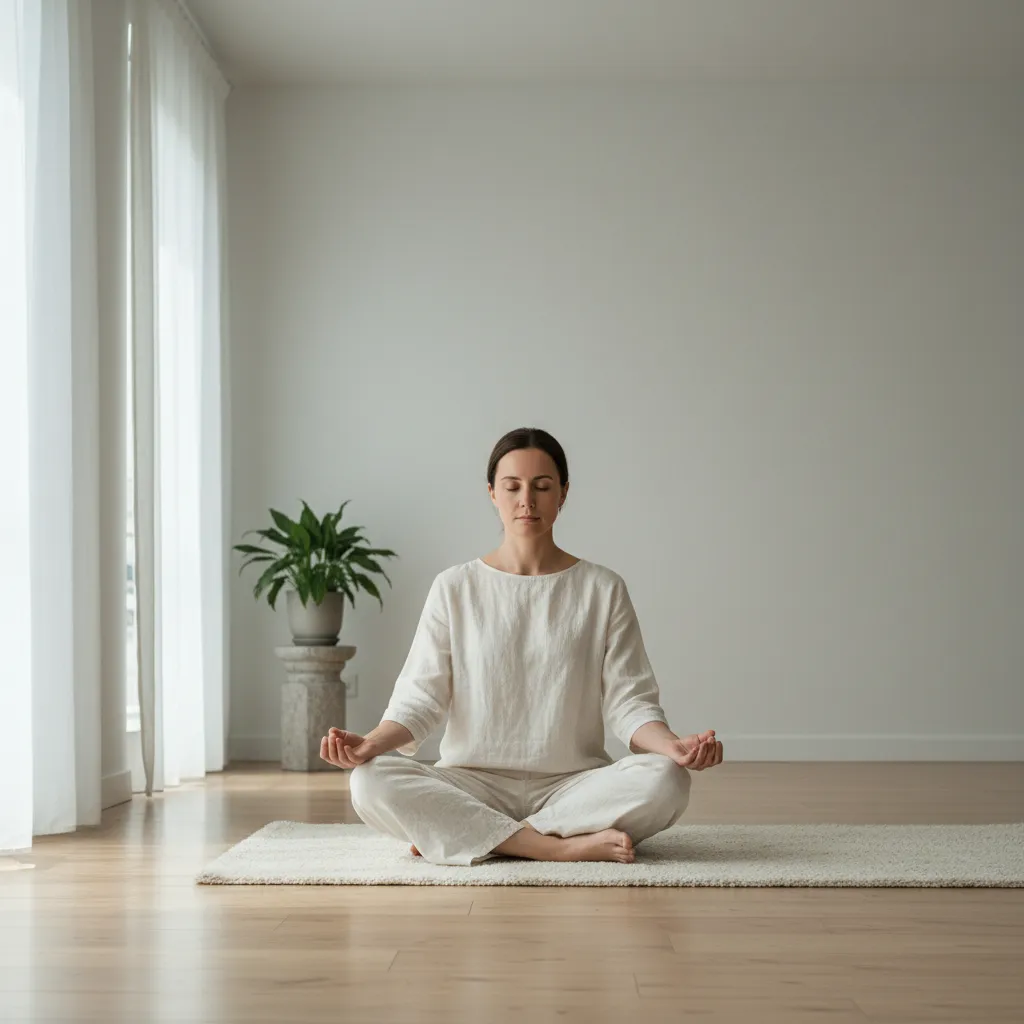
Why the 1-Minute Breath Reset Matters for Modern Professionals
In today's hyper-connected world, the lines between work and personal life are increasingly blurred, leading to an 'always-on' culture. This constant state of alert keeps our sympathetic nervous system engaged, elevating cortisol levels and contributing to chronic stress.
The physiological impact of chronic stress is well-documented. It impairs memory, reduces decision-making capabilities, stifles creativity, and makes sustained concentration a significant challenge. This directly affects professional performance and personal well-being.
When faced with immediate pressure, such as a challenging meeting or a tight deadline, the body's acute stress response floods our system with adrenaline. While this can provide a temporary boost, prolonged or repeated activation leads to burnout and diminished effectiveness.
Traditional stress management often requires significant time investment, which can be scarce for busy professionals. The beauty of a 1-minute breath reset lies in its brevity and portability, allowing for immediate application precisely when it's most needed.
This quick intervention offers a practical, in-the-moment strategy to break the cycle of stress, providing a micro-reset that can prevent minor stressors from escalating into overwhelming anxiety. It empowers individuals to take control of their physiological state, rather than being reactive.
Cultivating the ability to quickly shift out of a stress response not only improves immediate performance but also builds long-term resilience. It teaches the nervous system to return to a calm state more efficiently, reducing the cumulative impact of daily pressures.
The Science Behind Calm: Research Supporting Breath Protocols
The efficacy of structured breathing exercises, often referred to as breathwork, is firmly rooted in neuroscience and physiology. At its core, these techniques directly influence the autonomic nervous system (ANS), which controls involuntary bodily functions like heart rate, digestion, and breathing.
The ANS comprises two main branches: the sympathetic nervous system (SNS), responsible for 'fight or flight,' and the parasympathetic nervous system (PNS), responsible for 'rest and digest.' Modern stressors often over-activate the SNS, leading to heightened arousal.
Controlled breathing acts as a direct pathway to stimulate the vagus nerve, a major component of the PNS. Activation of the vagus nerve signals to the brain that the body is safe, initiating a cascade of calming effects, including a reduction in heart rate and blood pressure.
Research on techniques like box breathing (a common 1-minute reset protocol) demonstrates its ability to increase heart rate variability (HRV). Higher HRV is an indicator of a more flexible and resilient nervous system, better able to adapt to stress.
Studies using fMRI have shown that specific breathing patterns can alter brain activity, reducing amygdala activity (associated with fear and anxiety) and increasing prefrontal cortex activity (associated with executive function and decision-making).
Furthermore, consistent practice of breathwork has been linked to reductions in self-reported stress and anxiety, improved mood, and enhanced cognitive performance across various populations, from athletes to corporate executives. The evidence points to a tangible, measurable impact.
Realistic Benefits: What to Expect from Consistent Practice
Implementing a 1-minute breath reset into your daily routine offers a range of tangible benefits that extend beyond fleeting moments of calm. One primary outcome is a noticeable reduction in acute stress and anxiety levels.
By engaging the parasympathetic nervous system, this technique helps to lower heart rate and calm the body's physiological responses to stress. This means fewer moments of feeling overwhelmed and a greater sense of control in challenging situations.
Enhanced mental clarity and focus are also significant advantages. When the brain isn't preoccupied with stress signals, it can allocate more resources to cognitive tasks, leading to improved concentration and better problem-solving abilities.
Consistent practice contributes to better emotional regulation. You become more adept at recognizing the early signs of stress or agitation and can intervene proactively, preventing emotional spirals and maintaining a more balanced state throughout your day.
Over time, regular breath resets can improve overall resilience to stress. Your nervous system learns to recover more quickly from stressors, meaning that high-pressure situations become less disruptive and you bounce back faster.
This practice can also lead to better sleep quality, as reducing background stress contributes to a more relaxed state conducive to rest. Improved sleep, in turn, further amplifies cognitive function and emotional stability.
Ultimately, these micro-interventions accumulate to foster a greater sense of calm, presence, and effectiveness in both your professional and personal life, enabling you to navigate demands with greater ease and intentionality.
Limits, Risks, and Common Misconceptions
While highly beneficial, a 1-minute breath reset is not a panacea for all forms of stress or mental health challenges. It's a powerful tool for acute stress management and resilience building, but it does not replace professional therapy for chronic anxiety, depression, or trauma.
One common misconception is that deep breathing is always beneficial, regardless of the technique. Improper breathing, such as hyperventilating or holding your breath too long and forcefully, can induce dizziness, lightheadedness, or even panic in some individuals.
It's crucial to understand that while a breath reset can provide immediate relief, it doesn't solve the underlying systemic causes of stress. Addressing workload, relationships, or environmental factors often requires broader lifestyle changes or professional intervention.
Some may expect instant, profound tranquility from their first attempt. While many experience immediate calming effects, the full benefits of nervous system regulation and increased resilience develop with consistent, gentle practice over time, not through a single magical session.
For individuals with certain pre-existing medical conditions, especially respiratory or cardiovascular issues, it's advisable to consult a healthcare professional before adopting new breathing practices. While generally safe, personalized advice is always best.
Another risk is trying to force relaxation, which can paradoxically create more tension. The goal is to gently guide the breath, not to strain or control it rigidly. Listen to your body and adjust the pace if you feel any discomfort.
The Practical Protocol: How to Perform a 1-Minute Breath Reset
The most effective 1-minute breath reset technique is often based on 'box breathing,' also known as 4x4 breathing. This simple, rhythmic pattern helps to balance your nervous system by creating equal phases of inhalation, retention, exhalation, and retention.
To begin, find a comfortable position, whether seated or standing. You can close your eyes for deeper focus, or keep them gently open if you need to remain aware of your surroundings. Place one hand on your chest and one on your abdomen to feel the movement of your breath.
The first step is a slow, gentle exhale. Empty your lungs completely. Then, slowly inhale through your nose for a count of four seconds, feeling your abdomen expand. Focus on a smooth, steady intake of air, not a forced one.
Next, hold your breath at the top of the inhalation for a count of four seconds. Keep your body relaxed during this hold; avoid tensing your shoulders or jaw. This pause allows for gas exchange and signals a moment of stillness to your system.
Now, slowly exhale through your nose or mouth for a count of four seconds, allowing your abdomen to gently contract. Visualize releasing any tension or stress with the outgoing breath. Ensure the exhale is as smooth and controlled as the inhale.
Finally, hold your breath at the bottom of the exhalation for a count of four seconds before beginning the next cycle. This final pause resets the system. Repeat this 4-4-4-4 cycle for at least four rounds, which typically takes about one minute. Productivity Hub tools Habits can help you log your daily practice, making it a consistent part of your routine.
Timing, Dosage, and Adaptation for Maximum Impact
The beauty of the 1-minute breath reset is its adaptability. You can practice it virtually anywhere, anytime. Optimal timing includes moments before a high-stakes meeting, during short breaks between tasks, after receiving challenging news, or even proactively to prevent stress buildup.
For dosage, aim for at least 1-2 minutes, 3-5 times a day. Consistency is more important than duration. Short, frequent resets are often more effective than infrequent, longer sessions, as they continuously reinforce a calmer neural pathway.
You might adapt the protocol based on your current state. If you feel particularly anxious, focus on a slightly longer exhale (e.g., 4-4-6-2) to further activate the parasympathetic nervous system. Conversely, if you need a gentle energy boost, equal counts are usually ideal.
For more sustained focus, integrate a breath reset before starting a complex task. This clears mental clutter, allowing you to approach the work with a calmer, sharper mind. Consider it a mental warm-up.
If the 4-second count feels too long or too short, adjust it to what feels comfortable and sustainable. The goal is rhythm and smoothness, not strict adherence to numbers. Some may prefer 3-3-3-3 or 5-5-5-5, as long as the counts are balanced.
You can also integrate this practice into transitional moments throughout your day, such as before opening your email in the morning, right before lunch, or as you prepare to leave work. These small anchors help structure your day with intentional pauses. Productivity Hub tools Data can track consistency over time, providing valuable insights into your stress patterns and progress.
Integrating the Breath Reset into Productivity Hub
Productivity Hub offers several features that can seamlessly integrate and enhance your 1-minute breath reset practice. By leveraging these tools, you can ensure consistency, track progress, and build a lasting habit of stress resilience.
Utilize Productivity Hub tools Habits to create a recurring entry for your breath reset. Schedule it for key stress points in your day, such as before your morning stand-up, mid-afternoon slump, or prior to a challenging client call. Marking it complete reinforces the habit.
Set up reminders in Productivity Hub tools ToDo. For instance, create a daily reminder titled "1-Min Breath Reset" that pops up at specific times. This gentle nudge ensures you don't forget to take these vital micro-breaks, even on the busiest days.
After each breath reset, you can use Productivity Hub tools Data to log a quick mood or focus rating. Over time, this data will allow you to see correlations between your practice, your stress levels, and your overall productivity, providing concrete evidence of its benefits.
The journaling feature within Productivity Hub tools Data can be used to jot down any insights, challenges, or immediate effects you notice after a breath reset. This qualitative data complements your quantitative ratings, offering a holistic view of your progress.
Consider using Productivity Hub tools AI to analyze your logged data. The AI might identify patterns, such as days where breath resets are skipped correlating with higher reported stress, or suggest optimal times for your practice based on your work schedule.
By actively tracking and integrating this simple practice within Productivity Hub, you transform a fleeting moment of calm into a structured, supported, and data-driven approach to enhancing your focus and managing stress effectively.
Common Mistakes to Avoid for Effective Breathwork
One of the most frequent mistakes is forcing the breath. Trying to take the biggest possible inhale or exhale can create tension rather than relaxation. The goal is gentle, smooth, and controlled movements, not a performance.
Holding your breath too forcefully or for too long is another common error. While breath retention is part of the technique, it should feel comfortable, not restrictive. If you feel lightheaded or dizzy, reduce the hold duration.
Breathing too shallowly, primarily using only the chest, limits the full engagement of the diaphragm, which is crucial for activating the vagus nerve. Focus on abdominal breathing, where your belly rises and falls with each breath.
Expecting immediate, profound meditation-like states can lead to frustration. The breath reset is a physiological intervention first and foremost. While mental calm often follows, don't get discouraged if deep stillness isn't achieved instantly.
Neglecting consistency undermines the long-term benefits. A single 1-minute session will offer some relief, but the true power of nervous system regulation comes from repeated practice, allowing your body to learn and adapt over time.
Ignoring your body's signals is risky. If you experience discomfort, pain, or increased anxiety during the practice, gently stop and reassess. The technique should feel soothing and empowering, not distressing.
Another pitfall is using it as an avoidance strategy rather than a coping mechanism. While it calms you, it's important to still address the root causes of stress when possible, using the breath reset to empower clearer thinking about those solutions.
Mini Quantified Case Studies: Real-World Impact
A senior marketing manager, often overwhelmed by back-to-back virtual meetings, began incorporating a 1-minute breath reset before each critical call. After two weeks, she reported a 25% reduction in perceived anxiety during meetings and a 15% increase in her ability to articulate complex ideas clearly.
A software developer struggling with 'context switching' between coding tasks and urgent requests started using the box breathing technique for one minute before each transition. Data logged in his Productivity Hub tools Data showed a 20% improvement in his ability to regain focus and reduce errors within the first hour of a new task.
During a particularly demanding project launch, a team leader found herself prone to irritability and rushed decisions. By implementing three 1-minute breath resets daily, she noted a subjective 30% improvement in her emotional regulation and a 10% decrease in team conflict incidents, attributing it to her calmer demeanor.
A university student preparing for final exams used the breath reset technique to manage test anxiety. Regular practice for one minute before study sessions and immediately before entering the exam hall resulted in a 10-point average increase in test scores, linked to improved recall and reduced mental blockages.
An entrepreneur facing significant investor pressure integrated the 1-minute breath reset into his pre-presentation routine. He observed a measurable reduction in public speaking jitters, reporting a more composed delivery and a 5% higher conversion rate in securing follow-up meetings, directly correlating with his newfound calm.
Frequently Asked Questions About the Breath Reset
Is the 1-minute breath reset a form of meditation? While it shares principles with mindfulness and can induce a meditative state, it's primarily a physiological technique designed for rapid nervous system regulation. It's a gateway to calm, not necessarily a deep meditative practice itself.
How quickly can I expect to see results? Many people experience an immediate sense of calm and reduced anxiety after just one minute. For sustained benefits like improved resilience and consistent focus, daily practice over a few weeks or months is typically needed.
Can children or teenagers use this technique? Absolutely. Controlled breathing is a safe and effective tool for all ages to manage stress and improve focus. Adjust the counting to their comfort level; simpler counts like 3-3-3-3 might be a good starting point.
What if I feel dizzy or lightheaded during the practice? This can happen if you're breathing too deeply, too fast, or holding your breath too long. Reduce the duration of each phase, make your breaths shallower, and ensure your inhales and exhales are smooth and unforced. If it persists, consult a healthcare professional.
Does this replace other stress management strategies? No, it complements them. The 1-minute breath reset is an excellent tool for acute, in-the-moment stress relief. For chronic stress or underlying mental health issues, it should be used in conjunction with other strategies like therapy, exercise, and a balanced lifestyle.
Sources & References
- 1
- 2
- 3