Why Breathing Protocols Matter for Modern Life
The relentless pace of contemporary life, marked by constant digital notifications, demanding work schedules, and a culture of 'always-on,' creates an environment ripe for chronic stress. Our nervous systems are rarely given the opportunity to fully disengage from perceived threats, leading to a baseline state of heightened arousal.
This sustained activation prevents essential physiological processes like digestion, repair, and deep rest from operating optimally. The cumulative effect is often diminished energy, impaired concentration, and a reduced capacity to handle even minor stressors.
While external stressors are often unavoidable, our internal response to them is largely within our control. Breathing protocols offer a powerful, immediate, and accessible method to consciously recalibrate this internal response, shifting away from reactivity towards intentionality.
By taking deliberate control of our breath, we interrupt the stress feedback loop. This simple act sends a clear signal to the brain that the immediate environment is safe, allowing the body to downshift from an emergency state to one of calm and resourcefulness.
For professionals, students, and anyone navigating a demanding schedule, mastering these techniques translates directly into improved focus, enhanced decision-making under pressure, and a greater ability to sustain mental performance throughout the day.
The ability to rapidly calm the nervous system is not just about avoiding burnout; it's about creating an internal environment where creativity flourishes, learning is optimized, and emotional stability becomes a reliable asset. It's a vital skill for personal and professional resilience.
The Scientific Basis: How Breath Influences Your Nervous System
The intricate connection between breath and the autonomic nervous system (ANS) is well-established in scientific literature. The ANS consists of two primary branches: the sympathetic, responsible for 'fight or flight,' and the parasympathetic, which governs 'rest and digest' functions.
Controlled breathing actively engages the vagus nerve, a crucial component of the parasympathetic nervous system. Stimulation of the vagus nerve promotes a cascade of physiological responses that counteract the stress response, including a reduction in heart rate and blood pressure.
Research indicates that slow, deep breathing, particularly with an extended exhalation, increases heart rate variability (HRV). Higher HRV is a key indicator of a resilient and well-regulated nervous system, reflecting the body's ability to adapt to stressors more effectively.
Studies have shown that regular breathing practices can significantly decrease cortisol levels, the primary stress hormone. Lower cortisol contributes to improved mood, better sleep quality, and reduced inflammation throughout the body.
Furthermore, specific breathing patterns can influence brainwave activity. Techniques like box breathing can help shift the brain into alpha wave states, which are associated with relaxed alertness and improved cognitive performance, distinct from both deep sleep and agitated wakefulness.
The diaphragm, the primary muscle of respiration, plays a critical role. Diaphragmatic or 'belly' breathing is more efficient and triggers mechanoreceptors that send signals to the brain, further reinforcing the parasympathetic response. This contrasts with shallow, chest breathing often associated with stress.
Realistic Benefits of Integrating Breathing for Calm Focus
Integrating specific breathing protocols into your daily routine offers a wide array of tangible benefits, extending far beyond transient relaxation. These practices build a foundation for sustained mental and emotional well-being, particularly for calm focus.
One of the most immediate benefits is an enhanced ability to manage acute stress. When faced with a challenging situation, a few minutes of controlled breathing can prevent an escalating panic response, allowing for a more measured and effective reaction.
Over time, consistent practice improves cognitive clarity. By reducing the noise of an overactive nervous system, the mind becomes less cluttered, leading to better concentration, improved memory, and more effective problem-solving abilities.
These techniques also cultivate greater emotional regulation. Regularly downshifting the nervous system fosters a sense of emotional steadiness, making individuals less susceptible to mood swings and more capable of responding thoughtfully rather than reactively.
Physically, benefits include lower resting heart rate, reduced blood pressure, and improved sleep quality. These physiological improvements contribute to greater overall energy levels and a stronger immune system, enhancing physical resilience.
Ultimately, integrating breathing for calm focus contributes to a profound sense of self-mastery. It empowers individuals to take charge of their internal state, fostering a proactive approach to well-being rather than merely reacting to external pressures.
Limits, Risks, and Common Misconceptions
While highly beneficial, breathing protocols are not a panacea and come with certain limits and potential misconceptions. It's important to approach these practices with realistic expectations and an understanding of their appropriate use.
One common misconception is that all deep breathing is equally effective. While beneficial, specific patterns like box breathing or diaphragmatic breathing are designed to target the nervous system more directly than general deep breaths.
Breathing exercises are powerful tools for stress management but should not replace professional medical or psychological treatment for severe anxiety, depression, or other mental health conditions. They can be complementary but not substitutes.
For individuals with certain respiratory conditions, such as severe asthma or COPD, specific breathing techniques might need modification or approval from a healthcare professional. Always listen to your body and avoid forcing any breath.
Another risk is hyperventilation, which can occur if breathing is too rapid or forceful, particularly during extended retention phases without proper guidance. Beginners should start slowly and focus on gentle, controlled movements.
Some might feel frustrated if they don't achieve immediate profound calm. Consistency is key, and benefits accumulate over time. Expecting instant mastery can lead to discouragement, whereas gradual improvement is a more realistic outcome.
Practical Protocol: Mastering Box Breathing for Instant Calm
Box breathing, also known as four-square breathing, is a simple yet incredibly effective technique for rapidly calming the nervous system. It's a symmetrical pattern that helps to reset physiological rhythm and induce a state of relaxed alertness.
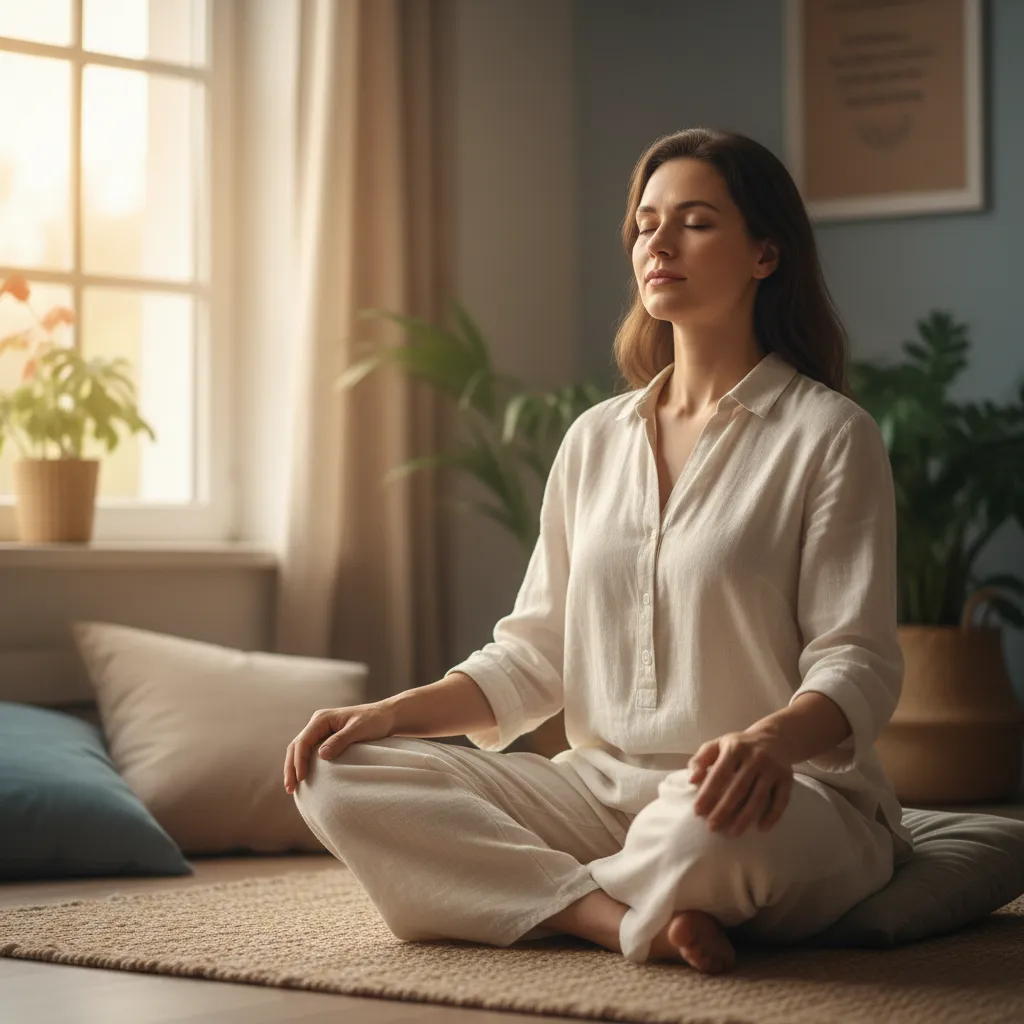
To begin, find a comfortable seated or lying position. Ensure your spine is straight but not stiff, and your shoulders are relaxed. You can close your eyes or soften your gaze to minimize external distractions.
The protocol involves four equal parts, each lasting for a count of four. Visualize tracing the sides of a square as you breathe: inhale, hold, exhale, hold.
First, exhale completely through your mouth, expelling all the air from your lungs. This prepares the system for a fresh, deliberate breath.
Now, slowly inhale through your nose for a count of four, feeling your belly expand. Imagine filling your lungs from the bottom up. This is the first side of your 'box.'
Hold your breath for a count of four. Keep your body relaxed and avoid tension. This pause allows for gas exchange and signals a break in rapid breathing. This is the second side.
Slowly exhale through your mouth for a count of four, emptying your lungs completely. Feel the tension leaving your body. This is the third side of the box. Hold your breath again for a count of four before the next inhale, completing the 'box' cycle. Repeat this cycle for 5-10 minutes, or until a sense of calm is achieved. Productivity Hub can help track your consistency with this practice through its Habits feature.
Timing, Dosage, and Adaptation for Daily Integration
The effectiveness of breathing protocols like box breathing is greatly enhanced by thoughtful integration into your daily schedule. Consider both proactive and reactive applications to maximize their impact on calm focus.
For proactive benefits, aim for 5-10 minutes of dedicated practice each morning. This sets a calm baseline for the day, improving your mental clarity and emotional resilience before daily pressures begin. Consistency here is paramount.
Reactive dosage involves using these techniques during moments of heightened stress. If you feel overwhelmed before a meeting, during a difficult conversation, or while tackling a complex task, a quick 1-2 minute session can rapidly downshift your nervous system.
Adaptation is key for sustainability. If a count of four feels too long or too short, adjust it to a comfortable three or five. The goal is rhythm and comfort, not strain. As you practice, you may naturally find a longer, more profound count becomes achievable.
You can also integrate micro-breaks throughout your day. For instance, before checking emails, after a demanding phone call, or during a short break between tasks, take 3-5 cycles of box breathing. These small interventions add up significantly.
For those with busy schedules, consider linking breathing practice to existing habits. For example, practice box breathing while waiting for your coffee to brew, during your commute, or before starting a meal. Productivity Hub tools Habits can be used to set reminders and track these integrated micro-practices, ensuring you maintain consistency without disruption.
Over time, your body will begin to associate specific breathing patterns with states of calm, making it easier to access those states more quickly. The more you practice, the more efficient your nervous system becomes at shifting into rest and digest.
Integrating Breathing Protocols with Productivity Hub
Productivity Hub is designed to support your journey toward optimal performance and well-being, and integrating breathing protocols can significantly enhance this experience. Utilize its features to make consistent practice a seamless part of your routine.
Start by creating a dedicated habit in Productivity Hub tools Habits for your daily breathing practice. Set a specific time, such as 'Morning Calm Breathing' or 'Mid-day Stress Reset,' and mark it as complete each time you perform the exercise. This visual tracking reinforces consistency.
Leverage Productivity Hub tools Data to monitor your progress. While the app may not directly measure physiological responses, you can track subjective metrics like 'Perceived Calmness' or 'Focus Level' before and after your practice. Over time, you'll see a correlation between consistent breathing and improved internal states.
For reactive stress management, use Productivity Hub tools ToDo to schedule 'breathing breaks' during demanding tasks or before critical meetings. Adding a '5-Minute Box Breathing' item before a presentation ensures you take that crucial moment to center yourself.
Consider using the notification features within Productivity Hub tools Habits to set gentle reminders throughout your day to take a few mindful breaths. These subtle nudges can interrupt cycles of stress accumulation and bring you back to a state of calm.
By actively logging your breathing practices and observing their impact within Productivity Hub, you transform an abstract concept into a measurable, actionable component of your overall productivity and well-being strategy. It creates a feedback loop that motivates continued engagement.
Productivity Hub can serve as your personal accountability partner, ensuring that your commitment to nervous system regulation doesn't fall by the wayside. The more consistently you track, the more clearly you'll see the positive ripple effect on your daily focus and resilience.
Common Mistakes to Avoid in Your Breathing Practice
While breathing exercises are generally safe and accessible, certain common mistakes can hinder their effectiveness or even cause discomfort. Being aware of these pitfalls can help you refine your practice and achieve better results.
One frequent error is forcing the breath. Breathing should always feel smooth, relaxed, and natural. If you find yourself straining or feeling dizzy, lighten your effort and reduce the duration of holds or the depth of inhales/exhales.
Another mistake is shallow, chest-dominant breathing. Many people habitually breathe primarily with their chest, which can reinforce a 'fight or flight' state. Focus on diaphragmatic breathing, feeling your belly rise and fall with each breath.
Neglecting the exhale is a common oversight. A complete exhale is just as, if not more, important than the inhale, as it clears residual air and allows for a fresh, deep intake. Emphasize a full, slow release of air.
Practicing only when you're already highly stressed reduces the cumulative benefits. While it's great for acute situations, consistent daily practice, even when calm, builds resilience and makes it easier to use the technique when truly needed.
Ignoring your body's signals is another error. If a particular breathing pattern causes discomfort, lightheadedness, or increased anxiety, stop and revert to natural breathing. Experiment with variations or shorter durations until you find what works for you.
Mini Quantified Case Studies: Real-World Impact
A 34-year-old marketing manager, experiencing daily afternoon energy slumps and decision fatigue, began a 5-minute box breathing routine each lunchtime. Within two weeks, she reported a 20% increase in post-lunch focus and reduced reliance on caffeine, noting clearer thought processes for complex tasks.
A 48-year-old entrepreneur, frequently overwhelmed by a demanding startup environment, incorporated 10 minutes of slow, diaphragmatic breathing before starting his workday. His self-reported stress levels, tracked via a mood journal, decreased by an average of 15% across three months, leading to more strategic, less reactive leadership decisions.
A 27-year-old software developer struggled with 'imposter syndrome' and anxiety before team presentations. Practicing box breathing for 3 minutes immediately before each meeting, he noted a measurable reduction in heart palpitations and a self-assessed 25% improvement in vocal clarity and confidence during presentations over a month.
A 55-year-old executive consistently faced high-stakes negotiations, often leading to disrupted sleep. By adopting a 7-minute breathing protocol (4-7-8 method) before bed, she observed a 30% reduction in time taken to fall asleep and a subjective improvement in sleep quality, resulting in more consistent energy levels throughout the following day.
A 22-year-old university student, battling pre-exam jitters, implemented 2 minutes of controlled breathing every hour during study sessions. He reported an improvement in information retention, with test scores increasing by an average of 8 points across subsequent exams, attributing it to sustained calm focus rather than frantic memorization.
Frequently Asked Questions About Breathing for Calm Focus
Q: How quickly can I expect to feel the effects of breathing exercises? A: Many people report an immediate sense of calm and mental clarity after just a few minutes of practice. For more lasting benefits like improved emotional regulation and resilience, consistent daily practice over several weeks is recommended.
Q: Is there a 'best' time of day to practice breathing protocols? A: The best time is often when you can be most consistent. Many find morning practice beneficial for setting a calm tone for the day, and evening practice helpful for relaxation before sleep. Mid-day breaks can also counter stress accumulation.
Q: Can breathing exercises really help with anxiety and panic attacks? A: Yes, controlled breathing can be a very effective tool for managing and reducing the severity of anxiety and panic attacks by activating the parasympathetic nervous system. However, for severe or persistent conditions, it should be used in conjunction with professional medical advice.
Q: Do I need special equipment or a quiet place to practice? A: No, one of the greatest advantages of breathing exercises is that they require no special equipment and can be performed almost anywhere. While a quiet space can enhance focus, you can practice discreetly at your desk, in a waiting room, or even during a commute.
Q: How long should a typical breathing session last? A: For beginners, 2-5 minutes is an excellent starting point. As you become more comfortable, you can gradually extend sessions to 10-15 minutes. Even 60 seconds of focused breathing can provide significant benefits in acute situations.
Sources & References
- 1
- 2
- 3