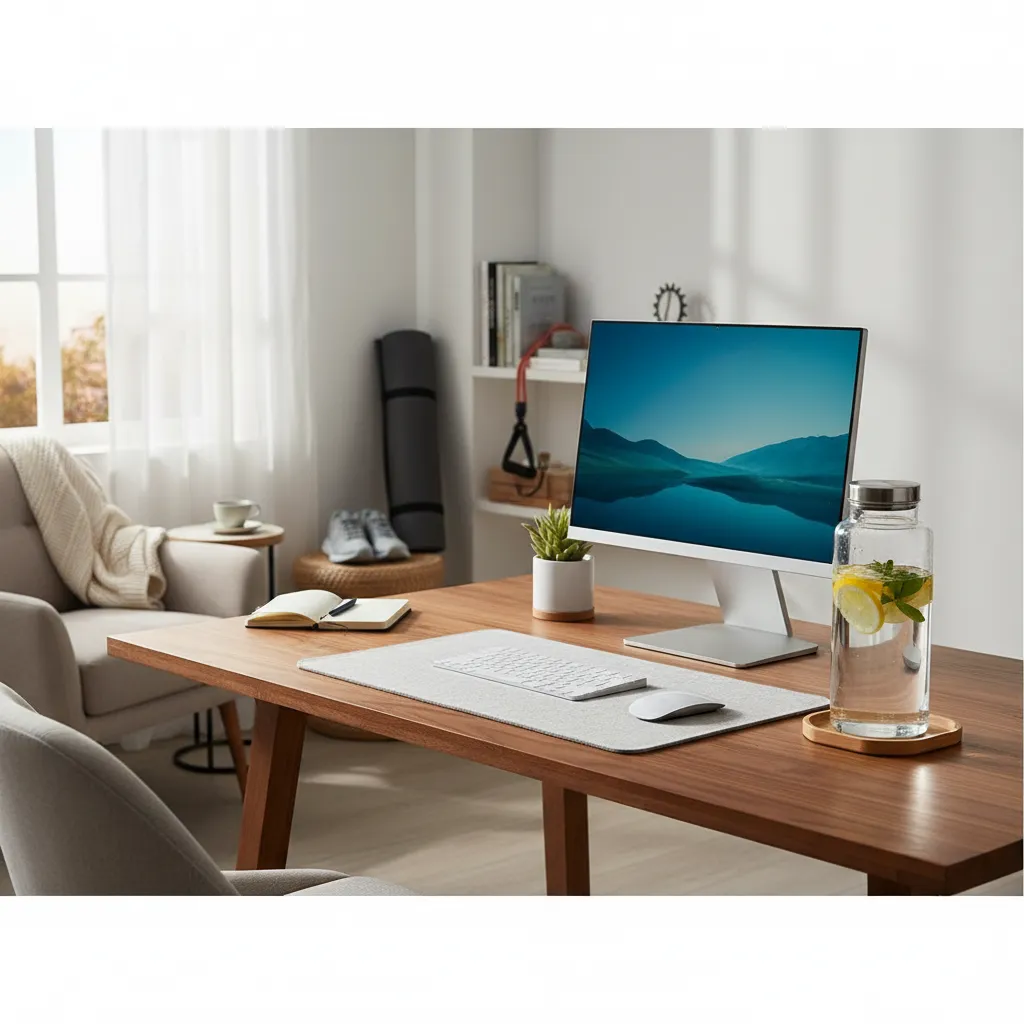
Why Environmental Design is the Unsung Hero of Habit Formation
Many individuals struggle with habit formation, often blaming a lack of self-discipline when the true culprit might be their environment. Human beings are profoundly influenced by their surroundings, often acting in response to cues and triggers present in their immediate space.
Our environments constantly communicate with us, dictating what actions are easy, what information is readily available, and what behaviors are primed. For instance, if your gym bag is packed and by the door, the mental effort to go to the gym is significantly lower.
This approach shifts the burden from willpower to system design. Instead of battling internal resistance day after day, we create a system where the desired action is the path of least resistance. This makes consistency less about a heroic effort and more about a well-engineered routine.
The impact extends beyond mere convenience; environmental design directly influences our cognitive load. When cues for desired behaviors are prominent and obstacles to undesired behaviors are significant, we make fewer decisions, reducing decision fatigue and preserving mental energy for more complex tasks.
Furthermore, a well-designed environment can reinforce identity-based behavior change. When your surroundings reflect the person you aspire to be-e.g., a tidy desk for a productive worker-it subtly yet powerfully affirms your new identity, making consistent actions feel more natural and aligned.
This proactive approach ensures that positive habits become deeply embedded, not just fleeting attempts. By systematically altering our spaces, we move from sporadically performing actions to consistently integrating them into our daily lives, leading to compounding benefits over time.
Empirical Support: Research on Environmental Cues and Behavior
The scientific literature strongly supports the notion that environmental factors play a crucial role in shaping human behavior. Research in behavioral economics and psychology consistently demonstrates how subtle cues can significantly alter choices and actions.
One foundational concept is 'nudge theory,' popularized by Thaler and Sunstein, which illustrates how small changes in the environment can influence behavior predictably without restricting choices. This includes everything from the placement of healthy food options to the design of public spaces.
Studies on 'choice architecture' reveal that the way options are presented can lead to vastly different outcomes. For example, individuals are more likely to choose healthier food if it's placed at eye level or made more accessible than less healthy alternatives.
Research by habit formation experts like James Clear emphasizes the role of making cues obvious and attractive. When the cue for a desired habit is visible and appealing, it's far more likely to trigger the corresponding action, reducing the reliance on conscious decision-making.
The concept of 'friction' is also key. Behavioral scientists have shown that even minor increases in effort or inconvenience can drastically reduce the likelihood of an action. Conversely, reducing friction makes actions almost automatic, demonstrating the power of environmental setup.
Evidence from studies on self-control and willpower indicates that individuals with higher self-control often aren't battling temptations more effectively; rather, they are better at structuring their environments to avoid temptations altogether, proactively reducing exposure to triggers for undesirable habits.
Realistic Benefits of Thoughtful Environmental Design
Adopting environmental design principles offers a cascade of tangible benefits, primarily beginning with reduced mental effort. Instead of expending energy on decision-making, you free up cognitive resources for creative problem-solving or deeper work, improving overall productivity.
Consistency becomes less of a struggle and more of a natural outcome. When your environment actively supports your goals, performing desired actions feels easier, leading to a higher adherence rate for new habits and a sustained commitment to long-term objectives.
You'll experience enhanced focus and fewer distractions. By decluttering your workspace and minimizing visual noise, you create a dedicated environment that cues concentration, making it easier to enter and maintain flow states without constant interruptions.
Improved well-being is another significant advantage. When your environment is organized and conducive to positive routines, it reduces stress and anxiety associated with chaos or procrastination, fostering a sense of control and accomplishment.
This approach also cultivates greater self-efficacy. Successfully maintaining habits through environmental design builds confidence in your ability to shape your life, reinforcing a positive self-image and encouraging further personal growth.
Ultimately, environmental design acts as a force multiplier for your intentions. It transforms vague aspirations into concrete actions by making the default choice the desired choice, accelerating progress towards your most important goals without constant willpower battles.
Limits, Risks, and Common Misconceptions
While highly effective, environmental design isn't a silver bullet. A common misconception is that it entirely removes the need for personal effort or intention. While it reduces friction, the initial decision to design the environment and consistently engage with it still requires a degree of conscious intent.
Another limit is over-reliance on external cues without addressing internal motivations. If a habit isn't genuinely aligned with your values or identity, even the most perfectly designed environment might only provide temporary adherence rather than deep-seated change.
There's a risk of creating overly rigid environments that lack adaptability. Life circumstances change, and an environment designed for one specific phase might become counterproductive in another. Flexibility and periodic review of your setup are essential to avoid this pitfall.
Some may misinterpret environmental design as merely tidying up or decluttering. While organization is a component, the core principle is strategic arrangement to prime specific actions, not just aesthetic appeal. A clean space isn't necessarily an effectively designed space for habit formation.
Another potential risk involves the 'out of sight, out of mind' fallacy, applied negatively. While hiding temptations is effective, it's crucial not to forget about important tasks or items by making them too difficult to access or recall, striking a balance between friction and accessibility.
Finally, environmental design might seem overwhelming to implement for some. The idea of redesigning an entire home or office can be daunting, but the power lies in incremental, focused changes rather than a complete overhaul. Start small, observe the impact, and iterate.
Practical Protocol for Designing Your Habit-Friendly Environment
Begin by identifying the specific habit you want to cultivate or eliminate. Clearly define the desired action and its frequency. For example, 'read for 15 minutes before bed' or 'avoid checking social media during work hours.' This clarity is fundamental.
For good habits, make the cues obvious and the action easy. If you want to read more, place the book on your pillow. If you aim to exercise, lay out your workout clothes the night before. Reduce any steps between you and the desired behavior.
Conversely, for bad habits, make the cues invisible and the action difficult. If you want to curb impulse snacking, store unhealthy foods out of sight or in a less accessible location. Unplug your TV after watching if you want to reduce screen time.
Leverage 'habit stacking' by integrating new habits into existing routines. Identify a current, strong habit and then append the new behavior to it. For example, 'After I brew my coffee, I will write my top three tasks for the day.'
Designate specific zones for specific activities. Create a dedicated 'focus zone' for deep work, free from distractions. Establish a 'relaxation zone' where screens are forbidden. This spatial anchoring helps your brain associate locations with particular behaviors.
Utilize visual reminders and accountability tools. Place post-it notes with your goals in high-traffic areas. Consider using the Productivity Hub tools Data feature to visualize your progress, creating a powerful psychological incentive to maintain your streak.
Remember that environmental design is an ongoing process of observation and adjustment. What works today might need tweaking tomorrow. Regularly review your environment's effectiveness and be prepared to iterate based on your experience.
Timing, Dosage, and Adaptation Strategies
The 'timing' of environmental interventions is crucial. Implement changes just before you intend to start a new habit or break an old one, creating a clean slate and immediate support for your intentions. For example, prepare your morning routine environment the night before.
Regarding 'dosage,' think in terms of incremental adjustments rather than drastic overhauls. Small, consistent changes accumulate significant impact. Start with one or two key environmental modifications and observe their effects before implementing more.
Adaptation is key as your habits evolve or life circumstances shift. An environment perfectly designed for focused work might need adjustments if you transition to a role requiring more collaborative interaction. Regularly reassess the fit between your environment and your current goals.
Be mindful of the 'shelf life' of certain cues. Over time, a visual reminder might become background noise. Periodically refresh your cues, perhaps by changing their location, color, or the specific wording of a motivating message to maintain their salience.
Consider seasonal adaptations. During colder months, your exercise environment might need indoor alternatives or more prominent reminders for layering clothes. In warmer weather, ensuring hydration cues are visible becomes more critical.
Utilize technology for dynamic adaptation. Set up digital prompts or use tools that can change your screen's background or notification settings based on the time of day or your current task. The Productivity Hub tools AI can even suggest environmental tweaks based on your past performance data.
Leveraging Productivity Hub for Environmental Habit Design
Productivity Hub offers several features that complement and enhance your environmental design efforts, extending the principles of friction reduction and cue creation into your digital workspace and daily routines.
The Productivity Hub tools ToDo list can be strategically used to externalize your environmental setup tasks. For instance, create a recurring task: "Set up reading nook for evening" or "Prepare gym clothes by door." This ensures the preparatory steps for your habits are consistently taken.
Utilize Productivity Hub tools Habits to track not just your desired habits, but also the environmental adjustments supporting them. You can create a 'Daily Workspace Reset' habit to ensure your desk is always primed for productive work, thereby reinforcing your physical environment.
The Data and analytics features within Productivity Hub can help you identify patterns between your environment and your habit adherence. If you notice a drop in focus on certain days, review your environmental setup for those days and make informed adjustments.
For digital environment control, consider how you arrange your digital tools. Use the Productivity Hub tools Settings to customize notifications, dashboard layout, and access to specific projects, creating a digital space that guides you towards your most important tasks and minimizes digital friction.
Integrate external triggers with Productivity Hub's internal logic. For example, if you place your 'Go To Gym' reminder next to your keys, and simultaneously have a 'Log Workout' task appear in Productivity Hub tools ToDo once you're back, you create a seamless physical-digital loop.
Common Mistakes in Environmental Design for Habits
One frequent error is making changes that are too subtle to be effective. A cue needs to be obvious enough to grab your attention. Simply thinking about organizing a drawer isn't as impactful as actually putting a 'meditation cushion' in plain sight.
Another mistake is trying to change too many things at once. Overhauling an entire living or working space can lead to overwhelm and abandonment. Start with one habit, design its environment, solidify it, and then move to the next.
Neglecting to remove or increase friction for bad habits is a common oversight. While focusing on good habits, people often forget the equally important step of actively making undesirable actions harder to perform or less visible.
Failing to review and adapt the environment over time is also problematic. What works initially might lose its effectiveness as you grow or your goals shift. A static environment for dynamic habits will eventually become a bottleneck.
Underestimating the power of digital environments is another pitfall. Many people meticulously design physical spaces but leave their phones, computers, and apps as uncontrolled sources of distraction. Your digital space needs strategic design too.
Finally, confusing environmental design with a one-time fix. It is an ongoing practice of tuning your surroundings to align with your evolving self and goals, requiring continuous attention and willingness to experiment with different setups.
Mini Quantified Case Studies in Environmental Impact
Sarah, a marketing manager, struggled with evening screen time. She implemented a simple rule: phones and tablets charge in the kitchen, not the bedroom. After 30 days, her sleep quality improved by an average of 1.2 hours per night, as tracked by a wearable device, and she reported feeling more rested.
Mark, a freelance writer, wanted to increase his daily word count. He designated a specific 'writing desk' solely for creative work, removing all non-writing related items. Within two weeks, his average daily output increased by 250 words, and his time-to-start writing decreased by 15 minutes.
Jessica aimed to drink more water. She purchased a visually appealing water bottle and kept it filled on her desk at all times, rather than using a standard glass. Her daily water intake, previously around 30 oz, consistently surpassed 60 oz for a month, reducing mid-afternoon fatigue.
David wanted to establish a consistent morning meditation practice. He placed a meditation cushion and a small, scented candle next to his bed. This visible cue led to a 75% adherence rate for his 10-minute meditation, up from 20% when he relied solely on a phone alarm.
Emily, a student, found herself constantly distracted by social media during study sessions. She installed a browser extension that blocked distracting websites during specific hours and physically moved her phone to another room. Her reported focus for study blocks improved by 40%, leading to higher assignment completion rates.
Frequently Asked Questions About Environmental Design for Habits
Q: Is environmental design only for physical spaces? No, environmental design applies equally to digital spaces. Managing notifications, organizing your desktop, and structuring your apps can significantly impact digital habits and productivity.
Q: How quickly can I expect to see results from environmental changes? Some changes can yield immediate results, especially for reducing friction or making cues obvious. For deep-seated habit formation, consistent adherence over several weeks (e.g., 21-66 days) will show significant progress.
Q: What if I share my space with others who don't follow the same rules? Communication is key. Explain your goals and why you're making changes. Focus on areas you control, like your personal desk or a corner of a shared room. Small, respectful adjustments can still have a big impact.
Q: Should I completely eliminate temptations from my environment? While reducing exposure to temptations is effective, complete elimination might not always be practical or sustainable. The goal is to make desired actions easier and undesired actions harder, not necessarily impossible. A balanced approach is best.
Q: Can environmental design help with procrastination? Absolutely. By making the first step of a task incredibly easy and visible, you can significantly reduce the mental barrier to getting started. For example, open the document you need to work on before you even sit down at your desk.
Sources & References
- 1
- 2
- 3