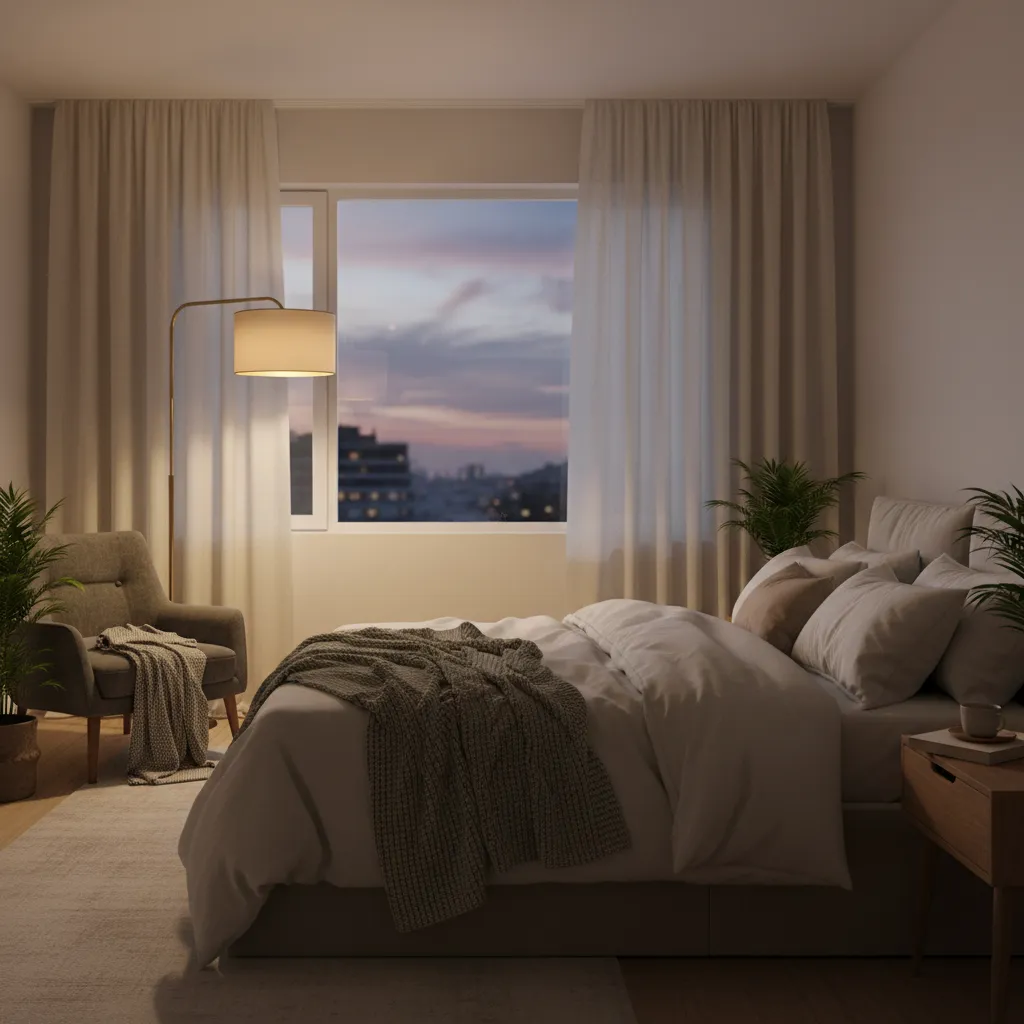
Why Your Evening Light Environment Is Critical for Deep Sleep
Sleep is not a luxury; it is a non-negotiable biological imperative. Within the sleep cycle, deep sleep holds a place of particular importance, serving as the primary phase for physical repair, cellular regeneration, and the release of growth hormones.
Crucially, deep sleep is also where the brain performs essential 'housekeeping' tasks, clearing metabolic waste products and consolidating declarative memories. Without sufficient deep sleep, these vital processes are incomplete, leading to a cascade of negative effects on health and cognition.
Our internal body clock, the circadian rhythm, is exquisitely sensitive to light. Light is the single most powerful external cue, known as a 'zeitgeber,' that entrains this rhythm, ensuring our bodies align with the 24-hour day-night cycle.
However, the proliferation of artificial light sources in our modern world, particularly those rich in blue wavelengths, poses a significant challenge to this natural synchronicity. These lights, emanating from smartphones, tablets, computers, and LED household fixtures, mimic the light of daytime.
When our eyes perceive this 'daytime' light in the evening, our brain receives a conflicting signal. It interprets the presence of bright light as a cue to remain alert and awake, suppressing the natural onset of sleep-promoting hormones like melatonin.
This suppression directly impacts the timing and duration of deep sleep. By delaying melatonin secretion and shifting our circadian rhythm later, evening light effectively pushes back the window for optimal deep sleep, often reducing its overall quantity and quality.
The Science Behind Light's Impact on Your Circadian Rhythm
At the heart of light's influence on sleep is melatonin, often called the 'hormone of darkness.' Melatonin production naturally begins to rise as natural light diminishes in the evening, signaling to the body that it's time to prepare for sleep.
This process is orchestrated by the suprachiasmatic nucleus (SCN), a small region in the hypothalamus of the brain, often referred to as the body's master clock. The SCN receives light information directly from specialized photoreceptors in the retina of the eye.
These photoreceptors, called intrinsically photosensitive retinal ganglion cells (ipRGCs), are particularly sensitive to blue light wavelengths. Unlike the rods and cones responsible for vision, ipRGCs primarily detect brightness and send signals to the SCN about the presence or absence of light.
When ipRGCs detect bright blue-rich light in the evening, they send strong inhibitory signals to the pineal gland, the brain structure responsible for producing melatonin. This suppression can delay melatonin onset by hours, pushing back the body's internal clock.
This phenomenon is known as a 'phase delay' of the circadian rhythm. Consequently, the entire sleep-wake cycle shifts later, making it harder to fall asleep at a desired time and potentially shortening the duration of the most restorative sleep stages.
The cumulative effect of consistent evening light exposure is a chronic misalignment between our internal biological clock and the social clock. This misalignment, or 'social jet lag,' contributes to widespread sleep problems and various health issues.
Realistic Benefits of Optimizing Evening Light Exposure
Consciously managing your evening light exposure can yield a surprising array of tangible benefits, extending far beyond simply falling asleep faster. The most immediate improvement often observed is a significantly reduced sleep onset latency, meaning you'll drift off to sleep more easily.
Optimizing evening light directly supports the integrity of your deep sleep architecture. By allowing melatonin to rise naturally, you create the ideal physiological conditions for your body to achieve longer and more consolidated bouts of restorative deep sleep.
Improved deep sleep translates into enhanced daytime alertness and sustained energy levels. When your brain and body have adequately recovered, you experience less fatigue, fewer energy dips, and a greater capacity to focus throughout the day.
Better sleep hygiene, driven by appropriate light cues, also has a profound impact on mood regulation. A well-aligned circadian rhythm and sufficient deep sleep are linked to greater emotional stability and reduced risks of anxiety and depressive symptoms.
Cognitive function receives a substantial boost as well. Deep sleep is critical for memory consolidation, learning, and problem-solving abilities. When you protect this vital sleep stage, you enhance your brain's capacity for complex tasks and creative thinking.
Furthermore, consistent, high-quality sleep supports robust immune function and balanced hormonal regulation. From stress hormones like cortisol to hunger hormones like leptin and ghrelin, the endocrine system operates more effectively when sleep is optimized.
Common Misconceptions and Limitations of Light Management
A common misconception is that all artificial light in the evening is equally detrimental. While blue-rich light is the primary concern due to its strong effect on ipRGCs, dim, warm-toned incandescent or amber LED light sources have a much lesser impact.
Another pitfall is the belief that amber-tinted glasses or software filters (like Night Shift or f.lux) are a complete solution. While these tools can certainly help reduce blue light exposure, they do not fully replicate natural darkness and should be used as supplementary aids, not replacements for overall light discipline.
Individual sensitivity to light varies significantly. Some individuals, particularly those with a more morning-oriented chronotype (larks), may be more susceptible to the disruptive effects of evening light, while others might be more resilient.
Genetic predispositions also play a role in how effectively an individual's circadian rhythm responds to light cues. What works perfectly for one person may require slight adjustments for another, highlighting the importance of personalized approaches.
It's also crucial to remember that light exposure is just one component of sleep hygiene. Factors like caffeine intake, alcohol consumption, exercise timing, and stress management all interact with light to influence sleep. Addressing only one aspect may not yield desired results if other areas are neglected.
Finally, consistency is paramount. Sporadic adherence to light management protocols will likely yield minimal benefits. The circadian rhythm responds best to consistent, predictable cues, meaning a diligent effort every evening is more effective than occasional attempts.
Practical Protocol: Crafting Your Ideal Evening Light Routine
Establishing an effective evening light protocol begins with understanding that 'evening' starts well before bedtime. For most people, this means consciously reducing light exposure 2-3 hours before their desired sleep time.
The first step involves a strict cutoff for blue-light emitting screens. This includes smartphones, tablets, computers, and even bright televisions. If unavoidable, use strong blue-light filters, reduce screen brightness significantly, and maintain a greater distance from the screen.
Within your home environment, transition to dim, warm-toned ambient lighting as the sun sets. Replace harsh overhead lights with lamps featuring lower wattage bulbs (under 60 watts) or smart bulbs that can adjust color temperature to a warm amber or red hue.
Consider investing in dedicated 'red-light' bulbs for bedrooms or reading lamps. Red light has the least impact on melatonin production and can provide sufficient illumination for winding down without disrupting your circadian rhythm.
Beyond indoor light, be mindful of outdoor light exposure. If you must go outside in the evening, try to avoid bright streetlights or storefronts. Blackout curtains or blinds in your bedroom are also essential to ensure complete darkness throughout the night.
Integrating a 'wind-down' walk in dim natural light, perhaps around sunset, can be beneficial. This allows your body to naturally experience the fading light, signaling the approaching night. The Productivity Hub tools ToDo can help you schedule these changes consistently, ensuring you integrate them into your daily habits.
Timing and Adaptation: Personalizing Your Light Strategy
The ideal timing for implementing evening light restrictions can vary significantly based on your individual chronotype. 'Morning larks' might benefit from starting their light reduction earlier, perhaps 3-4 hours before bed, while 'night owls' might find 1.5-2 hours sufficient initially.
Adaptation should be gradual. Drastic changes can feel restrictive and unsustainable. Start by dimming lights an hour earlier than usual and progressively extend the duration. Observe how your body responds and adjust accordingly.
Consistency is more impactful than extreme measures. It is better to consistently apply a moderate light reduction strategy every evening than to occasionally attempt a perfect, but unsustainable, blue-light blackout. The circadian rhythm thrives on regularity.
Weekends often become a period of 'circadian drift,' where later bedtimes and wake times disrupt the rhythm established during the week. Strive to maintain a consistent light exposure schedule, even on days off, to prevent this misalignment.
Travel, particularly across time zones, presents a unique challenge. In such scenarios, strategically timed light exposure (and avoidance) becomes even more critical. Upon arrival, seek morning light at your destination and avoid evening light to help reset your clock faster.
Seasonal changes also necessitate adaptation. In winter months, when daylight hours are shorter, ensuring robust morning light exposure becomes paramount to maintain a strong circadian signal. Productivity Hub tools Data can track your sleep metrics, helping you identify patterns and adapt your light strategy effectively based on your objective sleep quality.
Integrating Light Management with Productivity Hub Tools
The Productivity Hub suite offers practical functionalities to seamlessly integrate and optimize your evening light management strategy into your daily routine. Leveraging these tools can transform abstract goals into actionable habits.
Use the Productivity Hub tools ToDo to create recurring tasks for your evening light protocol. Set reminders for 'Dim lights at 8 PM,' 'Screen cutoff at 9 PM,' or 'Wear amber glasses after dinner.' This ensures consistency and reduces the mental load of remembering.
The Productivity Hub tools Habits can be invaluable for tracking your adherence to these new light management behaviors. Log whether you successfully avoided screens, used warm lighting, or engaged in a pre-bed wind-down routine. Visualizing your streak can be a powerful motivator.
Link your sleep tracking device or app to Productivity Hub tools Data. This allows you to monitor the objective impact of your light management on deep sleep duration, sleep onset latency, and overall sleep efficiency. You can visually correlate your light habits with tangible improvements in your sleep metrics.
The Productivity Hub tools AI assistant can analyze your tracked data and offer personalized insights. If your deep sleep remains low despite efforts, the AI might suggest refining your evening light cutoff time or exploring additional interventions based on your patterns.
Configure custom alerts and notifications within Productivity Hub tools Settings. For instance, set a 'wind-down' notification that reminds you to transition to low light, or an alarm that gently signals your optimal bedtime, reinforcing your consistent sleep schedule.
By actively using these integrated features, you not not only establish better sleep hygiene but also gain a deeper understanding of how your environment directly influences your sleep and, by extension, your daily productivity and well-being.
Common Mistakes to Avoid in Evening Light Management
One frequent mistake is adopting an all-or-nothing approach. Being overly strict from day one can lead to burnout and abandonment of the practice. Start with small, manageable changes and gradually increase your discipline.
Another common error is over-reliance on blue-light filtering glasses or software. While beneficial, these tools should complement a broader strategy of dimming ambient lights and reducing screen time, rather than being seen as a complete solution allowing unlimited screen use.
Many people focus only on direct screen light and neglect ambient light sources. Bright overhead kitchen lights, task lighting for reading, or even bathroom vanity lights used too close to bedtime can still significantly disrupt melatonin production.
Inconsistency is a major stumbling block. Adhering to a strict light protocol on weekdays but reverting to old habits on weekends ('social jet lag') undermines the body's attempt to establish a stable circadian rhythm.
Ignoring morning light exposure is also a mistake. Robust morning light helps to solidify your circadian rhythm. If you're rigorously avoiding evening light but not getting adequate bright light in the morning, your rhythm may still be weak or misaligned.
Expecting instant results can lead to discouragement. Shifting the circadian rhythm and improving sleep quality takes time and consistent effort. It may be weeks before significant, measurable changes in deep sleep are observed. Patience and persistence are key.
Quantified Results: Real-World Impacts on Deep Sleep
Sarah, a 34-year-old marketing professional, struggled with inconsistent deep sleep. After implementing a strict 9 PM screen cutoff and switching to red light bulbs in her living room, her average deep sleep percentage, tracked via her wearable, increased from 15% to 22% within three weeks. She reported feeling more refreshed upon waking.
Mark, a 48-year-old software developer, frequently found himself staring at the ceiling for an hour before falling asleep. By consistently dimming all lights and avoiding his laptop after 8:30 PM, his sleep onset latency, monitored through a smart mattress, decreased from an average of 55 minutes to 20 minutes over two months.
Elena, a 29-year-old student, often experienced afternoon energy crashes despite getting 7-8 hours of sleep. Her sleep tracker revealed fragmented deep sleep. Upon adopting amber glasses for evening reading and ensuring total darkness in her bedroom, her deep sleep became more consolidated, with fewer awakenings, leading to improved daytime alertness.
These mini case studies illustrate a consistent pattern: conscious management of evening light exposure, when combined with consistent tracking, leads to measurable and subjective improvements in deep sleep quality and overall sleep efficiency. The physiological response to light is universal, though individual results may vary in magnitude and speed.
The power lies in combining consistent behavioral changes with objective data. Tracking tools provide the feedback necessary to confirm the effectiveness of your light strategies and allow for fine-tuning based on personal outcomes rather than just general recommendations.
Frequently Asked Questions About Evening Light and Sleep
Q: Is watching TV in the evening bad for deep sleep?
A: Yes, large screen TVs emit significant blue light. While you might be further away than from a phone, the sheer size and brightness can still suppress melatonin. Dimming the screen, sitting further back, or wearing blue-light filtering glasses can mitigate, but not eliminate, the effect.
Q: Can I read on an e-reader before bed?
A: E-readers that use a front-light (like many Kobo or Nook models) or a backlit screen (like iPads) still emit blue light. Devices with e-ink screens that require an external light source (like original Kindles) or those with warm, amber-only illumination are generally better choices.
Q: Do amber-tinted glasses really block blue light effectively?
A: High-quality amber or red-tinted glasses are very effective at blocking blue light wavelengths that impact melatonin production. They should be worn 2-3 hours before bed, especially if screen use is unavoidable. Look for glasses that block at least 90-99% of blue light in the 400-500 nm range.
Q: How long before bed should I start dimming lights and avoiding screens?
A: A general recommendation is to begin your light reduction protocol 2 to 3 hours before your target bedtime. This gives your body ample time to initiate melatonin production naturally and prepare for a smooth transition into sleep.
Q: What if I work night shifts or have irregular schedules?
A: For night shift workers, the challenge is greater. During your 'day' sleep, treat it as night: ensure complete darkness with blackout curtains and an eye mask. During your 'night' work, use minimal, warm-toned lighting if possible, and wear blue-light blocking glasses to help mitigate circadian disruption once your shift ends.
Sources & References
- 1
- 2
- 3