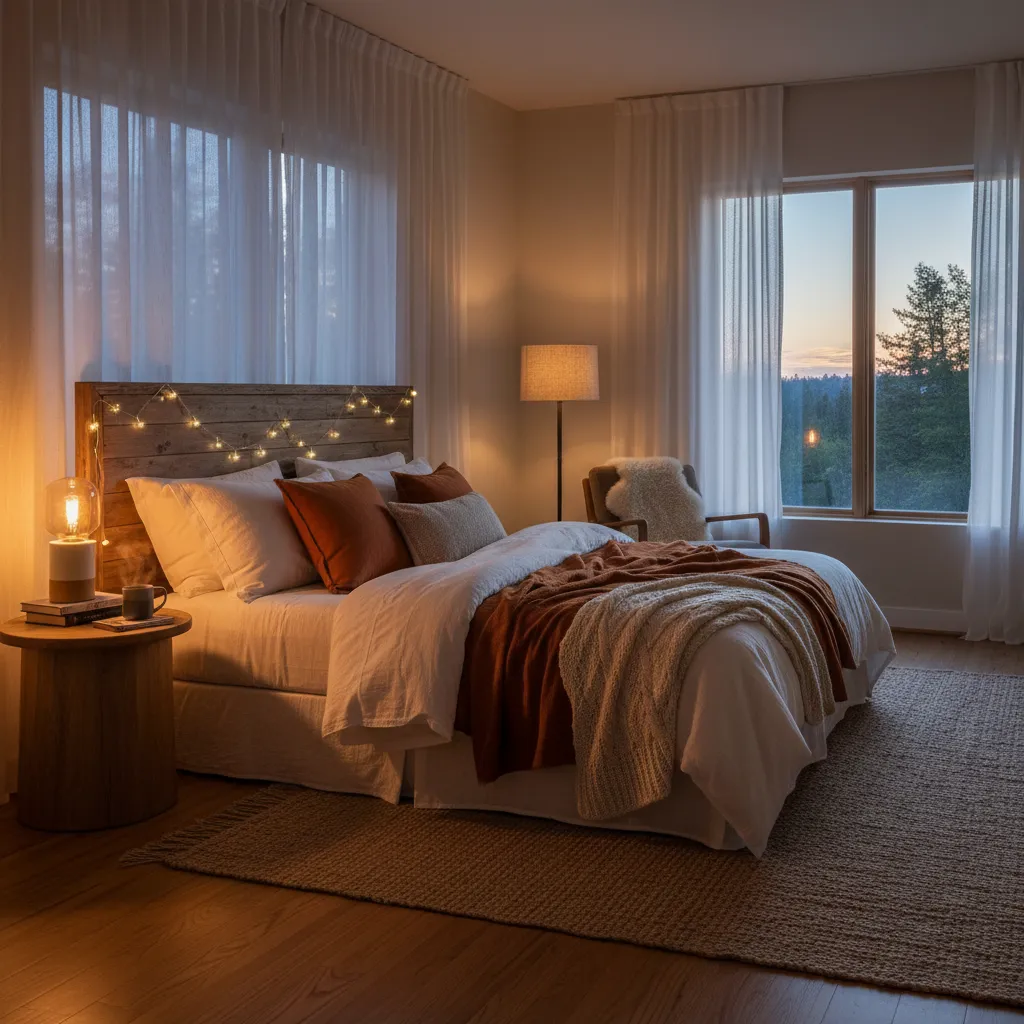
Why Evening Light Matters for Your Sleep and Energy
The omnipresence of artificial light sources in our lives has fundamentally altered the natural light-dark cycle that guided human biology for millennia. Our bodies are exquisitely tuned to respond to light cues, and disrupting these cues can have far-reaching consequences.
Evening light, particularly from digital screens and bright indoor lighting, sends a powerful signal to the suprachiasmatic nucleus (SCN) in our brain, the master clock of our circadian rhythm. This signal can trick the SCN into thinking it's still daytime, even as dusk falls.
This miscommunication directly interferes with the natural rise of melatonin, often called the 'hormone of darkness,' which is vital for initiating and maintaining sleep. Suppressing melatonin production makes it harder to fall asleep and can disrupt the quality of sleep once achieved.
Deep sleep, the most restorative stage, is particularly vulnerable to this disruption. It is during deep sleep that our bodies undergo significant physical repair, consolidate memories, and clear toxins from the brain, processes essential for waking performance.
When deep sleep is compromised, individuals often experience reduced alertness, impaired decision-making, slower reaction times, and increased irritability the next day. This directly impacts productivity, creativity, and overall life satisfaction.
Beyond immediate effects, chronic disruption of circadian rhythms and consistent deep sleep deficits have been linked to a range of long-term health issues. These include metabolic dysfunction, weakened immune response, and an elevated risk of mood disorders.
Therefore, recognizing and actively managing evening light exposure is a critical, yet often overlooked, component of sleep hygiene. It is a foundational step towards optimizing not just your nights, but your entire daily experience.
The Science Behind Light's Influence on Deep Sleep
Scientific research consistently demonstrates the potent effect of light on human physiology, specifically through its interaction with the circadian system. The mechanism largely involves specialized photoreceptors in the eye called intrinsically photosensitive retinal ganglion cells (ipRGCs).
These cells are particularly sensitive to blue wavelengths of light, peaking around 480 nanometers. Unlike rods and cones, which facilitate vision, ipRGCs transmit light signals directly to the SCN, informing the body about the time of day.
When blue-rich light hits these ipRGCs in the evening, they signal the SCN to inhibit melatonin synthesis and release from the pineal gland. This effectively delays the biological night and pushes back the body's natural readiness for sleep.
Studies using polysomnography, the gold standard for sleep measurement, have shown that exposure to blue light in the hours before bed significantly prolongs sleep latency, reduces total sleep time, and decreases the percentage of time spent in deep, slow-wave sleep.
For instance, research published in journals like Chronobiology International and Physiological Reports has quantified these effects, showing reductions in deep sleep ranging from 10-20% after prolonged evening screen exposure compared to dim light conditions.
Furthermore, disrupting the circadian rhythm through inappropriate light exposure can lead to a phenomenon known as circadian misalignment. This state can degrade sleep architecture across all stages, making sleep less efficient and restorative, even if total duration seems adequate.
The impact extends beyond mere sleep onset; the timing and quality of light during the day also 'anchor' the circadian rhythm. A lack of bright morning light, combined with excessive evening light, creates a 'circadian drag' that persistently shifts our internal clock later, affecting sleep and wakefulness.
Realistic Benefits of Optimizing Evening Light
Implementing conscious changes to your evening light environment yields a range of tangible and realistic benefits for sleep and overall well-being. These improvements are often noticeable within a few weeks of consistent effort, providing a compelling incentive for change.
A primary benefit is improved sleep latency, meaning you will find it easier to fall asleep faster. By allowing natural melatonin production to commence unimpeded, your body will naturally transition into a sleep-ready state more smoothly.
Perhaps even more importantly, you can expect an increase in the proportion and quality of your deep sleep. With less circadian disruption, your sleep architecture will normalize, allowing for more sustained periods in this crucial restorative stage.
This enhanced deep sleep translates directly into greater morning alertness and reduced grogginess. Waking up will feel more refreshing, eliminating the need to hit the snooze button multiple times and allowing for a more energetic start to your day.
Optimized sleep also significantly impacts cognitive function, leading to improved focus, better decision-making capabilities, and enhanced problem-solving skills throughout your waking hours. Your brain will simply perform more efficiently.
Moreover, better sleep hygiene, particularly through light management, contributes to better mood regulation and increased emotional resilience. Adequate rest helps balance neurotransmitters, reducing irritability and anxiety levels.
Ultimately, these combined benefits contribute to sustainable energy levels throughout the day, rather than relying on artificial stimulants. By aligning with your body's natural rhythms, you unlock a deeper well of consistent vitality.
Limits, Risks, and Misconceptions About Evening Light
While the importance of evening light hygiene is well-supported, it's crucial to understand its limitations and common misconceptions. Not all light is inherently 'bad,' and a nuanced approach is more effective than rigid adherence to overly simplistic rules.
A common misconception is that all blue light is detrimental. In reality, blue light is essential during daylight hours, signaling alertness and regulating mood. It only becomes problematic when experienced during the biological evening, disrupting melatonin production.
Another limit is that light management alone cannot solve all sleep problems. Factors such as chronic stress, poor diet, lack of physical activity, and underlying medical conditions all significantly influence sleep quality and must also be addressed holistically.
Individual variability in light sensitivity is also a key consideration. Some individuals may be more genetically predisposed to melatonin suppression from evening light exposure than others, meaning protocols may need slight personal adjustments.
Relying solely on software-based blue light filters on devices, such as 'Night Shift' or 'Eye Comfort Shield,' while helpful, may not be sufficient. These filters often only reduce blue light, not eliminate it, and ambient room lighting can still be highly disruptive.
Furthermore, the idea that amber-tinted glasses are a 'magic bullet' for perfect sleep is misleading. While highly effective at blocking blue light, they must be used consistently and combined with other good sleep practices to truly make an impact.
Finally, completely avoiding all light in the evening is neither practical nor necessary. The goal is to reduce bright, blue-rich light and shift towards dimmer, warmer spectrums, creating an environment conducive to natural melatonin release without absolute darkness.
Practical Protocols for Evening Light Management
Implementing effective evening light management doesn't require drastic lifestyle changes; rather, it involves adopting a series of conscious, consistent habits. The primary goal is to signal to your body that night is approaching.
Begin by dimming your indoor lighting at least 2-3 hours before your desired bedtime. Switch off bright overhead lights and opt for warmer, lower-intensity lamps. Think about mimicking the natural transition from daylight to twilight.
If possible, replace standard LED bulbs with 'warm white' or 'amber' spectrum bulbs in areas you frequent in the evening. These bulbs emit significantly less blue light compared to typical cool-white or daylight-spectrum LEDs.
Actively manage your screen time. If using digital devices in the evening is unavoidable, activate blue light filtering software on all your devices (phones, tablets, computers). Many operating systems now include this feature natively.
Consider using dedicated blue-light-blocking glasses, particularly those with amber or red lenses, for the last 2-3 hours before bed. These glasses are highly effective at preventing blue light from reaching your eyes and suppressing melatonin.
Establish a consistent 'wind-down' routine that signals to your body it's time to prepare for sleep. This could involve reading a physical book under dim light, listening to calming music, or taking a warm bath. You can track this new routine using Productivity Hub tools Habits to build consistency.
Ensure your bedroom is as dark as possible. Blackout curtains or blinds can prevent external light pollution, while covering any small light-emitting diodes from electronics can eliminate subtle disruptions. A completely dark room is ideal for deep sleep.
Timing, Dosage, and Adaptation Strategies
The effectiveness of evening light management hinges on precise timing and an understanding of the 'light dosage' your body receives. Consistency is paramount for recalibrating your circadian rhythm.
Start your light reduction protocol approximately 2-3 hours before your planned bedtime. This window allows sufficient time for melatonin levels to rise naturally and for your body to transition into a state of sleep readiness.
The 'dosage' of light refers to both its intensity and spectral composition. Aim for dim lighting (under 50 lux) with a warm color temperature (below 3000 Kelvin) during your pre-sleep window to minimize circadian disruption.
Adaptation to these changes may not be instantaneous. While some individuals notice improvements in sleep latency within a few days, significant shifts in deep sleep architecture often take 1-2 weeks of consistent application.
Crucially, evening light hygiene should be complemented by adequate bright light exposure during the day, especially in the morning. Exposure to natural daylight within an hour of waking helps anchor your circadian rhythm and reinforces the sleep-wake cycle.
Even brief periods of high-intensity blue light in the evening can be disruptive, so minimizing 'spikes' is important. For instance, a quick check of your phone in a dark room can have a disproportionate impact on melatonin suppression.
Monitoring your progress using sleep trackers or a sleep journal can provide valuable insights into what works best for your individual rhythm. Productivity Hub tools Data can help you correlate your light hygiene efforts with improvements in sleep metrics over time.
Integrating Light Hygiene with Productivity Hub Tools
Productivity Hub offers several integrated tools that can help you seamlessly incorporate effective evening light management into your daily routine and track its impact.
Utilize Productivity Hub tools Habits to establish and reinforce your evening light reduction protocols. Create a daily habit for 'Dim Lights by 9 PM' or 'Wear Blue Light Glasses.' The app's tracking features can help maintain consistency and build momentum.
Set reminders within Productivity Hub tools ToDo for specific evening tasks related to light hygiene. This could include 'Activate Night Shift on Laptop' or 'Turn off Overhead Kitchen Lights' as part of your pre-bed sequence.
Leverage Productivity Hub tools Data to monitor the effects of your light hygiene on your sleep metrics. If you integrate with a wearable sleep tracker, observe trends in your deep sleep percentage, sleep latency, and wakefulness after implementing changes.
You can create a custom routine under Productivity Hub tools Settings that includes automated reminders or prompts for switching to warmer lights at a set time. This helps automate a critical part of your evening preparation.
Consider using Productivity Hub tools AI insights, if available, to analyze your patterns and suggest optimal times for light reduction based on your sleep data. The AI might identify correlations between late-night screen use and reduced deep sleep segments.
By integrating these practices within your Productivity Hub ecosystem, you transform light management from a manual chore into an integral, supported part of your holistic productivity and well-being strategy. This ensures that sleep becomes a foundational pillar, not an afterthought.
Common Mistakes in Evening Light Management
Even with good intentions, several common mistakes can undermine efforts to optimize evening light for better sleep. Awareness of these pitfalls can help you avoid them.
One frequent error is focusing solely on screen devices while neglecting ambient room lighting. Bright overhead lights, especially cool-white LEDs, are potent melatonin suppressors, regardless of phone use.
Another mistake is starting light reduction too late. If you wait until an hour before bed to dim lights or don blue-blocking glasses, you may have already missed a crucial window for melatonin synthesis.
Inconsistency is a major hurdle. Skipping light hygiene practices on weekends or during travel can derail progress, as the circadian rhythm thrives on regularity and predictable cues.
Expecting instant results can lead to discouragement. While some improvements may be rapid, re-entraining your circadian rhythm and optimizing deep sleep is a gradual process that requires patience and persistent effort.
Ignoring morning light exposure is another oversight. Without sufficient bright light in the morning, your circadian rhythm can become prone to drifting later, making evening light management less effective.
Finally, over-reliance on blue light filters or glasses without addressing other sleep hygiene factors is a mistake. These tools are powerful aids, but they work best when part of a comprehensive approach to sleep, diet, and stress management.
Mini Quantified Case Studies
Case Study 1: The Corporate Professional. Sarah, a 34-year-old marketing manager, struggled with waking up groggy despite 7-8 hours of sleep. After implementing strict evening light hygiene-dimming lights and wearing amber glasses 2.5 hours before bed-her wearable sleep tracker showed a 15% increase in deep sleep percentage over three weeks. She reported feeling significantly more refreshed and productive in the mornings.
Case Study 2: The University Student. Mark, a 21-year-old student, frequently studied late into the night, often staring at his laptop screen. When he began using blue light filtering software on his devices and wore orange-tinted glasses after 8 PM, his sleep latency decreased from an average of 45 minutes to under 20 minutes within ten days. His focus during morning lectures improved noticeably.
Case Study 3: The New Parent. Emily, a 30-year-old new mother, experienced highly fragmented sleep due to night feedings. While she couldn't control wake-ups, she optimized her evening light by using only dim, red-spectrum night lights for late-night tasks. Her deep sleep percentage on her sleep tracker remained surprisingly stable, and she reported feeling less overwhelmed during the day, attributing it to the preserved restorative sleep she did get.
Case Study 4: The Remote Developer. David, a 42-year-old software developer working from home, integrated his evening light strategy with his Productivity Hub tools Data. By tracking his evening ambient light levels and screen time, he identified a direct correlation between high blue light exposure after 7 PM and a consistent drop in his Heart Rate Variability (HRV) and deep sleep scores the following morning. Adjusting his light environment led to a sustained improvement in recovery metrics.
Case Study 5: The Weekend Warrior. Alex, a 28-year-old who trained intensely on weekends, found his recovery lagging. He started wearing blue-blocking glasses for two hours before bed every night and ensured his bedroom was pitch black. Over a month, his deep sleep duration increased, and he reported reduced muscle soreness and faster recovery times, allowing him to maintain a higher intensity in his training sessions without feeling depleted.
Frequently Asked Questions About Evening Light and Sleep
Q1: Is all blue light bad for me? No, blue light is crucial during the day for alertness, mood, and circadian rhythm regulation. It only becomes problematic when experienced during the biological evening, as it suppresses melatonin production and disrupts your natural sleep cycle.
Q2: Do phone 'night shift' modes actually work? Phone 'night shift' or 'eye comfort' modes, which shift screen colors to warmer tones, are helpful as a first line of defense. However, they typically only reduce blue light, not eliminate it, and often don't address the intensity of the light emitted. For optimal results, combine them with other strategies like amber-tinted glasses.
Q3: What about reading before bed? Should I use an e-reader or a physical book? A physical book read under a dim, warm-spectrum light is generally preferred. If you use an e-reader, choose models with adjustable warm backlights or frontlights, and keep the brightness very low. Tablets and phones, even with night mode, still emit significant blue light and are best avoided.
Q4: How long does it take to see results from evening light management? Many individuals report feeling an immediate difference in sleep latency within a few days of consistent practice. However, significant changes in deep sleep architecture and overall circadian rhythm alignment may take 1-2 weeks or even longer to become fully established and noticeable.
Q5: Can I just take melatonin supplements instead of managing evening light? While melatonin supplements can assist with sleep, especially for jet lag or shift work, they are not a substitute for proper light hygiene. Relying solely on external melatonin doesn't address the underlying circadian disruption caused by inappropriate light exposure. Optimizing your natural melatonin production through light management is a more sustainable and holistic approach to sleep health.
Sources & References
- 1
- 2
- 3