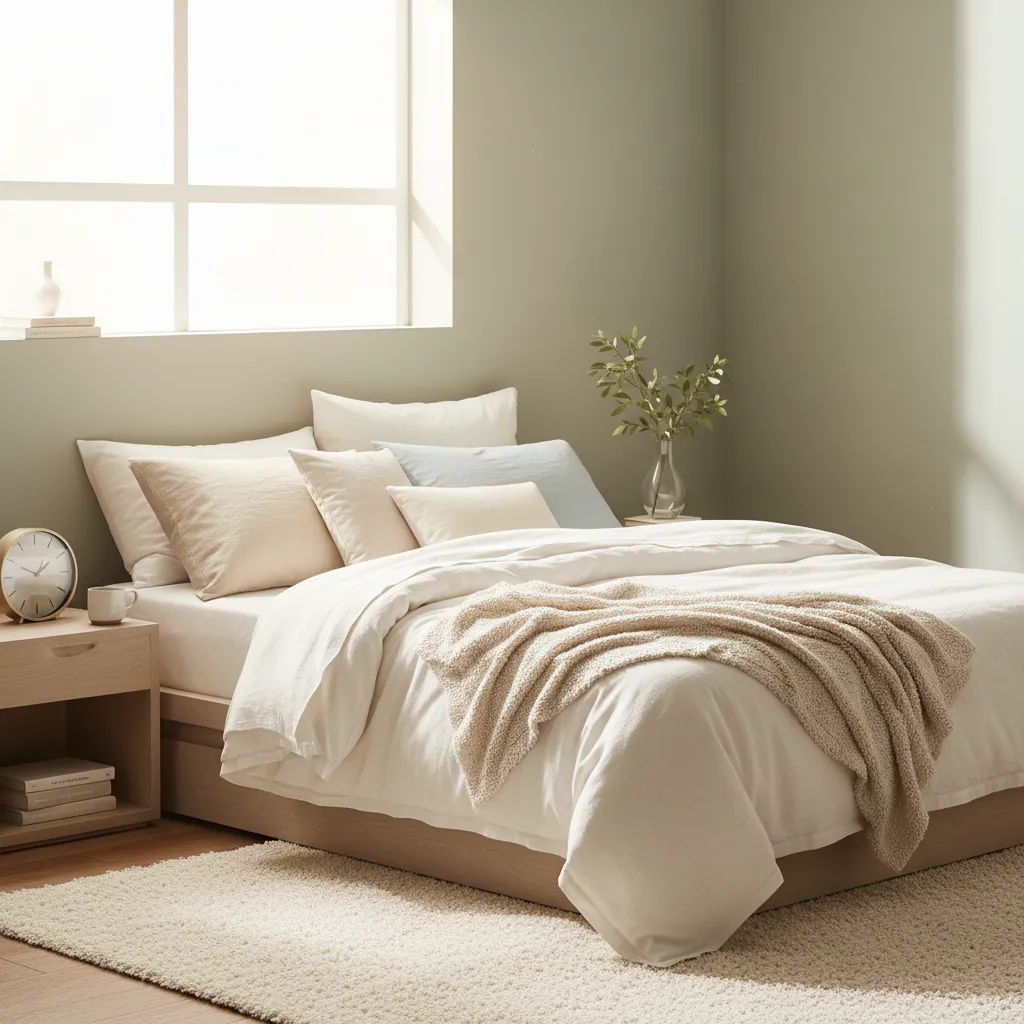
The Fundamental Importance of Light for Sleep and Recovery
Sleep is not merely a period of inactivity; it is an active, vital process essential for physical and cognitive restoration. Among its various stages, deep sleep stands out as the most crucial for bodily repair, immune system fortification, and consolidating memories.
Without sufficient deep sleep, our ability to learn, focus, and regulate emotions severely diminishes. Chronic deprivation leads to fatigue, irritability, impaired decision-making, and an increased risk of numerous health problems.
At the core of healthy sleep lies the circadian rhythm, our internal 24-hour clock that regulates countless physiological processes, including sleep-wake cycles. This rhythm is exquisitely sensitive to environmental cues, with light being the most powerful regulator.
Natural light exposure signals to our brain when it's day and when it's night, synchronizing our internal clock with the external world. This synchronization dictates the precise timing of melatonin production, a hormone vital for initiating and maintaining sleep.
Disruptions to this delicate balance, often caused by inconsistent light exposure, lead to a desynchronized circadian rhythm. This results in difficulty falling asleep, fragmented sleep, and a significant reduction in the restorative deep sleep stages.
Many individuals unknowingly compromise their sleep by neglecting the profound impact of light. Understanding and optimizing light exposure offers a powerful, yet often overlooked, pathway to achieving truly restorative sleep and enhanced daily recovery.
Scientific Evidence Supporting Light's Impact on Sleep
The science behind light's influence on sleep is well-established, centered on the suprachiasmatic nucleus (SCN) in the hypothalamus. The SCN acts as the body's master clock, receiving direct input from specialized photoreceptors in the eye.
These photoreceptors, particularly the intrinsically photosensitive retinal ganglion cells (ipRGCs), are most sensitive to blue light wavelengths. When these cells detect light, they signal the SCN, which then suppresses the production of melatonin by the pineal gland.
Research consistently demonstrates that exposure to bright light in the morning enhances circadian rhythm amplitude, leading to earlier melatonin onset in the evening and improved sleep quality. Studies show individuals with greater morning light exposure report better sleep efficiency.
Conversely, exposure to artificial light, especially blue-rich light from screens and LED bulbs, in the hours leading up to bedtime can significantly delay melatonin release. This pushes back sleep onset and reduces deep sleep duration.
A study published in 'Current Biology' highlighted that even moderate indoor light exposure before bedtime can shorten melatonin duration by about 90 minutes. This disruption directly affects the quantity and quality of restorative sleep phases.
Furthermore, exposure to sufficient natural daylight throughout the day has been linked to increased deep sleep duration and improved sleep continuity. This underscores that it's not just evening light to consider, but the entire 24-hour light cycle.
Realistic Benefits of Optimizing Light Exposure
Implementing a strategic approach to light exposure yields a cascade of tangible benefits for sleep and overall well-being. The most direct advantage is a significant improvement in the duration and quality of deep sleep.
With enhanced deep sleep, your body and mind experience more profound physical and mental recovery. This means waking up feeling genuinely refreshed, rather than still battling fatigue and grogginess.
Optimized light exposure helps stabilize your circadian rhythm, leading to more consistent sleep-wake times. This regularity contributes to increased daytime alertness, improved focus, and sustained cognitive function throughout your waking hours.
Beyond sleep, a well-regulated circadian rhythm contributes to better mood regulation and can help reduce feelings of anxiety. Consistent light cues help the body maintain its internal balance, positively impacting mental resilience.
Individuals often report more stable energy levels, fewer mid-afternoon slumps, and a reduced reliance on caffeine when their light environment is optimized. This is a direct result of improved sleep efficiency and a stronger internal clock.
Finally, sufficient and timely deep sleep plays a vital role in strengthening the immune system. By supporting your body's natural restorative processes, proper light exposure contributes to greater resilience against illness.
Limits, Risks, and Common Misconceptions
While highly beneficial, light therapy for sleep isn't a panacea and comes with specific considerations. A common misconception is that all light is detrimental in the evening; however, not all light wavelengths have the same impact on melatonin production.
For instance, red and amber light wavelengths have a minimal effect on melatonin suppression compared to blue light. Therefore, using dim red or amber lighting in the evening can be a supportive element of a healthy evening routine.
A significant risk lies in excessive artificial bright light exposure at the wrong times, particularly from electronic screens and modern LED lighting in the late evening. This can severely disrupt circadian rhythm and sleep onset.
It's also important to recognize that light exposure is one critical factor among many influencing sleep. Diet, exercise, stress management, and bedroom environment all play significant roles, and focusing solely on light may not resolve all sleep issues.
Another misconception is believing that merely avoiding screens is sufficient for evening light hygiene. Many indoor ambient lights, even if not directly from a device, emit significant blue light that can still interfere with melatonin production.
Furthermore, some individuals mistakenly believe that more light is always better. The key is not just the quantity but the timing, intensity, and spectrum of light. Bright light at night is detrimental, while bright light in the morning is highly beneficial.
A Practical Protocol for Optimizing Light Exposure
Implementing an effective light exposure protocol involves intentional adjustments throughout your day, not just at bedtime. The goal is to maximize bright, natural light in the morning and daytime, while minimizing artificial light in the evening.
Start your day by seeking bright natural light as soon as possible after waking. Aim for 10-30 minutes of outdoor exposure, ideally within the first hour. This signals to your brain that the day has begun and helps set your circadian clock.
During the daytime, maximize your exposure to natural light whenever possible. Work near a window, take outdoor breaks, or consider using a daylight spectrum lamp if your environment is naturally dim. Consistent daytime light exposure reinforces your sleep-wake cycle.
As evening approaches, begin to dim your lights significantly 2-3 hours before your desired bedtime. Transition to warmer, lower-intensity lighting. Replace bright overhead lights with lamps that emit red or amber wavelengths, or simply reduce overall illumination.
In the hour leading up to sleep, eliminate bright screens and overhead lighting entirely. Engage in relaxing activities like reading a physical book under a dim red light or listening to calming music. Productivity Hub tools Habits can help you build consistent morning light routines.
Finally, ensure your bedroom is as dark as possible during sleep. Install blackout curtains, cover any light-emitting devices, and remove nightlights. Even small amounts of light can disrupt deep sleep and melatonin production.
Timing, Dosage, and Adaptation Strategies
For morning light, the ideal 'dosage' is 10-30 minutes of natural outdoor light, with an intensity ideally reaching 5,000 to 10,000 lux. This is significantly brighter than typical indoor lighting and effectively suppresses melatonin and signals wakefulness.
Aim to get this morning light within the first 30-60 minutes of waking. Consistency is paramount; even on cloudy days, outdoor light is far more effective than indoor light for circadian entrainment.
Regarding evening light, the goal is to significantly reduce exposure 2-3 hours before your target sleep time. Dim your environment to less than 10 lux in the bedroom, which is roughly equivalent to a moonlit night.
For artificial lighting in the evening, prioritize bulbs with warmer color temperatures (lower Kelvin ratings, like 2700K or less) and those that emit minimal blue light. Red or amber spectrum lights are ideal for late-night illumination if needed.
Adapting to these changes requires consistency. Expect to see noticeable improvements in sleep quality and energy levels within 2-4 weeks of consistent application. Individual responses may vary, so pay attention to your body's signals.
Consider seasonal variations: in winter, when natural light is scarce, a therapeutic light box (10,000 lux) used for 15-30 minutes in the morning can mimic natural sunlight. Tracking your sleep patterns alongside your light exposure in Productivity Hub tools Data can reveal personal optimal timings.
Integrating Light Protocols with Productivity Hub
Productivity Hub offers several integrated tools to help you effectively implement and track your light exposure protocols for better sleep and recovery.
Utilize Productivity Hub tools Habits to establish and maintain consistent daily routines for light exposure. Create a habit for 'Morning Sun Exposure' and another for 'Evening Light Reduction' with specific timings and reminders.
Leverage Productivity Hub tools Data to track your sleep quality metrics, including deep sleep duration, sleep onset latency, and wake-ups. Correlate this data with your adherence to light protocols to identify what works best for you.
For proactive planning, use Productivity Hub tools ToDo to schedule tasks related to optimizing your light environment. This could include 'Purchase amber light bulbs,' 'Install blackout curtains,' or 'Set device night mode schedules.'
Productivity Hub tools AI can provide personalized insights based on your logged sleep data and habit tracking. The AI might suggest optimal morning light durations or evening light cut-off times tailored to your unique sleep patterns and goals.
Within Productivity Hub tools Settings, you can configure custom notifications and reminders that align with your light hygiene schedule. Set alerts to 'Go outside for morning light' or 'Dim lights for evening routine' to ensure consistency. Productivity Hub tools Habits offers a straightforward way to integrate these practices into your daily life.
Common Mistakes to Avoid in Light Exposure for Sleep
One of the most common mistakes is believing that indoor light in the morning is sufficient. Window glass filters out crucial wavelengths and intensity, rendering it far less effective than direct outdoor exposure for circadian entrainment.
Another prevalent error is using bright, overhead lights in the late evening, especially those with significant blue light components. This powerfully suppresses melatonin, delaying sleep onset and disrupting deep sleep architecture.
Many individuals rely solely on blue light filters on their electronic devices, neglecting the impact of ambient room lighting. While device filters help, the cumulative effect of all artificial light sources in the evening must be considered.
Failing to make the bedroom truly dark is a critical oversight. Even faint light from charging indicators, alarm clocks, or streetlights can penetrate closed eyelids and disrupt sleep cycles, particularly deep sleep.
Inconsistency in applying light protocols undermines their effectiveness. Sporadic morning light exposure or inconsistent evening light reduction prevents the circadian rhythm from fully synchronizing and adapting.
Ignoring the importance of weekend consistency can also derail progress. While tempting to 'sleep in' or stay up late, significant deviations from your weekday light-dark schedule can lead to 'social jet lag,' negatively impacting sleep quality during the week.
Mini Quantified Case Studies
Anna, a 34-year-old marketing manager, struggled with evening restlessness. After consistently getting 20 minutes of morning sun and dimming home lights 2 hours before bed for 4 weeks, her deep sleep increased by an average of 35 minutes per night, reported by her sleep tracker. She also noted feeling more refreshed upon waking.
Mark, 48, often felt groggy despite 7-8 hours in bed. Introducing a strict 'no screen after 9 PM' rule and replacing bright overhead lights with dim red-light lamps significantly improved his sleep latency. His sleep scores improved, showing a 15% reduction in time awake after sleep onset.
Sarah, a 28-year-old student, experienced inconsistent sleep due to varying study schedules. Implementing a bright light lamp for 15 minutes each morning, even on cloudy days, stabilized her circadian rhythm. She reported fewer mid-day energy dips and a more consistent sleep-wake time.
David, 55, used to watch TV until bedtime. After switching to reading under a small, low-intensity lamp for an hour before sleep, his sleep efficiency, measured by his wearable, rose from 80% to 88%. He also reported fewer nocturnal awakenings.
Emily, 30, started working from home and noticed her sleep quality decline. By dedicating her lunch break to a 30-minute walk outdoors and installing a daylight spectrum lamp at her desk, her sleep onset improved, and her average HRV (Heart Rate Variability) increased, indicating better recovery.
Frequently Asked Questions About Light and Sleep
How much morning light do I need? Aim for 10-30 minutes of natural outdoor light, ideally within an hour of waking. On cloudy days, this duration might need to be extended slightly, as outdoor light is still significantly brighter than indoors.
Are blue light blocking glasses effective? Yes, they can help mitigate the impact of blue light from screens and artificial sources in the evening. However, they are most effective when combined with overall ambient light reduction in your environment.
Can artificial light boxes replace natural sunlight? For morning use, therapeutic light boxes (typically 10,000 lux) can be a good substitute, especially in winter or for individuals who must wake before sunrise. They help signal wakefulness and suppress melatonin.
What about napping? Does light exposure affect naps? Brief power naps (20-30 minutes) in a moderately lit environment are generally fine and can boost alertness. However, longer naps or napping too late in the day can disrupt nocturnal sleep, regardless of light conditions.
Is it okay to use a nightlight in the bedroom? For minimal disruption, use a very dim red or amber nightlight, positioned low to the ground. Avoid bright white or blue lights, as these can easily interfere with melatonin production and sleep continuity.
Sources & References
- 1
- 2
- 3