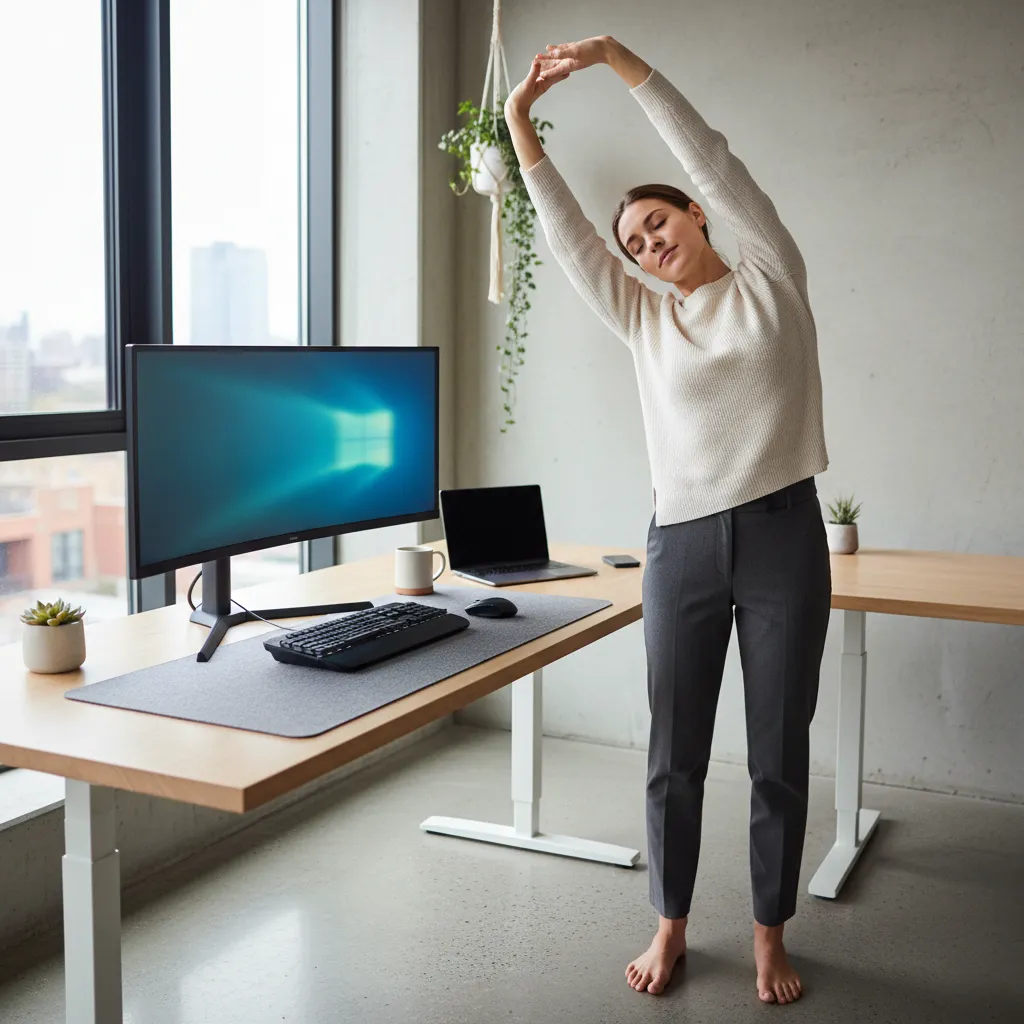
The Silent Epidemic of Sedentary Work
The modern office environment, characterized by long stretches of sitting, has become a significant public health concern. Despite advancements in ergonomics, the fundamental challenge of prolonged immobility persists for millions of workers worldwide.
Research consistently links sedentary behavior to an increased risk of chronic diseases, including cardiovascular issues, type 2 diabetes, and certain cancers. While these are long-term concerns, immediate impacts on daily well-being are just as critical.
On a daily basis, office workers often contend with cumulative physical discomfort. This can range from mild stiffness in the neck and shoulders to chronic lower back pain, severely impacting quality of life and work performance.
Beyond physical pain, prolonged sitting contributes to mental fatigue, reduced concentration, and even mood disturbances. The brain, much like the body, benefits from regular oxygenation and blood flow stimulated by movement.
Ignoring these early warning signs can lead to more serious musculoskeletal disorders requiring extensive medical intervention. Proactive measures are essential to prevent discomfort from escalating into chronic conditions.
Embracing micro-movement breaks is not just about avoiding pain; it's about sustaining peak performance and long-term health. It represents a fundamental shift towards a more active and mindful approach to desk work.
The Science Behind Movement Snacks
Extensive epidemiological studies and controlled trials have investigated the effects of prolonged sitting. These studies consistently highlight the detrimental physiological and psychological impacts of static postures.
One key area of research focuses on muscle activation and blood flow. When muscles are static for extended periods, blood circulation slows, reducing oxygen and nutrient delivery while allowing waste products to accumulate.
This reduced blood flow specifically impacts the deep stabilizing muscles of the spine and neck, leading to fatigue and poor postural support. Micro-movements help to reactivate these muscles and restore healthy circulation.
Studies from occupational health have shown that even short bursts of activity, as brief as 30 seconds to 2 minutes, can mitigate the negative effects of prolonged sitting. These interventions are far more effective than a single, longer break at the end of the day.
Cognitive neuroscience also supports the value of movement. Brief physical activity has been shown to improve executive function, memory retention, and creative thinking, likely due to increased brain oxygenation and neurotransmitter release.
The concept of "movement snacks" is directly derived from research indicating that the cumulative effect of small, frequent movements is significant. It disrupts the pathological pathways initiated by sustained immobility.
Tangible Gains from Consistent Micro-Breaks
Integrating micro-movement breaks into your routine yields a spectrum of realistic and immediate benefits that enhance your daily work experience. These aren't just theoretical advantages but observable improvements.
Foremost among these is a significant reduction in physical discomfort. Regular short movements alleviate stiffness in the neck, shoulders, and back, preventing the buildup of tension that often leads to chronic pain.
Improved circulation is another direct benefit, ensuring better oxygen and nutrient delivery to muscles and the brain. This can reduce feelings of lethargy and improve overall vitality throughout the workday.
Mentally, these breaks serve as mini-resets, helping to combat mental fatigue and sustain focus. Stepping away from the screen for even a minute can refresh your cognitive reserves, leading to sharper concentration and better problem-solving.
Better posture is a natural outcome of frequent movement and muscle re-activation. By regularly adjusting and stretching, you train your body to maintain more ergonomic alignment, reducing strain on joints and ligaments.
Finally, adopting micro-movement breaks contributes to a more sustainable work pace. Instead of pushing through discomfort, you learn to listen to your body, fostering a healthier relationship with your work and preventing burnout.
Understanding the Nuances of Movement Breaks
While highly beneficial, it's important to approach micro-movement breaks with realistic expectations and an understanding of their limitations. They are a tool, not a panacea for all health issues.
A common misconception is that these short breaks can fully replace dedicated physical activity. Micro-movements complement, but do not substitute, moderate to vigorous exercise required for cardiovascular health and strength training.
Another limit is their effectiveness in addressing pre-existing, severe musculoskeletal conditions. While they can provide relief and prevent worsening, professional medical or physical therapy intervention may be necessary for significant pain.
There's also a risk of overdoing it or performing movements incorrectly if not mindful. While most micro-movements are low-impact, listen to your body and avoid any actions that cause sharp pain or discomfort.
Some individuals might initially feel self-conscious or worry about disrupting their workflow. However, these breaks are designed to be subtle and quick, minimizing actual disruption while maximizing benefit.
It's crucial not to view these breaks as an excuse for maintaining poor ergonomics the rest of the time. A well-set-up workstation remains foundational, with micro-movements acting as an additive layer of support.
Simple Micro-Movements for Every Desk Worker
Implementing micro-movement breaks is straightforward and doesn't require specialized equipment or extensive knowledge. The key is consistency and integrating them seamlessly into your existing routine.
Start with simple neck stretches: gently tilt your head side to side, then ear to shoulder, holding each for 5-10 seconds. Follow with slow head rotations in both directions, being careful not to overextend.
Shoulder rolls are excellent for releasing upper back tension. Shrug your shoulders up towards your ears, roll them back and down, then reverse the motion. Perform 5-10 repetitions in each direction.
For your upper body, try chest openers. Clasp your hands behind your back, gently lift them away from your body, and feel the stretch across your chest and shoulders. This counters the hunched posture common at desks.
Lower body movements can be done subtly. Try ankle circles, lifting one foot and rotating it clockwise and counter-clockwise. You can also perform seated leg extensions, flexing your quadriceps.
Consider integrating subtle posture adjustments. Every 20-30 minutes, consciously check your posture: shoulders back and down, chest open, spine elongated. A small reminder, perhaps set through Productivity Hub tools Habits, can prompt these checks.
Even brief standing periods count. If you don't have a standing desk, stand up to take a phone call, or simply walk to the water cooler or restroom. Every step helps disrupt static positioning.
Optimizing Your Movement Schedule
The effectiveness of micro-movement breaks largely depends on their frequency and timing rather than intensity or duration. The goal is to avoid prolonged static periods.
A widely recommended protocol is the "20-20-20 rule" for eye strain, which can be adapted for movement: every 20 minutes, look at something 20 feet away for 20 seconds. Extend this by adding a quick stretch or posture change.
Set a timer or use an app to remind yourself to take a micro-break every 30 to 60 minutes. These reminders should be gentle nudges, not disruptive alarms, to integrate smoothly into your workflow.
The "dosage" of movement can be highly individualized. Beginners might start with 1-2 minute breaks every hour, while those with more awareness can integrate even shorter, 30-second movements more frequently, perhaps every 20-30 minutes.
Adapt the movements to your work environment and comfort level. If a full standing stretch isn't feasible, subtle seated movements can still offer significant benefits. The key is to break the static chain.
Listen to your body's signals. If you feel a specific area becoming stiff or sore, target that area with a relevant micro-movement. Personalized attention is more effective than a generic routine.
For consistent timing, consider utilizing the built-in reminder features of Productivity Hub tools ToDo or Productivity Hub tools Habits to schedule recurring micro-break notifications. This can help build a sustainable new routine.
Integrating Movement Breaks with Productivity Hub
Productivity Hub offers several features that can seamlessly support the integration of micro-movement breaks into your daily routine, transforming an abstract concept into an actionable strategy.
The Productivity Hub tools Habits module is ideal for creating and tracking your movement snack goals. You can set daily or hourly reminders for specific stretches or posture checks, ensuring consistent engagement.
Utilize the Productivity Hub tools ToDo list to schedule your designated "movement break" times. While not a typical task, treating it as an essential appointment ensures it's prioritized and not overlooked.
The Productivity Hub tools Data section can help you track your adherence to movement breaks over time. Visualizing your consistency can be a powerful motivator and reveal patterns in your activity levels.
For advanced users, Productivity Hub tools AI might offer personalized recommendations based on your work patterns and reported discomfort. Imagine an AI suggesting a neck stretch after two hours of intensive typing.
You can also use the general settings within Productivity Hub to customize notification sounds or visual cues for your movement reminders, making them subtle yet effective prompts.
By leveraging these integrated tools, Productivity Hub becomes more than just a task manager; it transforms into a holistic wellness companion, guiding you toward better physical and mental health alongside your professional goals.
Avoiding Pitfalls in Your Movement Journey
Even with good intentions, several common mistakes can hinder the effectiveness of your micro-movement break strategy. Awareness of these can help you stay on track.
One prevalent error is inconsistency. Taking breaks only when discomfort becomes acute, rather than proactively, reduces their preventative power. Regularity is paramount.
Another mistake is relying solely on a single type of movement. A varied routine that targets different muscle groups-neck, shoulders, back, and legs-is more comprehensive and effective.
Ignoring discomfort or pain during a stretch is also counterproductive. Micro-movements should feel gentle and relieving, not painful. Always listen to your body and adjust as needed.
Some individuals might perform movements too quickly or with poor form, diminishing their benefit. Focus on slow, controlled movements to truly engage the muscles and facilitate circulation.
Forgetting to integrate eye breaks alongside physical movements is another oversight. Eye strain contributes significantly to overall desk fatigue, so combine visual and physical resets.
Lastly, viewing these breaks as time-wasters rather than productivity enhancers is a significant mental block. Reframe them as essential investments in your sustained focus and well-being.
Real-World Impact: Stories of Change
Consider Sarah, a graphic designer who suffered from chronic neck and shoulder pain. After incorporating 2-minute micro-breaks every 45 minutes, focusing on neck tilts and shoulder rolls, her pain score dropped from an average of 6/10 to 2/10 within a month. Her reported focus improved by 25%.
Mark, a software developer, often felt mental fatigue by midday. He started taking a 30-second standing stretch and a quick walk to the window every hour. He noted a 15% increase in concentration duration and a significant reduction in post-lunch slump.
Emily, a data analyst, experienced persistent lower back stiffness from prolonged sitting. She began performing seated pelvic tilts and gentle spinal twists for one minute every 50 minutes. Her flexibility improved, and back discomfort became an infrequent occurrence within weeks.
John, a project manager, struggled with afternoon slump and reduced creative output. He implemented a routine of two quick stretches and a short walk every 90 minutes. He reported a noticeable uplift in mood and a 10% increase in problem-solving efficiency after two weeks.
A small marketing team implemented a "movement snack" challenge using shared reminders. Over three weeks, 80% of participants reported reduced physical discomfort, and the team collectively saw a 5% increase in task completion rates due to sustained energy and focus.
Frequently Asked Questions About Movement Breaks
Q: How often should I take a micro-movement break? A: Most experts recommend taking a break every 30-60 minutes. Even 30 seconds to 2 minutes of movement can make a significant difference in preventing static posture effects.
Q: What if I'm in a deep work flow and don't want to interrupt it? A: Micro-breaks are designed to be quick and subtle. Consider scheduling them during natural pauses, like between tasks, or use a gentle, non-disruptive timer. Remember, they enhance, not hinder, long-term focus.
Q: Do I need special equipment or a standing desk? A: No, most micro-movements can be performed right at your desk, either seated or standing briefly. While a standing desk is beneficial, it's not a prerequisite for incorporating these breaks.
Q: Can these breaks help with existing chronic pain? A: While micro-movements can alleviate discomfort and prevent worsening, they are primarily preventative. For existing chronic pain, consult a healthcare professional for a tailored treatment plan, using movements as a complementary strategy.
Q: Are there any movements I should avoid? A: Avoid any movements that cause sharp pain, dizziness, or discomfort. Always perform stretches gently and within your comfortable range of motion. If you have specific health conditions, consult your doctor or a physical therapist.
Sources & References
- 1
- 2
- 3