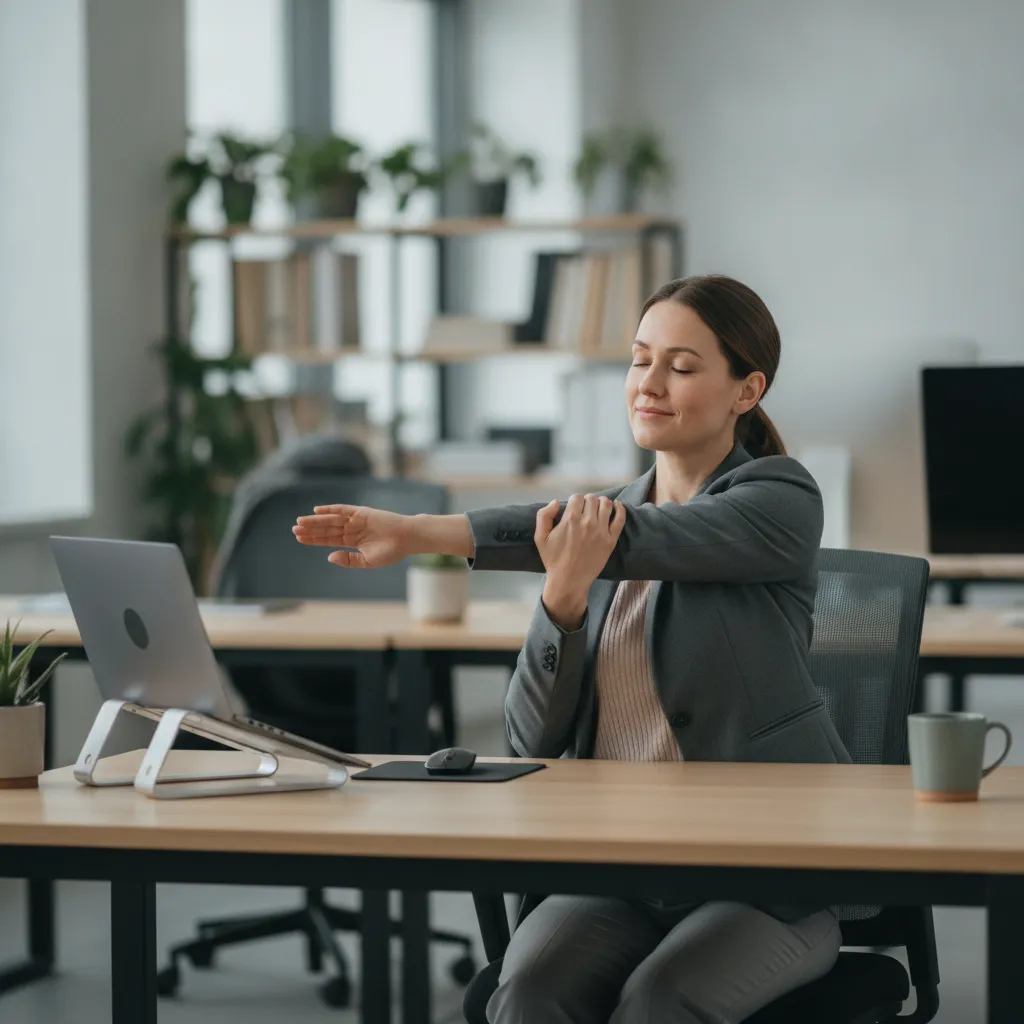
The Silent Epidemic of Desk Stiffness
Modern work environments, particularly those involving computers, compel millions into prolonged static postures. Research indicates that the average office worker spends over 80% of their day sitting.
This extended immobility places undue stress on the musculoskeletal system. Muscles can shorten and tighten, while joints become less mobile, leading to stiffness and pain.
The neck and shoulders are particularly vulnerable, often developing 'tech neck' or 'upper crossed syndrome' due to forward head posture. This can result in persistent discomfort and headaches.
Lower back pain is another common complaint, exacerbated by slumping or unsupported sitting. Pressure on spinal discs increases, contributing to herniations and chronic issues.
Beyond localized pain, poor circulation from prolonged sitting affects overall energy levels and cognitive function. A stagnant body often leads to a stagnant mind.
Addressing these issues isn't just about comfort; it's about preserving long-term physical health and maintaining professional effectiveness. Neglecting stiffness can lead to chronic conditions that impact quality of life.
Understanding why these problems arise is the first step toward implementing effective preventive strategies. Micro-stretches offer a proactive approach to combat this widespread issue.
Evidence-Based Benefits of Movement Snacks
Numerous studies highlight the importance of regular movement breaks for desk workers. Research published in the British Journal of Sports Medicine emphasizes that even short bouts of activity can mitigate health risks associated with prolonged sitting.
Specifically, micro-breaks involving light stretching or movement have been shown to improve localized blood flow. This increased circulation delivers vital oxygen and nutrients to muscles and joints, reducing stiffness.
A systematic review indicated that frequent short breaks are more effective than fewer, longer breaks for reducing musculoskeletal discomfort. Consistency in movement is key to preventing the accumulation of tension.
Beyond physical benefits, research also points to cognitive improvements. Interrupting periods of intense focus with movement can lead to enhanced concentration and reduced mental fatigue when returning to tasks.
Studies on workers incorporating micro-stretches reported significant reductions in neck, shoulder, and back pain compared to control groups. This suggests a direct correlation between brief movements and discomfort alleviation.
The psychological benefits are equally compelling; a brief movement snack can serve as a mental reset, reducing stress and improving mood. This contributes to a more positive and productive work experience.
The cumulative evidence strongly supports the integration of micro-stretches as a simple, yet powerful, intervention for improving both physical health and cognitive performance in office environments.
Realistic Benefits Beyond Pain Relief
While pain relief is a primary driver for many considering micro-stretches, the benefits extend far beyond simply alleviating discomfort. These small movements contribute to a holistic improvement in well-being.
One significant advantage is enhanced posture awareness. By regularly engaging in brief stretches, individuals become more attuned to their body's positioning and tendencies to slump, prompting natural corrections.
Improved flexibility and range of motion are natural outcomes, making everyday tasks feel easier and reducing the risk of strain from sudden movements. This contributes to overall physical resilience.
Micro-stretches act as mental refreshers, combating the cognitive fog that often accompanies prolonged sedentary periods. A short break can clear the mind, allowing for renewed focus and creativity.
Regular movement also contributes to better circulation, which in turn can boost energy levels and reduce feelings of sluggishness. This sustained energy helps maintain productivity throughout the workday.
Furthermore, by proactively addressing stiffness and tension, micro-stretches can prevent the escalation of minor discomforts into chronic conditions, saving potential healthcare costs and lost work time.
Ultimately, integrating these brief movements fosters a greater sense of bodily control and self-care, promoting a more sustainable and healthier approach to desk work.
Limitations, Risks, and Common Misconceptions
It is important to approach micro-stretches with realistic expectations and an understanding of their limitations. They are preventative and alleviative, not a cure-all for severe musculoskeletal conditions.
Micro-stretches are not a substitute for proper ergonomic setup. While they help mitigate the effects of static posture, an unsupportive chair or poorly positioned monitor will still contribute to issues.
There is a misconception that more intense stretching is always better. Micro-stretches are gentle; forcing a stretch or pushing into pain can lead to injury rather than relief. Listen to your body carefully.
Another common misunderstanding is that micro-stretches can replace regular exercise. They are supplementary 'movement snacks,' not a complete physical activity regimen. Daily walks or workouts remain essential.
Individuals with pre-existing injuries or chronic pain should consult a healthcare professional before starting any new stretching routine. Certain movements might be contraindicated for specific conditions.
The risk of injury from gentle micro-stretches is generally low, but poor form or overstretching can still cause minor strains. Always perform movements slowly and with control.
Finally, consistency is crucial. Performing micro-stretches sporadically will yield minimal results. The true power lies in their regular, integrated application throughout the workday.
Practical Protocol for Effective Micro-Stretches
Implementing a micro-stretch routine is straightforward and requires no special equipment, making it ideal for any office environment. The key is gentle, controlled movements.
For neck relief, try slow neck rotations: gently drop your chin to your chest, then slowly roll your head to one shoulder, hold, and then to the other. Repeat 2-3 times in each direction.
Shoulder shrugs are excellent for upper back tension. Simply raise your shoulders towards your ears, hold for a few seconds, then release them down and back. Repeat 5-10 times.
Wrist and hand stretches are crucial for those typing extensively. Extend one arm forward, palm up, then gently pull your fingers down towards your body with your other hand. Repeat for both palms up and down.
Upper body twists can address mid-back stiffness. Sit tall, place one hand on your opposite knee, and gently twist your torso, looking over your shoulder. Hold briefly and switch sides.
Integrating these short movements is simple. You can set reminders on your phone or use the Productivity Hub tools Habits feature to schedule recurring micro-stretch breaks throughout your day.
Remember, each stretch should be held for about 10-15 seconds, or performed dynamically for 5-10 repetitions. Breathe deeply throughout each movement to enhance relaxation and efficacy.
Optimal Timing, Dosage, and Adaptation
The effectiveness of micro-stretches hinges on consistent and timely application. Rather than waiting for discomfort to set in, proactive movement is far more beneficial.
Aim for a micro-stretch break every 30-60 minutes. These brief interruptions, lasting 1-2 minutes, are short enough not to disrupt deep work but frequent enough to prevent stiffness from accumulating.
Consider grouping 2-3 different stretches into each break to target various muscle groups. For instance, a neck roll, a shoulder shrug, and a wrist stretch can be completed within 90 seconds.
Listen to your body's signals and adapt the routine as needed. If one area feels particularly tense, focus more stretches on that region. Conversely, if a stretch causes discomfort, modify it or skip it.
Morning, midday, and late afternoon are critical times for longer micro-stretch sequences. A more comprehensive set of 3-5 stretches can be performed during your existing breaks, such as lunch or coffee breaks.
You can track your consistency using Productivity Hub tools Data, monitoring how often you take breaks and cross-referencing this with your reported energy levels or pain scores over time. This helps refine your schedule.
Adapting your stretching routine to your specific work demands and personal physical needs ensures maximum benefit. The goal is sustainable, consistent movement, not rigid adherence to a fixed plan.
Integrating Micro-Stretches with Productivity Hub
Productivity Hub offers several features that can seamlessly integrate and enhance your micro-stretch routine, transforming it from an occasional thought into a consistent habit.
The 'Habits' tool within Productivity Hub is ideal for scheduling regular micro-stretch reminders. You can set a recurring habit for 'Micro-Stretch Break' every 45 minutes, ensuring you never forget.
Utilize the 'ToDo' tool to create specific stretch sequences for different times of the day. For example, a 'Morning Wake-Up Stretch' list and an 'Afternoon Desk Decompression' list can be created.
The 'Data' section of Productivity Hub can be used to track the impact of your routine. Log your daily stiffness levels or focus scores before and after implementing consistent micro-stretches to see tangible improvements.
For those seeking new ideas, Productivity Hub tools AI might even suggest personalized stretch routines based on your tracked activity patterns and reported discomfort, offering dynamic adaptation.
By leveraging these integrated tools, you move beyond mere intention to systematic implementation and measurable results. Productivity Hub helps make healthy habits stick, fostering a more mindful approach to your workday.
Customizing your Productivity Hub tools Settings to include quick access to your micro-stretch habit tracker can further reinforce consistency and make it an effortless part of your daily flow.
Common Mistakes to Avoid
While micro-stretches are simple, certain mistakes can diminish their effectiveness or even lead to minor discomfort.
A common error is rushing through the stretches. Each movement should be slow, controlled, and deliberate, allowing muscles to properly engage and relax.
Ignoring pain signals is another critical mistake. Stretches should feel like a gentle pull, never sharp or uncomfortable pain. If it hurts, stop or modify the movement.
Holding your breath during stretches reduces their efficacy. Remember to breathe deeply and smoothly, which helps relax muscles and oxygenate tissues.
Inconsistency is arguably the biggest pitfall. Sporadic stretching yields minimal results. The benefits accumulate through regular, frequent application throughout the day.
Having unrealistic expectations, such as expecting immediate relief from chronic pain, can lead to discouragement. Micro-stretches provide gradual, cumulative benefits.
Finally, neglecting proper posture even when not stretching can undermine the benefits. Strive for good ergonomic practices even during non-stretching intervals.
Mini Quantified Case Studies
Sarah, a 34-year-old software developer, reported a 30% reduction in end-of-day neck tension after three weeks of implementing hourly 90-second micro-stretches. Her self-reported focus scores also increased by an average of 15% in the afternoon.
Mark, a 48-year-old marketing manager, suffered from chronic lower back stiffness. After six weeks of incorporating five-minute stretch sequences during his coffee breaks, he noted a 40% decrease in stiffness and reported feeling 'less hunched' at his desk.
Elena, a 28-year-old content creator, experienced frequent wrist pain from typing. By integrating specific wrist and forearm stretches every hour, her discomfort subsided by 50% within a month, allowing her to work longer without interruption.
David, a 55-year-old project manager, used micro-stretches to combat afternoon fatigue. He found that a brief standing stretch sequence at 2 PM significantly reduced his need for an afternoon caffeine boost, improving his overall energy by 25%.
The cumulative data across various office professionals consistently shows that even minimal, consistent movement breaks lead to measurable improvements in discomfort, focus, and overall well-being, affirming their practical value.
Frequently Asked Questions About Micro-Stretches
Do I need special equipment for micro-stretches? No, micro-stretches are designed to be performed at your desk using only your body weight and the immediate environment, requiring no special tools.
How long should each micro-stretch last? Each individual stretch or movement typically lasts between 10 to 30 seconds. The entire micro-break sequence should ideally be 1-2 minutes.
Can micro-stretches prevent carpal tunnel syndrome? While not a definitive cure, regular wrist and hand stretches can improve circulation and reduce tension, potentially mitigating the risk of conditions like carpal tunnel syndrome.
Is it okay to stretch even if I don't feel stiff? Yes, preventative stretching is highly recommended. It helps maintain flexibility and prevents stiffness from developing in the first place, acting as a proactive measure.
Can I do micro-stretches while on a call? Many subtle micro-stretches, like gentle neck rolls or shoulder shrugs, can be performed discreetly during calls without being disruptive, allowing for continuous movement.
Sources & References
- 1
- 2
- 3