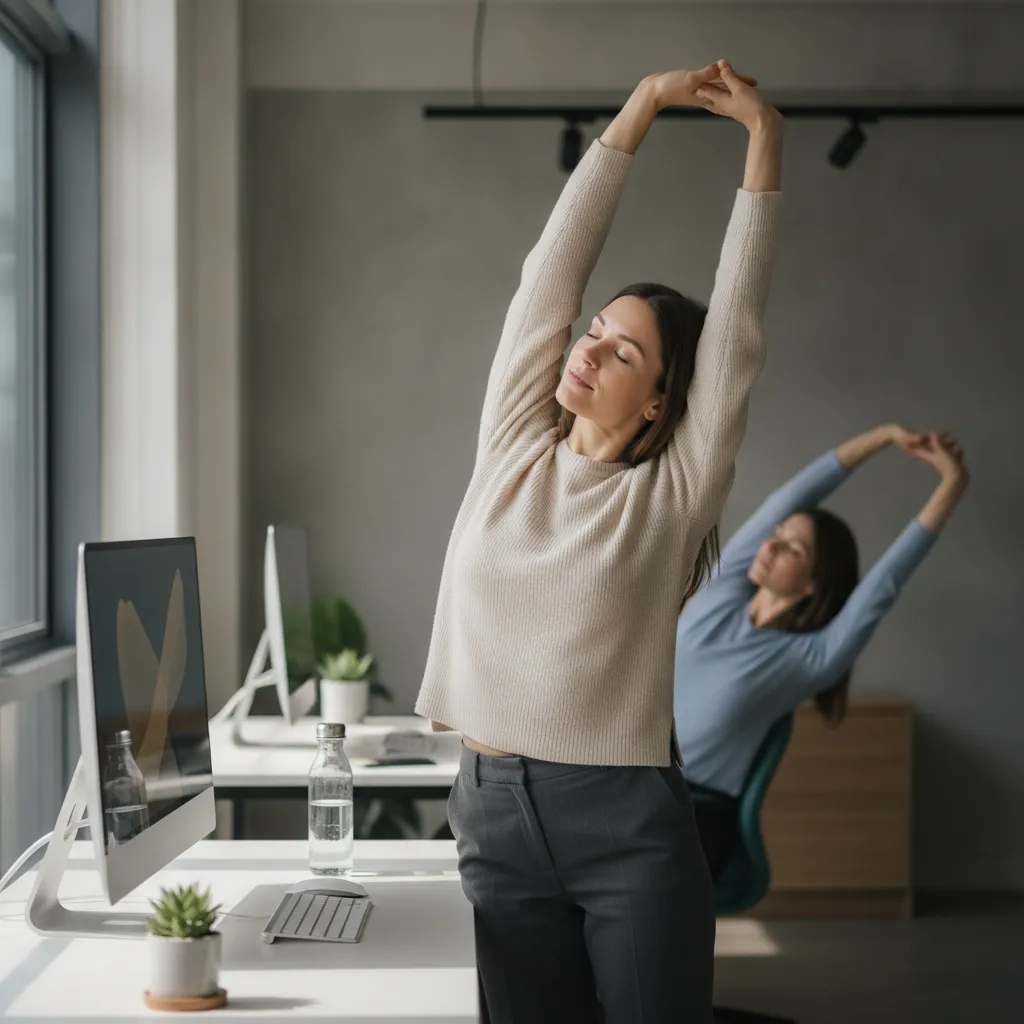
The Silent Epidemic of Desk Stiffness
In an era dominated by digital work, sitting has become the new smoking, according to health experts. The average office worker spends upwards of 8-10 hours per day seated, contributing to a widespread problem of musculoskeletal discomfort.
This sedentary lifestyle is a primary driver of chronic desk stiffness, manifesting most commonly in the neck, shoulders, and lower back. These areas bear the brunt of sustained, often poor, postural alignment.
Beyond immediate discomfort, prolonged sitting can lead to a host of serious health issues. These include increased risk of cardiovascular disease, type 2 diabetes, and certain types of cancer.
The static positions we adopt at our desks restrict blood flow, tighten muscles, and compress spinal discs. This often results in a feeling of rigidity, reduced flexibility, and persistent aches that can detract from both professional performance and personal well-being.
Many individuals unknowingly exacerbate the problem by holding tension in their bodies, especially during periods of high concentration or stress. This muscular bracing further limits natural movement and accelerates stiffness.
Recognizing the pervasive nature and serious implications of desk stiffness is the first crucial step. It highlights the urgent need for simple, actionable strategies to counteract the detrimental effects of our modern work habits.
Scientific Basis for Micro-Breaks
Research consistently demonstrates the negative physiological impact of prolonged uninterrupted sitting. Studies show a significant correlation between sedentary time and various health markers, including metabolic dysfunction and increased inflammation.
Conversely, incorporating short bouts of activity, even as brief as 1-2 minutes, has been shown to mitigate these risks. These 'movement snacks' act as crucial interruptions to the cascade of adverse effects initiated by immobility.
Evidence from exercise science and ergonomics supports the idea that regular micro-breaks improve circulation. Enhanced blood flow delivers oxygen and nutrients to tissues, helping to reduce muscle fatigue and alleviate stiffness.
Furthermore, movement signals to the brain that the body is active, leading to improved alertness and cognitive function. Shifting positions and performing light exercises can break through mental fog and boost concentration levels.
Many studies highlight how short bursts of activity can positively influence spinal health. They encourage the natural movement of spinal discs, improving nutrient exchange and reducing the cumulative pressure built up during static sitting.
The science is clear: our bodies thrive on movement. Integrating frequent, short periods of activity is not merely a suggestion, but a fundamental requirement for maintaining physical health and mental acuity in a desk-bound world.
Realistic Benefits of Daily Movement Snacks
One of the most immediate benefits of movement snacks is a tangible reduction in physical stiffness. Performing simple stretches or movements can quickly release tension in the neck, shoulders, and back, restoring a sense of ease.
Consistent integration of these micro-breaks significantly improves overall posture. By regularly reminding your body to move and reset, you can counteract the slumping and forward head posture commonly associated with desk work.
Beyond physical relief, movement snacks often lead to enhanced mental clarity and focus. Stepping away for even a minute can refresh your mind, helping you return to tasks with renewed concentration and efficiency.
Individuals who regularly practice movement snacks report decreased incidence of chronic pain. By preventing the accumulation of tension and promoting better circulation, these brief activities serve as a preventative measure against persistent aches.
Regular movement contributes to improved mood and reduced stress levels. Physical activity, however brief, releases endorphins, which have natural mood-boosting effects and can help alleviate work-related anxiety.
Over time, these small, consistent efforts build greater flexibility and mobility across major joints. This enhanced range of motion supports better physical function not only at your desk but also in all aspects of daily life.
Limits, Risks, and Misconceptions
Movement snacks are a valuable tool, but they are not a substitute for comprehensive physical activity. While they mitigate the harm of sitting, they do not replace the benefits of regular exercise, such as cardiovascular workouts or strength training.
A common misconception is that any movement is beneficial. While broad movement is good, performing movements incorrectly or with excessive force can lead to injury. Gentle, controlled movements are key.
It's crucial to listen to your body and avoid pushing into pain. If a particular movement causes discomfort, modify it or choose an alternative. Pain is a signal that something might be amiss.
Another pitfall is relying solely on static stretching. While static stretches have their place, dynamic movements are often more effective for breaking stiffness and promoting blood flow during short breaks.
Some might believe that movement snacks are time-consuming or disruptive. In reality, they are designed to be quick and unobtrusive, taking mere seconds or a minute or two, easily fitting into natural work pauses.
Finally, thinking that a single 'perfect' ergonomic setup negates the need for movement is a misunderstanding. Even with the best ergonomics, the human body still requires dynamic motion to function optimally and prevent stiffness.
Practical Protocol for Movement Snacks
Integrate simple neck rolls to release tension. Gently tilt your head side to side, then roll your chin towards your chest, slowly and smoothly. Avoid full circular rolls if you have neck sensitivity.
Perform shoulder shrugs and rolls. Elevate your shoulders towards your ears, hold briefly, then release. Follow this with gentle forward and backward shoulder circles to improve mobility.
Incorporate seated spinal twists. While seated, gently twist your upper body to one side, using your chair back for support if needed, and hold for a few seconds. Repeat on the other side to mobilize your spine.
Stretch your chest and open your shoulders. Clasp your hands behind your back and gently lift them away from your body, or simply extend your arms wide to open up the chest, countering the forward posture of typing.
Don't forget your lower body. Perform seated leg extensions, flexing and pointing your feet to activate calf muscles. Stand up and do a few calf raises or gentle hamstring stretches by propping one heel on a low surface.
For maximum benefit, alternate between upper body, core, and lower body movements. A varied approach ensures different muscle groups receive attention, preventing localized fatigue and stiffness.
Remember to breathe deeply throughout these movements. Conscious breathing enhances relaxation and helps to further release muscular tension. Aim for slow, controlled movements rather than rapid, jerky ones.
Timing, Dosage, and Adaptation Strategies
The ideal timing for movement snacks is frequent and regular. Aim for a short break every 30-60 minutes, even if it's just for 60 seconds. Consistency is far more impactful than intensity.
Consider a structured approach, like the '20-20-20 rule' adapted for movement: every 20 minutes, take 20 seconds to look at something 20 feet away, and add a quick body movement. This integrates eye breaks with physical ones.
The 'dosage' should be brief but effective. A 1-2 minute burst of movement is typically sufficient to break static posture, improve circulation, and refresh your mind without disrupting workflow significantly.
Listen to your body's signals for adaptation. If you feel particular stiffness in your lower back, prioritize movements like gentle pelvic tilts or standing lumbar extensions during your next snack.
Adapt your movement snacks to your environment and current tasks. If you're on a video call, simple neck movements or discreet stretches can be done without drawing attention. If you have more freedom, stand up and walk a few steps.
Vary your routine to prevent monotony and ensure comprehensive body engagement. Keep a mental or physical list of 3-5 different movement snacks and rotate them throughout the day to target different muscle groups.
Consider integrating short walking breaks, even if just to the kitchen or bathroom, as a form of movement snack. Any change in posture and location contributes to breaking sedentary patterns effectively.
Integrating Movement Snacks with Productivity Hub
Productivity Hub offers robust tools to help you consistently integrate movement snacks into your daily routine. The key is leveraging its features to create reminders and track your progress.
Utilize Productivity Hub tools ToDo to set recurring tasks for your movement snacks. Schedule a '5-Minute Stretch' or 'Desk Mobility Break' to pop up every hour or two, ensuring you don't forget to move.
The Productivity Hub tools Habits feature is ideal for building long-term consistency. Create a habit like 'Daily Movement Snacks' and mark it complete after each session, watching your streak grow.
Leverage Productivity Hub tools Data to track your adherence. Over time, you can review your completion rates and identify patterns, helping you understand when you're most likely to skip and adjust your strategy accordingly.
You can even use Productivity Hub tools AI to suggest varied movement snack routines based on your tracked activity and reported stiffness levels. This personalized approach keeps your routine fresh and targeted.
For more advanced users, tie specific movement snack protocols to different project types or work phases within Productivity Hub tools Settings. For instance, a more vigorous routine during intense focus periods, or gentler movements during lighter tasks.
By integrating your movement snack schedule directly into Productivity Hub, these essential breaks become an ingrained part of your workflow, just like any other critical task, ensuring consistent physical well-being.
Common Mistakes to Avoid
One common mistake is neglecting consistency. Performing movement snacks only when discomfort becomes severe is less effective than proactively integrating them throughout the day to prevent stiffness.
Ignoring pain signals is another critical error. Pushing through pain can lead to injury or exacerbate existing conditions. Always modify or stop a movement if it causes sharp or increasing discomfort.
Believing that a single 'big' stretch at the beginning or end of the day is enough is a misconception. While beneficial, it doesn't adequately counter the cumulative effects of hours of static posture.
Overcomplicating the movements can also lead to failure. Movement snacks should be simple, easy to remember, and quick to perform. Complex routines are less likely to be maintained consistently.
Failing to vary movements can result in neglecting certain muscle groups or boredom. Rotate between different exercises targeting the neck, shoulders, back, and even legs to ensure a holistic approach.
Comparing your movements to others is counterproductive. Everyone's body and flexibility are different. Focus on what feels good and beneficial for your own body, not on achieving an 'ideal' form.
Forgetting to hydrate is often overlooked. Proper hydration supports muscle and joint health, making movements more comfortable and effective. Drink water throughout the day, not just during breaks.
Mini Quantified Case Studies
Case Study 1: Sarah, a software developer, reported daily neck stiffness and headaches. After 3 weeks of 90-second movement snacks every hour (neck rolls, shoulder shrugs), her headache frequency dropped by 40% and neck discomfort was 'much less noticeable,' according to her self-reported data.
Case Study 2: Mark, a data analyst, experienced persistent lower back pain after lunch. By incorporating 2-minute standing stretches (gentle spinal twists, standing back extensions) every 45 minutes, he noted a 60% reduction in midday pain within a month, allowing him to focus better in the afternoons.
Case Study 3: Emily, a content creator, often felt lethargic and unfocused by mid-afternoon. Implementing 3-minute 'energy boost' movement snacks (arm circles, torso twists, calf raises) every 90 minutes led to a self-reported 25% increase in energy levels and sustained focus throughout her workday.
Case Study 4: David, an administrative assistant, struggled with stiff shoulders and limited range of motion. After 6 weeks of dedicated shoulder rolls and chest openers during his twice-hourly micro-breaks, his shoulder mobility, as measured by a simple reach test, improved by 15 degrees.
Case Study 5: Lisa, a project manager, frequently felt tense and irritable after long meetings. By using 1-minute seated meditation with gentle stretches (deep breathing, seated cat-cow) before and after each meeting, she reported a subjective decrease in stress by 30% and improved post-meeting clarity.
Frequently Asked Questions
Q: How long should a typical movement snack be? A: Ideally, a movement snack should last between 1 to 3 minutes. This duration is long enough to make a difference but short enough not to significantly disrupt your workflow.
Q: What if I don't have enough space at my desk? A: Many effective movement snacks can be done right at your desk, even in a small cubicle. Focus on seated stretches, neck rolls, shoulder movements, and discreet leg exercises.
Q: Can movement snacks help with existing pain? A: While they can significantly alleviate stiffness and reduce the intensity of mild pain, movement snacks are primarily preventative. For chronic or severe pain, consult a healthcare professional.
Q: Do I need special equipment? A: No, movement snacks require absolutely no special equipment. Your body weight and the immediate environment (like your chair or desk) are all you need.
Q: How often should I take a movement snack? A: Aim for a movement snack every 30 to 60 minutes. Establishing a consistent rhythm is more important than the exact frequency; the key is to avoid long periods of uninterrupted sitting.
Sources & References
- 1
- 2
- 3