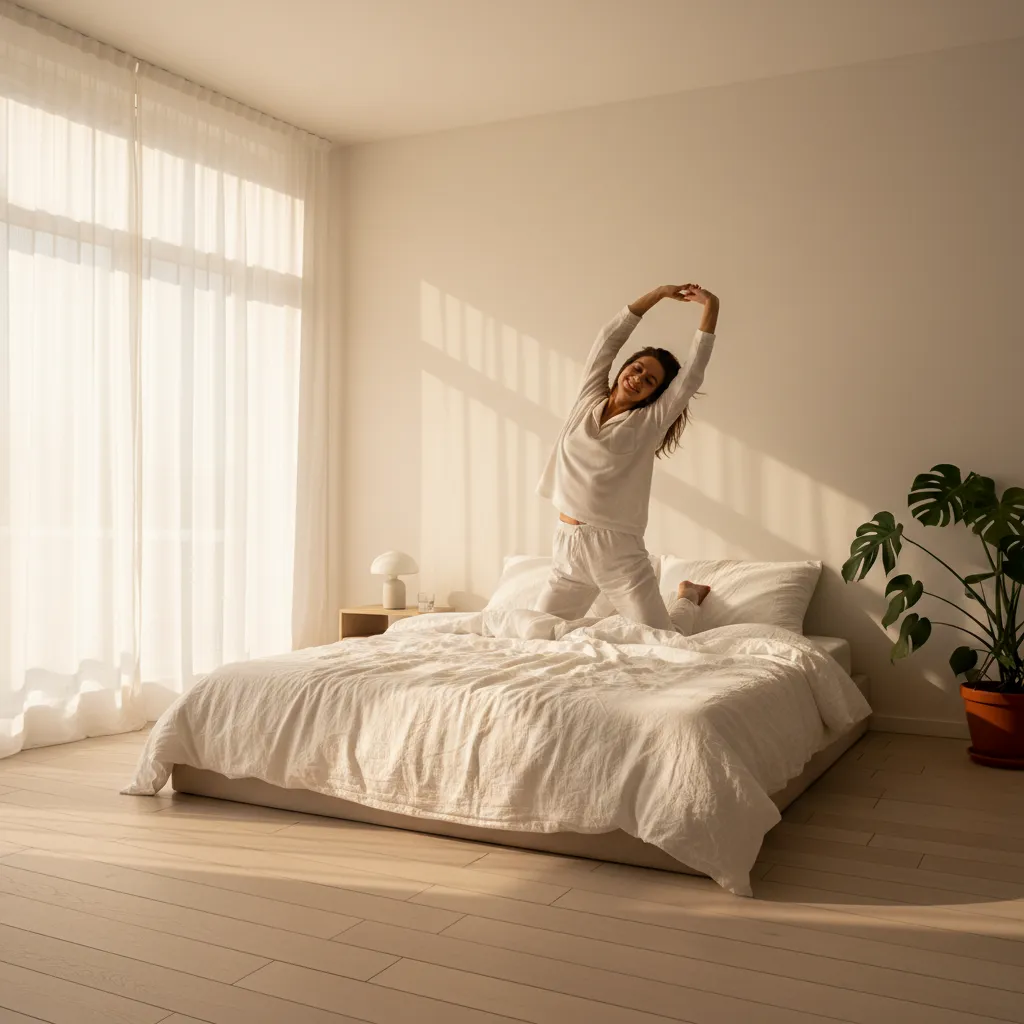
The Undeniable Link Between Light, Sleep, and Energy
Sleep is not merely a period of inactivity; it's an active, restorative process vital for every aspect of our health. Quality sleep directly influences cognitive function, emotional regulation, physical recovery, and metabolic health.
At the heart of sleep regulation lies our circadian rhythm, a roughly 24-hour internal clock that dictates when we feel awake and when we feel sleepy. This rhythm is profoundly sensitive to external cues, with light being the primary synchronizer.
Disruption of this rhythm, often due to irregular light exposure, can lead to a cascade of negative effects. These include difficulties falling asleep, fragmented sleep, reduced deep sleep, and chronic daytime fatigue.
Beyond sleep, light exposure directly impacts our energy levels and alertness throughout the day. Bright light exposure, particularly in the morning, signals wakefulness and boosts alertness, preparing us for cognitive tasks.
Conversely, inappropriate light exposure, especially from screens late at night, can suppress melatonin production, the hormone essential for signaling sleep. This directly impedes our ability to wind down and initiate restful sleep.
Understanding this intricate relationship between light, our internal clock, and our daily energy is the first step toward harnessing its power for improved well-being.
Scientific Foundations: How Light Regulates Your Inner Clock
The scientific basis for light's impact on sleep is rooted in its interaction with specialized photoreceptors in our eyes. These intrinsically photosensitive retinal ganglion cells (ipRGCs) are distinct from those used for vision.
These ipRGCs primarily detect blue-spectrum light and transmit signals directly to the suprachiasmatic nucleus (SCN) in the hypothalamus. The SCN is often referred to as the body's master clock.
The SCN then relays information to the pineal gland, which is responsible for producing melatonin. Exposure to bright light, especially blue light, inhibits melatonin production, signaling to the body that it is daytime.
Conversely, darkness stimulates melatonin release, which helps to induce drowsiness and prepare the body for sleep. This mechanism ensures our internal clock is synchronized with the natural cycle of day and night.
Research consistently demonstrates that individuals exposed to sufficient bright light during the day, and minimal light at night, exhibit stronger circadian rhythms, leading to improved sleep quality and duration.
Studies have also shown that specific wavelengths, particularly in the blue-green spectrum, are most potent in their effect on melatonin suppression and circadian phase shifting, highlighting the importance of light quality, not just intensity.
Realistic Benefits: More Than Just Feeling Less Tired
Mastering light exposure yields a spectrum of benefits far beyond merely reducing fatigue. Consistent, high-quality sleep profoundly impacts numerous physiological and psychological domains.
One significant benefit is enhanced cognitive function, including improved memory consolidation, sharper focus, and better problem-solving abilities. Optimal light exposure helps keep your brain alert during the day and fully restorative at night.
Mood stabilization is another critical outcome. A well-regulated circadian rhythm helps balance neurotransmitters, reducing instances of irritability, anxiety, and symptoms associated with seasonal affective disorder.
Physical recovery and performance also see marked improvements. Deep sleep, facilitated by proper light cues, is essential for muscle repair, hormone regulation, and overall cellular rejuvenation, leading to better physical output and faster recovery from exercise.
Furthermore, a strong circadian rhythm bolsters the immune system. Adequate sleep ensures the body can effectively produce and deploy immune cells, making you less susceptible to illness.
Ultimately, optimizing light exposure translates into a more energetic, resilient, and mentally acute self, capable of higher productivity and greater overall life satisfaction.
Limits, Risks, and Misconceptions About Light Exposure
While light is a powerful tool for sleep and energy, it's crucial to understand its limitations and potential risks. More light isn't always better, and the timing of exposure is paramount.
One common misconception is that any bright light is beneficial in the morning. While general brightness helps, certain wavelengths, particularly blue light, are most effective for circadian entrainment. However, prolonged direct exposure to extremely intense artificial light can cause eye strain or discomfort.
Another pitfall is assuming that simply dimming lights in the evening is sufficient. It's not just intensity but also the color temperature and type of light. Warm, orange-hued light is less disruptive than cool, blue-white light from electronics.
The idea that 'catching up' on sleep on weekends completely negates poor weekday habits is also flawed. While some recovery occurs, chronic circadian misalignment can still have cumulative negative health impacts that are not easily reversed.
Excessive use of blue light blocking glasses throughout the day can also be counterproductive. We need blue light during the day for alertness and mood regulation; blocking it unnecessarily can lead to lethargy and disrupt natural signaling.
Finally, individuals vary in their light sensitivity and chronotypes. What works perfectly for an early bird might need adjustment for a night owl, highlighting the need for personalized approaches rather than one-size-fits-all solutions.
A Practical Protocol for Daily Light Mastery
Implementing a strategic light exposure protocol can significantly improve your sleep and energy. Start by embracing morning light immediately upon waking.
Aim for 10-30 minutes of natural outdoor light within the first hour of waking. This powerful signal tells your body it's daytime, kickstarting your circadian rhythm and boosting alertness. Even on cloudy days, outdoor light is superior to indoor artificial light.
Maximize natural light exposure throughout your workday. Position your desk near a window, take short breaks outside, or even consider walking meetings. Midday natural light reinforces your wakefulness signals and improves focus.
As evening approaches, begin to gradually dim your indoor lighting. About 2-3 hours before bedtime, switch to warmer, lower-intensity lights. Avoid overhead bright lights and opt for lamps at eye level or lower.
Critically, minimize exposure to blue-rich light from screens (phones, tablets, computers, TVs) in the hours leading up to sleep. Use night shift modes or blue-light blocking glasses if screen time is unavoidable. You can track this habit using Productivity Hub tools Habits.
Create a sleep sanctuary that is as dark as possible. Use blackout curtains or an eye mask to block out all external light. Even a small amount of light can disrupt melatonin production and deep sleep cycles.
Timing, Dosage, and Adapting to Your Lifestyle
The 'dosage' and 'timing' of light exposure are not fixed; they require adaptation based on individual factors, chronotype, and seasonal changes. Consistency, however, is key for circadian stability.
For morning light, early birds might find 10 minutes sufficient, while night owls may benefit from 20-30 minutes to help advance their sleep phase. The goal is to receive direct, unfiltered light to the eyes, not through a window.
Seasonal variations demand adjustment. In winter, when natural light is scarce, consider using a light therapy lamp (10,000 lux) for 20-30 minutes in the morning. During summer, natural light is often plentiful.
When traveling across time zones, strategic light exposure becomes a powerful tool for combating jet lag. Expose yourself to light at your destination's daytime and avoid it at night to help quickly reset your clock.
Naps should be carefully timed to avoid disrupting nighttime sleep. Short power naps (20-30 minutes) are best taken in the early afternoon, ideally not after 3 PM. Avoid very dark rooms for naps to prevent deep sleep inertia.
Adaptation is an ongoing process. Use Productivity Hub tools Data to track your sleep metrics and energy levels, correlating them with your light exposure habits. This empirical feedback allows for personalized adjustments, refining your protocol for optimal results.
Integrating Light Strategies with Productivity Hub
Productivity Hub offers several integrated tools that can significantly support your efforts to master light exposure for better sleep and energy.
Utilize the Productivity Hub tools Habits feature to consistently track your morning light exposure, evening light reduction, and screen-time cutoff. Setting daily reminders can help ingrain these new routines.
The Productivity Hub tools Data dashboard can become your personalized lab. Log your subjective energy levels, mood, and sleep quality alongside your light exposure timings. Over time, you'll identify clear correlations and patterns.
By integrating data from wearable sleep trackers, you can monitor objective metrics like deep sleep duration, sleep latency, and wakefulness after sleep onset. Cross-reference this with your light exposure habits recorded in Productivity Hub.
Leverage the Productivity Hub tools AI insights. Input your personalized data and receive recommendations on optimal light exposure timings tailored to your chronotype and lifestyle, helping you make data-driven decisions.
You can also use the Productivity Hub tools ToDo feature to schedule specific 'light breaks' throughout your day. For instance, schedule a 15-minute outdoor walk at midday to maximize natural light during peak working hours. This systematic approach ensures light mastery becomes a seamless part of your daily productivity ecosystem.
Common Mistakes to Avoid in Your Light Environment
Even with good intentions, several common mistakes can undermine efforts to optimize light exposure for sleep and energy. Awareness is the first step toward correction.
One frequent error is relying on indoor light for morning wakefulness. While better than darkness, indoor artificial light, even bright office lights, is significantly less effective than natural outdoor light for stimulating the SCN.
Ignoring evening light pollution is another major pitfall. Many people dim their screens but leave bright overhead lights on until bedtime, negating efforts to signal sleep to the brain.
Inconsistent routines are also problematic. Sporadic morning light or varied bedtimes/wake times, even on weekends, can confuse your circadian clock, leading to persistent fatigue and fragmented sleep.
Not addressing indirect light sources in the bedroom, such as charging lights, alarm clock displays, or light peeking through curtains, can subtly disrupt sleep architecture and prevent truly deep recovery.
Over-reliance on caffeine or stimulants to combat daytime grogginess caused by poor light hygiene is a cycle that exacerbates the problem. These substances only mask the underlying issue, further disrupting natural sleep patterns.
Finally, failing to consider the color temperature of artificial lighting. Many modern LEDs emit a significant amount of blue light, even if they aren't screens. Opt for warmer, amber-toned bulbs in the evening.
Mini Quantified Case Studies: Real-World Impacts
Case Study 1: Sarah, Graphic Designer. Sarah struggled with evening restlessness and waking up groggy. After consistently getting 20 minutes of morning sunlight and using blue-light blocking glasses after 7 PM for 3 weeks, her sleep latency decreased by 18 minutes, and her reported morning grogginess improved by 40%.
Case Study 2: Mark, Remote Worker. Mark experienced a midday energy slump, often needing coffee after lunch. By moving his workspace closer to a window and taking a 15-minute outdoor walk at noon daily, he reported a 25% increase in afternoon focus and reduced his daily coffee intake by one cup.
Case Study 3: Elena, Shift Worker. While challenging, Elena, a nurse, focused on maximizing light during her wakeful periods and creating complete darkness for sleep. She utilized a strong light therapy lamp upon waking from night shifts and achieved a 15% increase in total sleep duration on her recovery days.
Case Study 4: David, Student. David found himself easily distracted and prone to procrastination. By implementing a strict 'no screens 2 hours before bed' rule and ensuring morning light exposure, he noted a 30% improvement in study concentration and felt less anxious before exams.
Case Study 5: Olivia, Executive. Olivia's sleep was shallow, evidenced by frequent awakenings. After ensuring her bedroom was completely dark with blackout curtains and removing all light-emitting devices, her deep sleep percentage increased by an average of 10%, leading to significantly improved morning alertness.
Frequently Asked Questions About Light and Sleep
Q: Can I get morning light through a window? A: While some light penetrates glass, windows filter out much of the beneficial blue light wavelengths crucial for circadian signaling. For optimal effect, step outside, even for just a few minutes.
Q: How do naps fit into a light-optimized routine? A: Keep naps short (20-30 minutes) and take them in the early afternoon (before 3 PM). Avoid very dark nap environments, as this can induce deeper sleep and make waking up harder, contributing to sleep inertia.
Q: Does screen brightness on my phone matter as much as blue light? A: Both matter. High brightness can be disruptive regardless of blue light, but blue light itself is a potent melatonin suppressor. Use night mode and dimness settings simultaneously in the evening.
Q: Are light therapy lamps effective, and when should I use one? A: Yes, 10,000-lux full-spectrum light therapy lamps are highly effective, especially in regions with limited natural sunlight or for individuals with Seasonal Affective Disorder. Use them for 20-30 minutes shortly after waking in the morning.
Q: What about night lights or bathroom lights during the night? A: Aim for the lowest possible intensity, amber or red-toned light if you must use a light at night. Blue and white light can quickly interrupt melatonin production, even during brief awakenings.
Sources & References
- 1
- 2
- 3