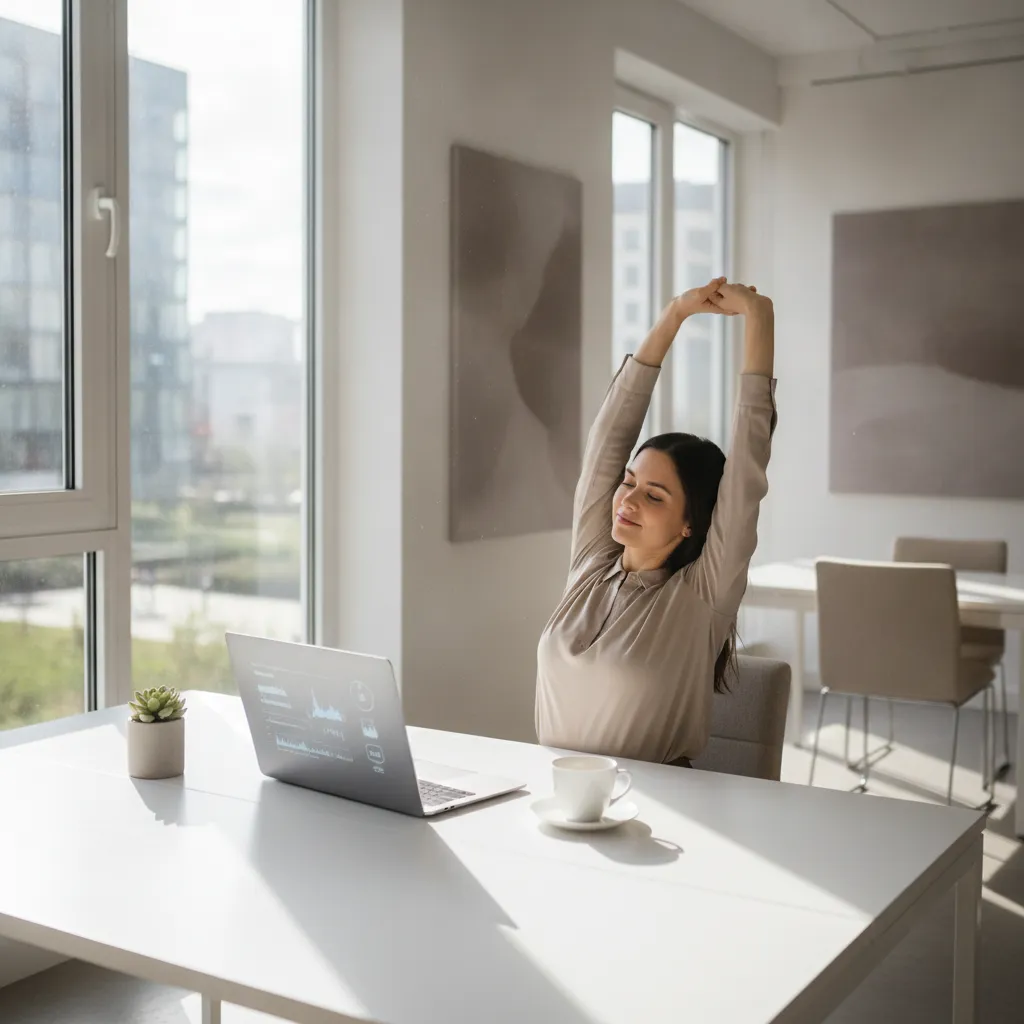
The Science Behind Movement Snacks and Micro-Breaks
Contemporary ergonomic research strongly advocates for regular movement breaks to counteract the deleterious effects of prolonged sitting. The human body is designed for movement, not sustained static positions.
A systematic review published in the British Journal of Sports Medicine highlighted the significant benefits of breaking up prolonged sitting with short bouts of light activity. These interventions were shown to improve markers of metabolic health and reduce musculoskeletal discomfort.
Specifically, studies on "movement snacks" demonstrate their efficacy in improving blood flow, reducing muscle fatigue, and increasing flexibility. Even a few minutes of targeted stretching can make a noticeable difference.
Neuroscience also supports these breaks by showing that brief physical activity can enhance cognitive function and reduce mental fatigue. A quick stretch not only benefits the body but also sharpens the mind.
Research from institutions like Cornell University's Ergonomics program provides clear guidelines on the importance of varied postures and short, frequent breaks. They emphasize that no single "perfect" posture exists, but rather a dynamic approach to sitting and standing.
These findings underscore that prevention is key. Integrating simple, short stretches throughout the day is a scientifically supported strategy to maintain physical health and optimize desk-based work.
Tangible Gains from a Minimal Time Investment
The primary and most immediate benefit is a significant reduction in stiffness and discomfort in common problem areas like the neck, shoulders, and lower back. This relief is often felt within days of consistent practice.
Improved posture is another key outcome. By gently elongating muscles and increasing joint mobility, these stretches help realign the spine and encourage a more upright, natural sitting or standing position.
Enhanced circulation throughout the body is a direct result of movement. This can reduce feelings of sluggishness, combat cold hands and feet, and even improve oxygen delivery to the brain.
Mentally, these short breaks act as reset buttons. They can alleviate mental fatigue, improve focus, and reduce stress levels, leading to a more productive and pleasant workday.
Long-term, consistent implementation of these micro-breaks contributes to the prevention of chronic musculoskeletal conditions. It's an investment in enduring physical health that pays dividends over years.
Users often report increased energy levels and a greater sense of well-being. Moving even a little makes you feel more alive and less confined by your workstation.
Understanding the Boundaries and Avoiding Pitfalls
One common misconception is that stretching is a cure-all for severe pain or existing injuries. While beneficial for prevention, these stretches are not a substitute for professional medical advice or physical therapy for acute conditions.
Stretching should never cause sharp pain. If you experience discomfort beyond a mild stretch sensation, stop immediately. Pushing through pain can exacerbate existing issues or create new ones.
Another limit is that these stretches alone cannot fully counteract an otherwise completely sedentary lifestyle outside of work. They are part of a holistic approach to physical health, not a standalone solution.
The "2-minute" timeframe refers to a targeted intervention; it doesn't mean two minutes is sufficient for your entire day's physical activity. It complements, rather than replaces, longer exercise sessions.
While generally safe, individuals with certain medical conditions, like osteoporosis, herniated discs, or recent surgeries, should consult their doctor before starting any new exercise routine, including simple stretches.
It's important to differentiate between active stretching for mobility and passive stretching for flexibility. Our focus here is on dynamic movement to break static postures, not holding deep stretches for extended periods.
The 2-Minute Desk Stretch Protocol: Step-by-Step
This simple protocol targets the neck, shoulders, upper back, and wrists - common areas of desk-related tension. Each movement should be performed slowly and with control, breathing deeply throughout.
Neck Tilts (30 seconds): Gently drop your right ear towards your right shoulder, holding for 10-15 seconds. Repeat on the left side. Feel a stretch along the opposite side of your neck.
Shoulder Rolls (30 seconds): Roll your shoulders up towards your ears, then back and down in a circular motion. Perform 5-7 repetitions forward, then reverse for 5-7 repetitions backward.
Chest Opener (30 seconds): Interlace your fingers behind your back or grasp opposite elbows. Gently lift your arms away from your body, expanding your chest. Hold for 15-20 seconds.
Upper Back Twist (30 seconds): While seated, place your right hand on your left knee and gently twist your torso to the left, looking over your left shoulder. Hold for 10-15 seconds and repeat on the other side.
Wrist & Forearm Stretch (30 seconds): Extend one arm straight forward, palm facing down. With your other hand, gently pull your fingers back towards your body for 15 seconds. Then, extend your arm palm up and gently pull fingers down for 15 seconds. Repeat on the other arm. It can be easily tracked using Productivity Hub tools Habits to ensure consistency and reinforce good practices.
Optimizing Your Movement Snacks for Maximum Impact
The "2-minute" duration is a guideline; the key is consistency. Aim to perform this full sequence at least 2-3 times throughout your workday. Many find success by doing it once every 2-3 hours.
Consider integrating these stretches around natural breaks, such as before starting a new task, after a long meeting, or during a short pause between focused work blocks. This helps make it a habit.
Adapt the stretches to your body's needs. If one area feels particularly tight, you might spend an extra 10-15 seconds on that specific stretch, ensuring comfort and efficacy.
For those with standing desks, many of these stretches can be performed while standing, adding a dynamic element. Simply adjust the Chest Opener or Upper Back Twist accordingly.
Listen to your body. Some days you might feel more flexible, other days less so. Adjust the intensity and range of motion to what feels good and beneficial, avoiding any strain.
You can also split the 2-minute routine into even smaller "micro-micro-breaks." For instance, perform just the neck tilts during a phone call, or the wrist stretches while waiting for a file to load.
Productivity Hub tools AI can even suggest optimal times for these breaks by analyzing your work patterns, helping you seamlessly weave movement into your day without disrupting flow.
Integrating Movement into Your Productivity Workflow
Productivity Hub offers several features that can help you consistently implement the 2-minute desk stretch protocol. Making it a habit is key, and our tools are designed to support that.
Utilize Productivity Hub tools Habits to schedule and track your stretch sessions. You can set daily reminders to perform the 2-minute routine at specific intervals, building a consistent practice.
Create a custom "Desk Stretch" habit, assigning it a target frequency of 2-3 times per day. The visual tracking helps reinforce your progress and motivates continued engagement.
For an even more structured approach, integrate a "Stretch Break" item into your daily schedule using Productivity Hub tools ToDo. This ensures it's accounted for within your planned work blocks.
Productivity Hub tools Data allows you to monitor the impact of your consistency. Track how regularly you perform the stretches and correlate it with self-reported levels of stiffness or discomfort over time.
In future updates, Productivity Hub tools AI might even offer personalized stretch recommendations or intelligent reminders based on your posture detection or active work periods. This would further optimize your break strategy.
By leveraging these integrated features, you transform a simple suggestion into an actionable, trackable, and beneficial part of your daily productivity routine, enhancing both well-being and output.
Pitfalls to Avoid for Effective Stretching
One common mistake is rushing through the stretches or using jerky movements. Each movement should be slow, controlled, and deliberate to allow muscles to gently lengthen and avoid injury.
Holding your breath is another frequent error. Remember to breathe deeply and continuously throughout each stretch. Proper breathing enhances relaxation and helps your muscles release tension.
Ignoring discomfort or pushing into pain is detrimental. A stretch should feel like a gentle pull, not a sharp, stabbing sensation. If it hurts, ease up or stop entirely.
Neglecting consistency limits effectiveness. Doing the 2-minute stretch once a week will yield minimal results. The power lies in its regular, frequent application throughout the workday.
Forgetting hydration is often overlooked. Muscles and connective tissues need water to remain supple and function optimally. Ensure you're drinking enough water throughout the day.
Thinking of these stretches as a "chore" rather than a beneficial break can diminish their impact. Approach them as a moment of self-care and a proactive step for your physical health.
Real-World Impact: Small Changes, Big Results
Case Study 1: Sarah, Graphic Designer. Sarah reported chronic neck and shoulder tension after 6+ hours at her computer daily. After consistently implementing the 2-minute protocol twice daily for three weeks, she noted a 40% reduction in daily stiffness and significantly fewer tension headaches.
Case Study 2: Mark, Project Manager. Mark struggled with lower back discomfort, particularly after long meetings. Integrating the desk stretches, especially the upper back twist and chest opener, every two hours led to a 25% improvement in his back comfort within a month. He also felt more energized post-meetings.
Case Study 3: Emily, Content Creator. Emily experienced "tech neck" symptoms and wrist fatigue. By focusing on the neck tilts and adding the wrist stretches multiple times a day, her wrist pain decreased by 50% and her overall neck mobility improved, according to her self-assessments over two months.
Case Study 4: David, Software Engineer. David initially doubted the efficacy of such short breaks. However, after using Productivity Hub tools Habits to remind him for six weeks, he observed an unexpected benefit: improved focus during deep work sessions, attributing it to the mental reset provided by the physical breaks.
These examples illustrate that even minimal, consistent effort in integrating simple movement snacks can lead to measurable improvements in comfort, well-being, and even cognitive performance for desk-bound professionals.
Frequently Asked Questions About Desk Stretches
Q: Can I do these stretches while standing? A: Absolutely! Many of these stretches, especially neck tilts, shoulder rolls, and chest openers, are easily adaptable for standing. The upper back twist can also be performed standing with a slight modification, or you can find an alternative standing torso twist.
Q: How often should I do the 2-minute routine? A: For optimal results, aim for 2-3 times per workday. Listen to your body; if you feel particularly stiff, a fourth session won't hurt. Consistency is more important than volume.
Q: What if I don't have 2 minutes all at once? A: You can break it down further. Do the neck and shoulder stretches in one minute, and the chest/back/wrist stretches in another. Even 30 seconds of targeted movement is better than none.
Q: Will these stretches prevent carpal tunnel syndrome? A: While wrist stretches can help reduce wrist fatigue and improve circulation, which might reduce risk factors, they are not a guaranteed prevention for carpal tunnel syndrome. Proper ergonomics, regular breaks, and professional medical advice for symptoms are crucial.
Q: Can I do these stretches if I have an existing injury? A: If you have an existing injury or chronic pain condition, it is always best to consult with a healthcare professional, such as a doctor or physical therapist, before starting any new exercise or stretching regimen. They can provide personalized guidance.
Sources & References
- 1
- 2
- 3