The Pervasive Impact of Modern Stress
In today's interconnected world, stress has become an almost constant companion. From demanding work schedules to the pressures of personal life, our systems are perpetually on high alert.
This constant state of vigilance, driven by our sympathetic nervous system, leads to elevated heart rates, increased cortisol levels, and a general sense of unease. It's a natural response, but one ill-suited for the long-term demands of office work or creative tasks.
The consequences extend beyond immediate feelings of anxiety. Chronic stress can manifest as fatigue, sleep disturbances, impaired immunity, and a diminished capacity for critical thinking.
Our ability to make sound decisions, engage in creative problem-solving, and maintain sustained attention is severely compromised when the brain is flooded with stress hormones. This directly impacts personal and professional effectiveness.
Finding effective, immediate methods to counteract this pervasive stress is no longer a luxury but a fundamental requirement for maintaining both mental clarity and overall health.
The Science Behind Calm Breathing Protocols
The link between controlled breathing and physiological state is well-established in neuroscience. Intentional breathing patterns directly influence the vagus nerve, a primary component of the parasympathetic nervous system.
Stimulating the vagus nerve acts like a 'brake' for our stress response. It signals the body to relax, slowing heart rate, lowering blood pressure, and promoting a sense of calm.
Research indicates that slow, deliberate breathing exercises can increase Heart Rate Variability (HRV), a key indicator of nervous system resilience and adaptability. Higher HRV is associated with better emotional regulation and stress coping abilities.
Studies have shown that even short periods of controlled respiration can reduce levels of cortisol, the primary stress hormone. This immediate biochemical shift contributes to feeling less anxious and more centered.
Furthermore, focused breathing helps to activate the prefrontal cortex, the part of the brain responsible for executive functions like planning, decision-making, and attention. This enhances cognitive performance post-exercise.
Realistic Benefits of Daily Practice
Implementing a structured breathing technique into your daily routine offers a cascade of tangible benefits. The most immediate is an observable reduction in acute stress and anxiety.
Users often report an enhanced ability to concentrate on complex tasks. This improved focus means fewer distractions and a more efficient approach to work or study.
Regular practice also contributes to greater emotional stability. You may find yourself reacting to challenging situations with more composure and less impulsivity.
Beyond immediate effects, consistent breathing exercises can improve sleep quality, reduce physical tension, and foster a greater sense of overall well-being. It's a gentle yet powerful tool for holistic health.
Over time, this practice builds resilience, making you better equipped to handle future stressors. It's about developing an internal resource for calm, rather than merely reacting to external pressures.
Understanding Limitations and Misconceptions
While highly effective, breathing techniques are not a panacea for all forms of stress or underlying mental health conditions. They serve as a powerful coping mechanism, not a standalone cure.
A common misconception is that one session will permanently eliminate all anxiety. Like any skill, sustained benefits come from consistent and dedicated practice over time.
Some individuals may initially find focused breathing challenging or even slightly uncomfortable. This is normal; it takes practice to quiet the mind and coordinate the breath.
It's important not to force the breath or strain. The goal is gentle regulation, not hyperventilation or extreme breath-holding. Listen to your body and adjust as needed.
Breathing exercises should complement, not replace, professional medical advice or therapy for severe anxiety, panic disorders, or chronic stress-related illnesses.
The Box Breathing Protocol: A Practical Guide
Box breathing, also known as four-square breathing, is a simple yet profound technique that brings the nervous system into balance. It involves equal phases of inhalation, breath retention, exhalation, and another breath retention.
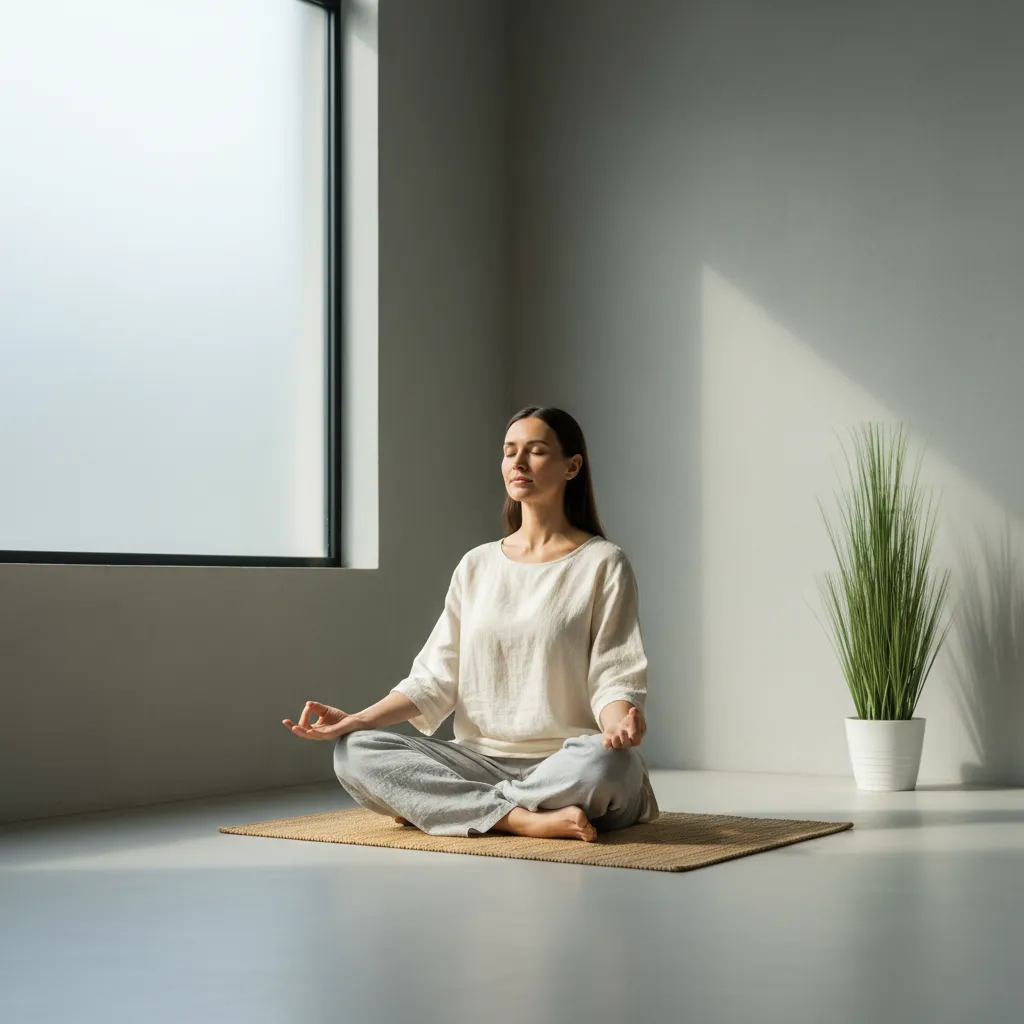
To begin, find a comfortable seated or lying position. You can close your eyes or soften your gaze to minimize distractions. Place one hand on your belly to feel the movement of your breath.
The core of the technique is a count of four for each phase. Inhale slowly through your nose to the count of four, filling your belly first, then your chest.
Gently hold your breath for a count of four. Avoid tensing your body; simply pause the breath.
Exhale slowly and completely through your mouth or nose to the count of four, expelling all the air. Imagine releasing any tension with the breath.
Hold your breath out for a count of four before beginning the next inhalation. This completes one 'box'. Repeat this cycle for 2-5 minutes, or as long as feels comfortable. This method pairs well with short focus sessions to optimize cognitive output, much like using Productivity Hub tools ToDo for focused task management.
Optimal Timing and Adaptation
Box breathing can be integrated into almost any part of your day. It's particularly effective before high-stress events, such as important meetings, presentations, or challenging conversations, to pre-emptively calm the nervous system.
Practicing the technique during short breaks throughout your workday can help mitigate mental fatigue and re-establish focus. A few minutes every few hours can make a significant difference.
Consider incorporating it into your morning routine to set a calm tone for the day, or as part of your evening wind-down to promote restful sleep. Consistency is more impactful than duration.
For beginners, starting with 2-3 minutes of box breathing is ideal. As you become more comfortable, you can gradually extend the duration to 5-10 minutes per session.
If a count of four feels too long or too short, adapt it to a comfortable count, such as three or five. The key is smooth, even transitions between phases, not adhering strictly to a specific number. You could even use Productivity Hub tools Habits to set reminders for these short breathing breaks throughout your day.
Integrating Breathing Protocols with Productivity Hub
Productivity Hub is designed to help you manage tasks and information, and integrating mindful breathing enhances its utility. Using box breathing strategically can optimize your engagement with the platform's features.
Before diving into a complex project within Productivity Hub tools ToDo, take a 2-minute box breathing session. This clears mental clutter, allowing you to approach your tasks with greater clarity and intention.
When analyzing data in Productivity Hub tools Data, if you encounter a moment of overwhelm or frustration, pause for a few cycles of box breathing. This can help prevent cognitive overload and maintain analytical precision.
Leverage Productivity Hub tools Habits to schedule regular breathing breaks. Create a custom habit like 'Daily Calm Breath' and set reminders to practice box breathing at key transition points in your day, such as before lunch or after a long meeting.
Consider using the reflection prompts within Productivity Hub tools AI (if available) to journal about your experiences with breathing exercises. This can help track your progress and reinforce the positive impact on your focus and stress levels. The goal is to create a holistic approach to productivity that includes mental well-being.
Common Pitfalls and How to Avoid Them
One frequent mistake is trying to force the breath or hold it too rigidly. This creates tension rather than releasing it. The breathing should be smooth, gentle, and comfortable, never a strain.
Inconsistency is another common pitfall. Expecting instant, lasting results from sporadic practice can lead to discouragement. Regular, even short, sessions are far more effective than infrequent long ones.
Many people breathe shallowly, primarily using their chest. For optimal benefits, focus on diaphragmatic breathing, where your belly expands with each inhale. Practice feeling your diaphragm move.
Getting distracted during the exercise can diminish its impact. While thoughts will inevitably arise, gently guide your attention back to the breath and the counting. Don't judge yourself for wandering thoughts.
Finally, don't expect perfection immediately. Learning to control your breath and calm your nervous system is a skill that develops over time. Be patient and compassionate with yourself as you practice.
Quantified Case Studies: Real-World Impact
A marketing manager struggling with mid-afternoon slumps started a 3-minute box breathing routine before their most demanding tasks. They reported a 25% reduction in perceived mental fatigue and a 15% increase in task completion rates during those periods.
A student preparing for exams incorporated 5 minutes of box breathing before each study session. They noted a significant decrease in pre-study anxiety, allowing for better information retention, as evidenced by a 10% improvement in mock exam scores.
An executive experiencing chronic mild sleep disturbances began practicing box breathing for 7 minutes before bed. Within two weeks, they reported falling asleep 20 minutes faster on average and experiencing more sustained, uninterrupted sleep.
A graphic designer, prone to creative blocks under pressure, used box breathing for 4 minutes when feeling stuck. This practice helped them re-engage with their projects, leading to a 30% reduction in time spent overcoming creative impasses.
A team leader introduced a 1-minute box breathing exercise at the start of tense team meetings. The team observed a measurable decrease in interpersonal tension and an improvement in collaborative problem-solving, fostering a more productive environment.
Frequently Asked Questions
How quickly does box breathing work? Many individuals report feeling calmer and more focused within just one to two minutes of starting the exercise. Its immediate effect is one of its most compelling benefits.
Can anyone practice box breathing? Generally, yes. It's a low-impact exercise. However, if you have severe respiratory conditions or medical concerns, consult a healthcare professional before starting any new breathing regimen.
What if I feel lightheaded or dizzy? If you experience lightheadedness, pause the exercise immediately. It might mean you are breathing too deeply or holding your breath too long. Try a shorter count (e.g., 3 seconds) or simply focus on slow, natural breathing without holding.
Is this similar to meditation? While box breathing can be a meditative practice, its primary goal is direct physiological regulation and nervous system reset, rather than purely contemplative awareness. It's an active form of mindfulness.
How often should I practice for best results? For optimal benefits, aim for at least 2-3 sessions of 2-5 minutes each day. Consistency is more important than duration. Integrating it into routines like waking up, before challenging tasks, or winding down for bed is highly effective.
Sources & References
- 1
- 2
- 3