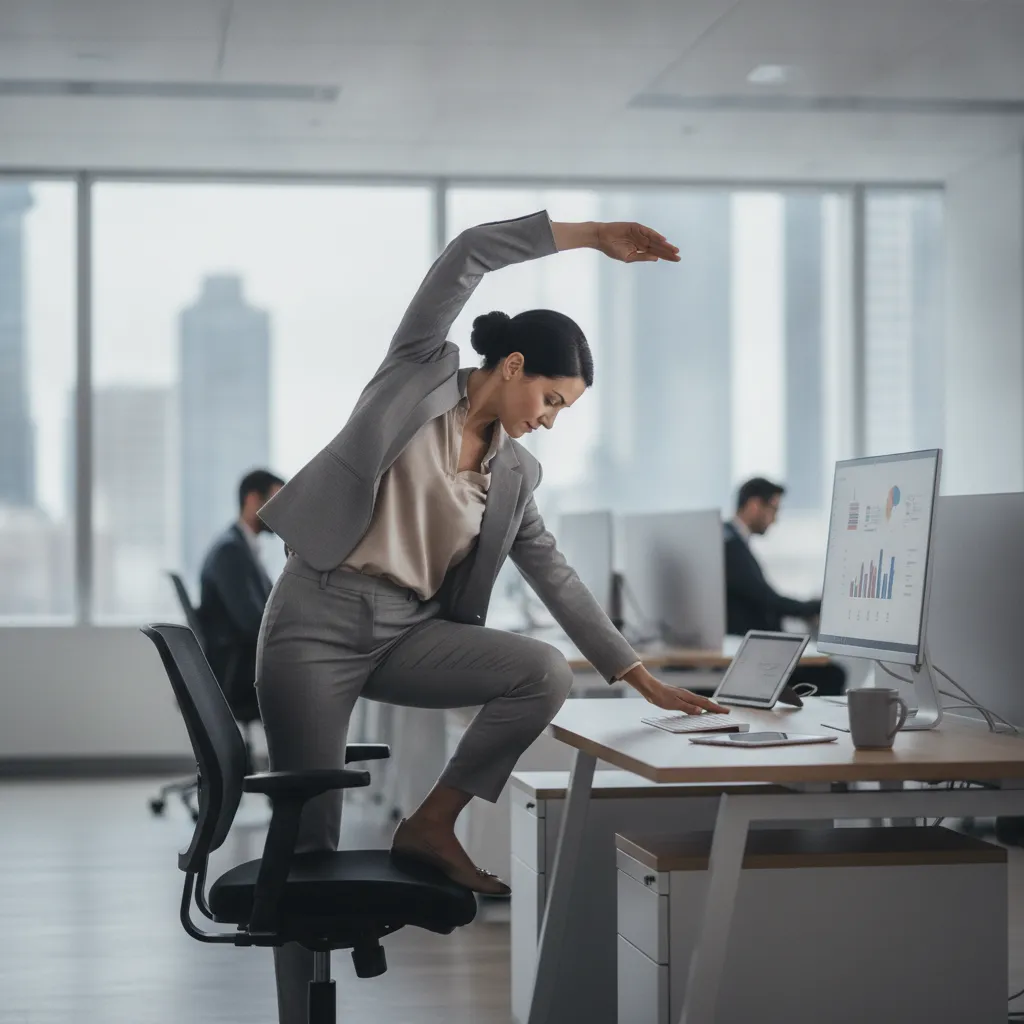
Why Desk Stretches Are Essential for Modern Professionals
The average office worker spends over eight hours a day seated, often in front of a computer screen. This extensive static posture is fundamentally at odds with our body's natural need for movement.
Prolonged sitting compresses the spinal discs, strains the neck and shoulder muscles, and can lead to tightening in the hips and hamstrings. This contributes directly to chronic discomfort.
Reports indicate a significant rise in musculoskeletal disorders among office workers, with neck and back pain being among the most prevalent complaints. These issues reduce comfort and concentration.
Beyond localized pain, a sedentary lifestyle is a known risk factor for various serious health conditions, including cardiovascular disease, type 2 diabetes, and certain cancers. Integrating movement mitigates these risks.
The impact extends to mental well-being too. Physical discomfort and inactivity can contribute to increased stress, reduced mood, and decreased cognitive function, affecting overall work performance.
Desk stretches offer a practical, immediate solution to combat these negative effects without disrupting your workflow significantly. They are a proactive step towards a healthier, more productive workday.
By consciously interrupting long periods of sitting with simple movements, professionals can maintain better physical health and sustain higher energy levels throughout their demanding schedules.
The Scientific Basis for Movement Snacks and Desk Mobility
Research consistently demonstrates the detrimental effects of prolonged sedentary behavior on human physiology. Studies published in journals like the British Journal of Sports Medicine highlight the increased mortality risk associated with excessive sitting.
Conversely, incorporating short bouts of physical activity, even as little as 1-5 minutes, can significantly counteract these risks. These 'movement snacks' help to reactivate muscles and improve blood flow.
Physiologically, stretching helps to increase circulation to muscles and joints, delivering vital oxygen and nutrients while aiding in the removal of metabolic waste products. This reduces stiffness and promotes healing.
Studies on office workers show that regular micro-breaks incorporating light movement or stretching lead to a reported decrease in musculoskeletal pain and an improvement in perceived energy levels. Participants also often report enhanced mood.
From a neurological perspective, moving activates different neural pathways, which can break cycles of mental fatigue and improve focus. A brief stretch can be a powerful cognitive reset.
Evidence supports that even mild physical activity can positively influence posture by gently lengthening shortened muscles and strengthening weak ones. This helps the body find a more natural alignment.
The concept of 'movement snacks' is backed by exercise physiology, emphasizing that cumulative short bursts of activity are valuable, not just prolonged exercise sessions.
Realistic Benefits of Integrating Desk Stretches
One of the most immediate and noticeable benefits is a significant reduction in stiffness and discomfort in the neck, shoulders, and back. Many users report feeling less 'locked up' after just a few sessions.
Regular stretching helps to improve overall posture. By gently releasing tension in tight muscles, your body can naturally settle into a more upright and aligned position, reducing slumping.
Integrating movement throughout the day can dramatically boost your energy levels and combat feelings of fatigue. A brief stretch can act as a natural pick-me-up, refreshing both mind and body.
Improved physical comfort often translates directly into enhanced focus and concentration. When you are not distracted by aches and pains, your cognitive resources are freed up for tasks at hand.
Desk stretches can also serve as a practical stress-reduction technique. The act of mindful movement and deep breathing during a stretch can help to calm the nervous system and alleviate mental tension.
Over time, consistent engagement with these micro-breaks can contribute to the prevention of chronic pain conditions often associated with office work, supporting long-term physical health.
Ultimately, these simple practices lead to an improved overall sense of well-being, making your workday more comfortable, productive, and less physically demanding.
Limits, Risks, and Common Misconceptions
It's crucial to understand that desk stretches are a supportive measure, not a complete replacement for regular physical exercise. They complement, rather than substitute, comprehensive fitness routines.
Improper form during stretching can be counterproductive and even lead to injury. Always perform stretches gently, without bouncing, and stop if you feel any sharp pain.
A common misconception is that effective stretching requires significant time. In reality, even 30-second micro-breaks performed consistently can yield positive results.
Overstretching or forcing a stretch beyond your natural range of motion can damage muscles or connective tissues. Listen to your body and avoid pushing into pain.
While beneficial, desk stretches alone may not resolve underlying medical conditions such as severe herniated discs or chronic inflammatory diseases. Consult a healthcare professional for persistent pain.
Another misconception is that one should only stretch when experiencing pain. Proactive, preventative stretching is far more effective at maintaining comfort and flexibility.
These stretches are designed for general well-being and flexibility. Individuals with specific injuries or mobility limitations should seek guidance from a physical therapist before starting any new routine.
Practical Protocol: Simple Desk Stretches You Can Do Today
Neck Tilts: Gently tilt your right ear towards your right shoulder, holding for 15-20 seconds. Repeat on the left side. Keep your shoulders relaxed and avoid shrugging.
Shoulder Rolls: Roll your shoulders forward in a circular motion for 5-10 repetitions, then reverse the direction, rolling backward. This helps release tension in the upper back and neck.
Chest Opener: Interlace your fingers behind your back (or grasp opposite elbows). Gently lift your arms away from your body, opening your chest and drawing your shoulder blades together. Hold for 20-30 seconds.
Wrist and Forearm Stretch: Extend one arm straight out with your palm facing down. Use your other hand to gently pull your fingers back towards your body until you feel a stretch in your forearm. Repeat with the palm facing up. This is particularly useful for those using a keyboard and mouse extensively.
Seated Spinal Twist: Sit tall with both feet flat on the floor. Twist your torso to the right, placing your right hand behind you and your left hand on your right knee. Hold for 20-30 seconds, then repeat on the left side. Remember to breathe deeply during the stretch.
Hip Flexor Stretch (Seated): Scoot to the front of your chair. Extend one leg straight back behind you, keeping your hips squared forward. You should feel a gentle stretch in the front of your hip. Hold for 20-30 seconds per side. These simple movements can be recorded and tracked for consistency within your Productivity Hub tools Habits.
Timing, Dosage, and Adapting to Your Workday
The most effective way to incorporate desk stretches is to treat them as 'movement snacks' throughout your day. Aim for short bursts of activity rather than one long stretching session.
A good rule of thumb is to take a 2-5 minute movement break every 60-90 minutes of seated work. Set a reminder if necessary to establish consistency.
Consider integrating specific stretches before or after certain activities. For example, a neck stretch before a virtual meeting or a chest opener after a long writing session can be beneficial.
Each stretch typically requires 15-30 seconds of hold time, performed 1-3 times per side. The total duration of a movement snack should feel refreshing, not exhausting.
Listen to your body and adapt the stretches to your specific needs. If a particular area feels tighter, dedicate a bit more time to it. If a stretch causes discomfort, modify or omit it.
To aid in establishing a routine, consider using the Productivity Hub tools Habits feature to schedule your stretch breaks. This can help create a consistent pattern, ensuring you integrate movement effortlessly into your daily rhythm.
Integrating Movement with Productivity Hub
Productivity Hub offers several features that can seamlessly integrate your desk stretch routine into your workday, transforming intention into consistent action.
Utilize the Productivity Hub tools Habits to set up recurring reminders for your movement snacks. You can customize the frequency and timing, ensuring you receive timely prompts to stand up and stretch.
Track your consistency and progress using Productivity Hub tools Data. Logging your daily stretch breaks can provide valuable insights into your adherence and help reinforce positive behavior.
For more structured planning, schedule your 'movement breaks' directly within Productivity Hub tools ToDo. Treat these breaks as essential tasks that contribute to your overall well-being and productivity.
Leverage Productivity Hub tools AI for personalized recommendations. As you track your activities, the AI can suggest optimal break times or specific stretches tailored to your typical work patterns and reported needs.
You can even set up custom notifications to remind you to hydrate or adjust your posture alongside your stretch breaks, creating a holistic wellness routine managed within one platform.
By actively using these tools, you transform a good intention into a managed, measurable habit, ensuring that desk stretches become a natural and integrated part of your productive day.
Common Mistakes to Avoid for Effective Stretching
Rushing the Stretch: Many people rush through stretches, failing to hold them for long enough to allow the muscles to lengthen. Aim for a slow, sustained hold of at least 15-20 seconds per stretch.
Holding Your Breath: Holding your breath creates tension throughout the body. Remember to breathe slowly and deeply during each stretch, allowing oxygen to reach your muscles and promoting relaxation.
Ignoring Pain Signals: Stretching should feel like a gentle pull, not sharp pain. If you experience any pain, ease out of the stretch immediately. Pushing through pain can lead to injury.
Inconsistency: The benefits of desk stretches are cumulative. Performing them sporadically will yield limited results. Consistency is key to improving flexibility and reducing stiffness over time.
Improper Form: Performing stretches with incorrect form can be ineffective or even harmful. Pay attention to the instructions and ensure you're targeting the intended muscle groups safely.
Over-relying on Stretches Alone: While beneficial, desk stretches are only one component of a healthy lifestyle. Neglecting regular exercise, proper nutrition, and adequate sleep will limit their overall effectiveness.
Only Stretching When in Pain: Waiting until discomfort sets in means you're being reactive rather than proactive. Integrate stretches preventatively to maintain flexibility and avoid pain altogether.
Mini Quantified Case Studies: Real-World Impact
Sarah, a Software Developer: After integrating three 5-minute movement breaks into her 8-hour workday, Sarah reported a 40% reduction in daily neck stiffness within two weeks. Her self-assessed concentration improved by 15% in the afternoons.
Mark, a Project Manager: Mark, who previously experienced persistent lower back discomfort, started performing seated spinal twists and hip flexor stretches every hour. He noted a 30% decrease in pain intensity and felt less fatigued by end-of-day meetings, as tracked by his wellness journal.
A Remote Customer Service Team: A small pilot program with a team of six customer service representatives introduced mandatory desk stretches every 90 minutes. Employee surveys indicated a 25% improvement in overall mood and a 20% reduction in self-reported tension headaches over a month-long period.
Dr. Anya Sharma's Study: Dr. Sharma's preliminary research involving a group of administrative staff revealed that consistent micro-breaks with targeted stretches correlated with a 10% increase in typing speed and a 5% decrease in error rates, suggesting improved focus and reduced physical distraction.
Freelancer Cohort Data: A group of 20 freelancers who adopted a structured desk stretch routine reported an average increase of 1.5 hours of 'focused work time' daily. They attributed this to reduced physical discomfort and enhanced mental clarity derived from their short, regular movement sessions.
Frequently Asked Questions About Desk Stretches
How often should I stretch at my desk? It is generally recommended to take a 2-5 minute movement break every 60-90 minutes of continuous sitting. Consistency is more important than duration.
Are these stretches enough for my daily exercise? No, desk stretches are supplementary. They combat the negative effects of prolonged sitting but do not replace the cardiovascular and strength benefits of a dedicated exercise routine.
What if I feel pain during a stretch? Immediately ease out of the stretch if you experience any sharp or intense pain. Stretching should feel like a gentle pull, not discomfort. Consult a healthcare professional if pain persists.
Can desk stretches help with headaches? Yes, many tension headaches originate from tight muscles in the neck and shoulders. Regular neck and shoulder stretches can help alleviate this tension, potentially reducing headache frequency and intensity.
How long until I see results? While some individuals experience immediate relief from stiffness, significant improvements in posture and chronic discomfort typically require consistent practice over several weeks. Tracking your progress can help visualize the benefits.
Sources & References
- 1
- 2
- 3