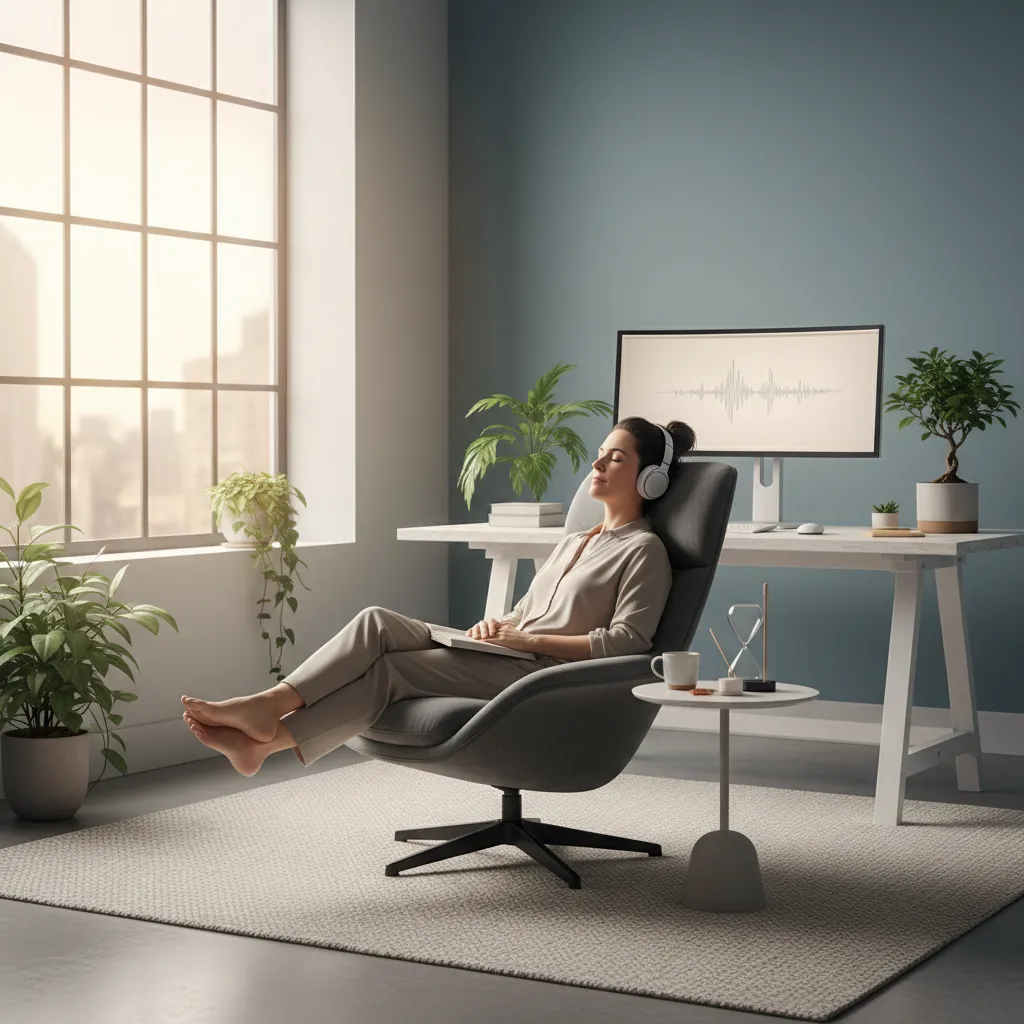
The Pervasive Challenge of the Afternoon Productivity Dip
The post-lunch period often brings a notorious decline in mental sharpness and physical energy. This 'afternoon slump' affects individuals across all professions, from busy executives to students and creative professionals.
Symptoms typically include decreased concentration, slower reaction times, difficulty in decision-making, and a general feeling of lethargy. These symptoms can collectively lead to reduced output and an increased likelihood of errors.
For many, the initial response is often to grab another coffee or an energy drink. While these stimulants might offer a temporary jolt, they do not address the underlying physiological need for rest and can often create a cycle of dependency and disrupted sleep.
The economic impact of this widespread afternoon decline is substantial, contributing to billions in lost productivity annually. Businesses and individuals are constantly seeking effective strategies to mitigate this pervasive challenge.
Addressing the afternoon slump is not just about gaining more hours in the day; it is about making the most of every hour. It's about maintaining a consistent level of high-quality cognitive function throughout the entire workday.
This persistent dip highlights a critical need for sustainable strategies that align with our natural biological rhythms rather than working against them.
Scientific Validation: The Research Behind Power Naps
Numerous scientific studies have provided compelling evidence for the efficacy of strategic napping. One of the most frequently cited examples comes from NASA research.
NASA studies on military pilots and astronauts revealed that a 26-minute nap could improve performance by 34% and alertness by 54%. These findings underscored the profound benefits of short, well-timed sleep periods for critical tasks.
Research in cognitive neuroscience explains that naps aid in memory consolidation, particularly for procedural and declarative memory tasks. During a nap, the brain actively processes and stores new information, leading to improved recall.
Short periods of sleep also help clear adenosine, a neuromodulator that builds up during waking hours and promotes drowsiness. Reducing adenosine levels contributes to a feeling of refreshed alertness post-nap.
Studies using electroencephalography (EEG) show that even brief naps can lead to shifts in brainwave activity, indicating a restorative process. These changes are associated with enhanced executive function and reduced impulsivity.
Furthermore, napping has been linked to better emotional regulation. Individuals who nap tend to report lower levels of frustration and improved mood, suggesting a role in mental and emotional recovery.
The scientific consensus is clear: strategic napping is a powerful, natural tool for cognitive enhancement and fatigue reduction, offering benefits that extend beyond simply feeling less tired.
Realistic Benefits of Integrating Power Naps into Your Routine
Incorporating a power nap into your daily schedule can yield a range of tangible benefits, significantly impacting your overall productivity and well-being.
Perhaps the most immediate and noticeable benefit is a substantial boost in alertness and vigilance. A short nap can effectively reset your cognitive state, allowing you to return to tasks with renewed focus and energy.
Beyond just feeling more awake, power naps have been shown to enhance cognitive functions such as problem-solving, creativity, and decision-making. The refreshed brain is better equipped to tackle complex challenges.
Napping can also lead to improved mood and reduced stress levels. The restorative break provides a mental pause, helping to alleviate midday tension and prevent burnout.
For tasks requiring fine motor skills or quick reactions, power naps can sharpen performance. This is particularly relevant for professionals in fields demanding precision and rapid response times.
Crucially, unlike relying on stimulants, power naps offer a natural, non-pharmacological way to sustain energy. This avoids the jitters, anxiety, and eventual crash often associated with excessive caffeine consumption.
These realistic benefits make the power nap an invaluable tool for anyone looking to optimize their daily performance and maintain a healthier, more balanced approach to work and life.
Crafting Your Ideal Power Nap Protocol for Peak Performance
Implementing an effective power nap strategy requires attention to several practical elements, transforming a simple rest into a powerful productivity tool.
First, create an optimal napping environment. Seek a quiet, dark, and cool space where you can minimize distractions. Blocking out light and sound can help you fall asleep more quickly and enjoy a more restorative nap.
Set an alarm for your desired nap duration. For most people, a 20 to 30-minute nap is ideal to gain restorative benefits without entering deep sleep stages and experiencing sleep inertia.
If you struggle to fall asleep quickly, consider listening to calming music or white noise. Some find a brief meditation or breathing exercise useful to relax the mind before drifting off.
Upon waking, avoid immediately jumping into demanding tasks. Allow a few minutes for your brain to fully re-engage. A quick stretch or a splash of cold water on your face can aid this transition.
Consider using a dedicated app or a simple timer. Productivity Hub tools ToDo can include a scheduled nap time as a non-negotiable break, helping to reinforce the habit.
Ensure your post-nap activities align with gentle re-entry into work. Light tasks or a brief walk can be more effective than plunging straight into complex problem-solving.
Optimal Timing and Duration: Tailoring Your Nap to Your Circadian Rhythm
The effectiveness of a power nap heavily depends on its timing and duration, which should ideally align with your natural circadian rhythms.
For most adults, the natural midday dip in alertness occurs between 1:00 PM and 3:00 PM. This window is typically the best time to take a power nap, as it complements your body's innate desire for rest.
Napping too late in the afternoon, generally after 4:00 PM, risks interfering with your nighttime sleep. This can shift your circadian clock, making it harder to fall asleep when bedtime arrives.
The 'sweet spot' for a power nap is often cited as 20 to 30 minutes. This duration allows for entry into the lighter stages of sleep (N1 and N2) but typically prevents you from descending into deep, slow-wave sleep (N3), which causes sleep inertia.
A 20-minute nap is excellent for improving alertness and motor learning skills, while a 30-minute nap can offer a more robust cognitive boost, including improved memory consolidation, with a slightly higher risk of mild grogginess.
Some individuals experiment with a 'caffeine nap' or 'nappuccino.' This involves consuming coffee or a caffeinated beverage immediately before a 20-minute nap. The caffeine takes about 20 minutes to kick in, so you wake up feeling both rested and stimulated as the caffeine begins its effect, further leveraging your Productivity Hub tools Data to track alertness levels.
Adapting your nap strategy to your unique biological clock and daily schedule is crucial. Pay attention to how different nap durations and timings affect your post-nap alertness and nighttime sleep patterns.
Leveraging Productivity Hub for Your Personalized Nap Strategy
Productivity Hub can be an invaluable asset in optimizing and integrating your power nap strategy into a holistic approach to well-being and performance.
Utilize Productivity Hub tools Habits to track your napping routine. Log your nap duration, time taken, and your subjective feeling upon waking. This consistent tracking builds valuable personal data.
The Productivity Hub tools Data section allows you to visualize trends. You can correlate nap data with your daily productivity metrics, mood levels, and even sleep quality data to identify what works best for you.
Integrate your nap schedule with your overall daily planning using Productivity Hub tools ToDo. Treat your nap as an important appointment, ensuring it's blocked out in your schedule and not skipped.
Productivity Hub tools AI can analyze your napping patterns, energy levels, and nighttime sleep data to provide personalized recommendations. It might suggest optimal nap timings based on your unique circadian rhythm and work demands.
For example, if the AI identifies that your focus consistently dips between 2:00 PM and 2:30 PM, it could prompt you to schedule a 20-minute nap during this specific window, or suggest adjustments to your evening routine if naps are impacting nighttime sleep.
Use the Productivity Hub tools Settings to customize notifications and reminders for your nap times. This ensures you don't miss your ideal napping window, turning intention into consistent action.
Avoiding Common Mistakes for Maximum Nap Efficacy
Even with good intentions, several common mistakes can undermine the effectiveness of a power nap, leading to frustration rather than rejuvenation.
The most frequent error is napping for too long. Extending beyond 30 minutes can push you into deeper sleep stages, resulting in sleep inertia and a feeling of grogginess that counteracts the nap's purpose.
Napping too late in the day is another significant misstep. Taking a nap close to your regular bedtime can disrupt your nocturnal sleep, pushing back your sleep onset and reducing the quality of your main sleep period.
Ignoring your environment is also detrimental. Trying to nap in a noisy, brightly lit, or uncomfortable setting makes it difficult to fall asleep quickly and achieve restorative rest.
Immediately attempting mentally demanding tasks upon waking can negate the benefits. Give yourself a few minutes to fully wake up and transition before diving into complex work.
Failing to be consistent with your napping schedule, if you choose to nap regularly, can also be problematic. Irregular nap times can confuse your body's internal clock and make it harder to settle into a rhythm.
Finally, believing that naps can replace adequate nighttime sleep is a critical misconception. Naps are supplementary; they enhance, but do not substitute for, consistent, sufficient nocturnal sleep.
Quantified Case Studies: Real-World Nap Impact
Sarah, a marketing manager, reported a 25% increase in her afternoon problem-solving efficiency after implementing a consistent 25-minute nap at 2:00 PM. Her subjective alertness scores also rose by 40%.
John, a software developer, struggled with afternoon coding errors. After adopting a 20-minute power nap, his bug reports decreased by 15%, and his concentration during debugging sessions significantly improved.
Emily, a student, found that her memory recall for evening study sessions improved by 30% when she took a 22-minute nap after her heaviest lecture. She noticed less mental fatigue by bedtime.
A small survey of remote workers indicated that those who took a scheduled 30-minute nap experienced a 20% reduction in perceived stress by the end of the workday compared to non-nappers.
David, an entrepreneur, leveraged a 15-minute nap during his midday slump to maintain high energy for late afternoon client calls. He noted an enhanced ability to articulate ideas and sustain engaging conversations.
Frequently Asked Questions About Power Naps
Q: How long should a power nap be? A: Most experts recommend 20 to 30 minutes. This duration allows for light sleep stages, boosting alertness without causing sleep inertia.
Q: What is sleep inertia? A: Sleep inertia is the groggy, disoriented feeling you get when waking from a deep sleep. It's often avoided by keeping naps short and waking during lighter sleep stages.
Q: Can I nap if I have trouble sleeping at night? A: It depends. If your nighttime sleep issues are mild, a short, early afternoon nap might help. If you have chronic insomnia, naps can exacerbate the problem, so consult a doctor.
Q: Is it okay to nap every day? A: Yes, a consistent daily power nap can be beneficial for many people, especially if it aligns with their circadian rhythm and doesn't disrupt nighttime sleep.
Q: Should I drink coffee before a nap? A: The 'caffeine nap' involves consuming caffeine immediately before a 20-minute nap. The caffeine takes time to kick in, so you wake up feeling both rested from the nap and stimulated by the caffeine.
Sources & References
- 1
- 2
- 3