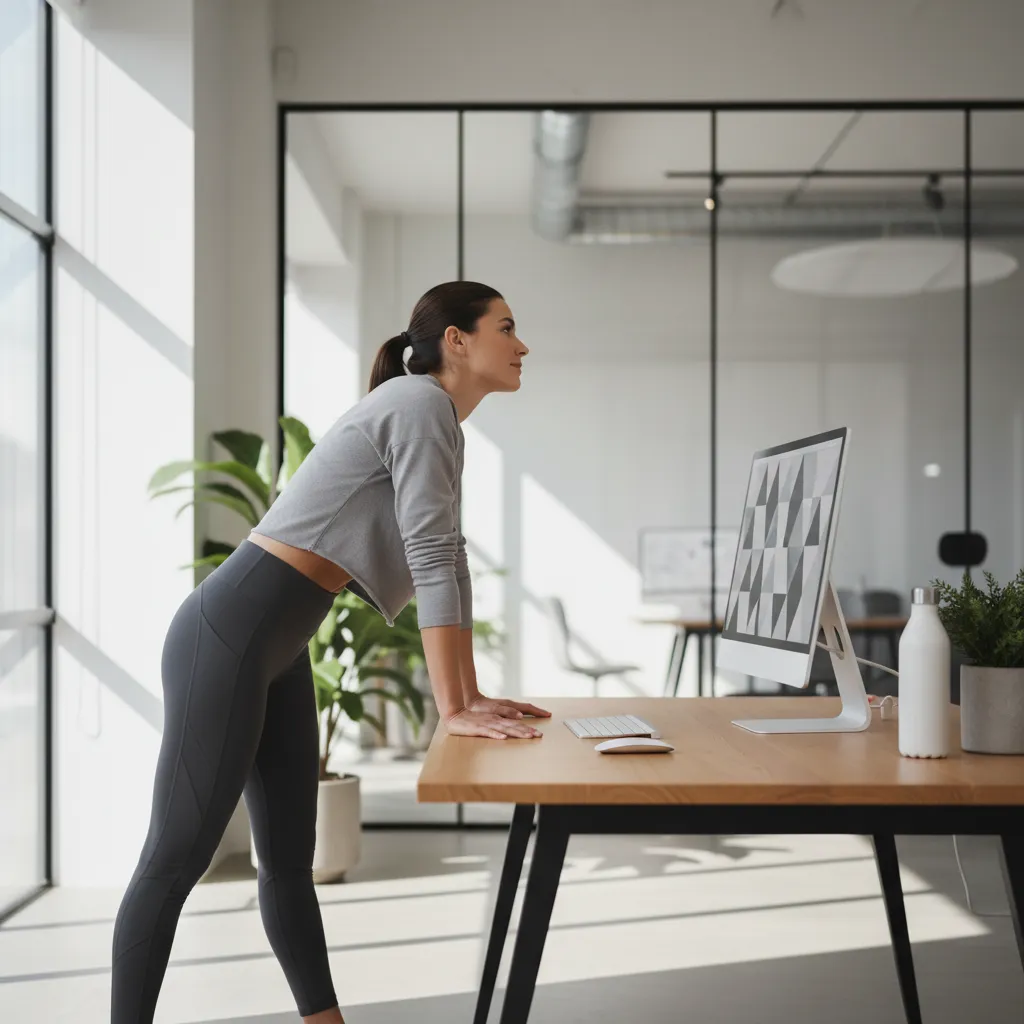
Why the 2-Minute Desk Break Matters More Than Ever
The modern professional environment increasingly necessitates long periods of seated work, a departure from the more active lifestyles of previous generations. This shift has inadvertently created a new public health challenge: the prevalence of sedentary behavior.
Sitting for extended durations has been linked to a surprising array of health complications. These include an elevated risk of heart disease, type 2 diabetes, certain cancers, and significantly, chronic musculoskeletal disorders affecting the back, neck, and shoulders.
Beyond the major health concerns, persistent immobility leads to immediate discomforts. Muscles tighten, joints stiffen, and blood circulation slows, causing that familiar ache in the neck, tension in the shoulders, and an overall feeling of lethargy.
Crucially, the impact isn't solely physical. Our cognitive performance suffers when we remain static. Sustained concentration without breaks can lead to mental fatigue, decreased alertness, reduced problem-solving abilities, and even diminished creativity.
Traditional solutions, such as attempting a full workout before or after work, often fail to address the fundamental problem of prolonged sedentary periods during the day itself. These isolated bursts of activity, while beneficial, do not fully counteract hours of immobility.
This is where the concept of frequent, short movement breaks becomes vital. These micro-breaks are specifically designed to interrupt long stretches of sitting, providing immediate relief and proactive prevention against the cumulative stress on the body and mind.
Understanding the profound and pervasive effects of prolonged sitting underscores why even a two-minute intervention can be a game-changer for daily productivity and long-term health.
The Science Behind Movement Snacks and Cognitive Boosts
Extensive research illuminates the profound effects of sedentary behavior. Studies consistently show a direct correlation between prolonged sitting and increased mortality risk, even among individuals who engage in regular exercise.
However, the good news is that interrupting these sedentary periods, even briefly, can significantly mitigate these risks. Research published in journals like the British Journal of Sports Medicine highlights the benefits of 'activity snacks' for metabolic health and energy expenditure.
From a musculoskeletal perspective, micro-breaks work by promoting blood flow to stiff muscles and joints. This increased circulation helps deliver essential nutrients and oxygen while clearing metabolic waste products that accumulate during static postures, reducing tension and discomfort.
Furthermore, the cognitive benefits of short movement breaks are well-documented. A change in physical posture and a moment of gentle activity can serve as a powerful mental reset, improving attention span and focus upon returning to tasks.
Neuroscientific studies suggest that even brief physical activity can enhance brain function by increasing the production of neurotransmitters associated with mood and cognitive processing. This leads to improved mood, reduced stress levels, and better decision-making capabilities.
Specific movements, such as gentle neck stretches and shoulder rolls, have been shown in occupational health studies to significantly reduce the incidence and severity of neck and shoulder pain among office workers. These small actions prevent the accumulation of strain.
The evidence is clear: incorporating short, regular movement breaks into the workday is not merely a suggestion for comfort but a scientifically supported strategy for optimizing both physical health and mental acuity.
Realistic Benefits You Will Experience
Implementing a two-minute desk break throughout your day offers a tangible array of immediate and long-term benefits that directly improve your work experience and overall well-being.
One of the most immediate effects is a noticeable reduction in physical stiffness and discomfort. Those nagging aches in your neck, shoulders, and lower back begin to dissipate as you regularly move and stretch, preventing tension from building up.
Improved blood circulation is another swift benefit. Standing and performing simple movements helps to pump blood more efficiently throughout your body, including to your brain. This enhanced blood flow can reduce feelings of sluggishness and promote alertness.
Cognitively, these short breaks act as a mental palate cleanser. Stepping away for two minutes allows your brain to briefly disengage from a task, returning with renewed focus and clarity. This can help overcome mental blocks and enhance problem-solving skills.
Over time, consistent micro-breaks contribute significantly to the prevention of long-term musculoskeletal issues. By regularly varying your posture and moving your joints, you reduce the chronic strain that can lead to conditions like repetitive strain injury or persistent back pain.
Many individuals report increased overall energy levels throughout the workday. Instead of experiencing the typical afternoon slump, regular movement helps to maintain a more consistent energy curve, keeping you feeling refreshed and productive for longer.
Finally, these small acts of self-care can also positively influence mood and stress levels. Taking a deliberate pause signals to your body that you are attending to its needs, fostering a sense of control and reducing the physiological markers of stress.
Limits, Risks, and Common Misconceptions
While highly beneficial, it's important to approach two-minute desk breaks with realistic expectations and an understanding of their limitations. These breaks are a valuable tool but not a panacea for all health issues.
A primary misconception is that these micro-breaks can replace regular, moderate-to-vigorous exercise. They cannot. While they mitigate the negative effects of prolonged sitting, they do not provide the cardiovascular or strength-training benefits of dedicated workouts.
Another common pitfall involves improper execution. Overstretching, forcing movements, or ignoring existing pain can lead to injury. All movements should be gentle, controlled, and within a comfortable range of motion, never causing sharp or increasing discomfort.
The most frequent barrier is the belief that 'there isn't enough time.' However, two minutes is a remarkably short period, easily found within any hour. The perception of being too busy often stems from a lack of prioritization or a misunderstanding of the benefits.
Some may believe that simply having a standing desk is sufficient. While standing desks are excellent for varying posture, prolonged standing can also lead to its own set of issues, such as foot pain or varicose veins. Even with a standing desk, movement breaks are essential.
Initially, you might feel self-conscious or awkward performing stretches in an open office environment. This is a normal reaction. However, focusing on your health and recognizing that many colleagues likely share similar discomforts can help overcome this hesitation.
It is crucial to remember that individual needs vary. What feels good for one person might not be ideal for another. Listen to your body and adapt the movements to suit your specific comfort levels and physical condition.
Practical Protocol: Your 2-Minute Desk Break Routine
The core principle of the two-minute desk break is light, intentional movement that targets common areas of stiffness without requiring specialized equipment or significant space. The goal is to gently mobilize your joints and muscles.
Begin with gentle neck rolls. Slowly drop your chin towards your chest, then roll your ear towards one shoulder, holding briefly, before returning to the center and repeating on the other side. Avoid full circular rolls that can strain the neck.
Next, perform shoulder shrugs and rolls. Lift your shoulders towards your ears, hold for a second, then release. Follow this by rolling your shoulders forward in a circular motion, then backward, to release tension in the upper back and neck.
Incorporate torso twists, which can be done seated or standing. If seated, place one hand on the opposite knee and gently twist your upper body, looking over your shoulder. If standing, gently rotate your torso from side to side, keeping your hips relatively stable.
Don't forget your wrists and fingers. Extend one arm forward with your palm facing down, then gently pull your fingers back towards your body for a wrist extension stretch. Reverse this for a wrist flexion stretch. Clench and release your fists to keep finger joints mobile.
Finally, include ankle rotations. While seated, lift one foot slightly and gently rotate your ankle in circles, both clockwise and counter-clockwise. This improves circulation in your lower legs and prevents stiffness from prolonged foot immobility.
Throughout this two-minute sequence, focus on deep, mindful breathing. Inhale slowly through your nose and exhale fully through your mouth. This enhances relaxation and oxygen uptake, maximizing the restorative effect of your break. Users of Productivity Hub can even set a quick timer in Productivity Hub tools ToDo to ensure consistency.
Timing, Dosage, and Adapting the Routine
The optimal frequency for these micro-breaks is every 30 to 60 minutes. While every hour is a good starting point, adjusting to every 45 or 30 minutes, especially during intense work periods, can yield even greater benefits.
The 'dosage' of two minutes is a sweet spot: long enough to make a physiological difference, but short enough to feel manageable and avoid disrupting workflow significantly. Some days you might extend it to three minutes, other days one minute might suffice.
Adapting the routine to your specific work environment is key. In an open-plan office, subtle stretches like neck rolls, wrist rotations, or seated torso twists are easily performed without drawing excessive attention.
For those with a private office or working from home, the possibilities expand to include standing stretches, walking briefly around the room, or even light calisthenics. The principle remains: interrupt immobility with intentional movement.
Consider integrating these breaks into your existing workflow. For instance, take a break after completing a major task, before starting a new meeting, or during a natural pause in your email processing. This helps create a natural habit trigger.
Progression can involve gradually introducing new movements or holding stretches slightly longer as your body becomes more accustomed. Listen to what your body needs on any given day; some days might require more neck focus, others more back mobility.
Ultimately, the goal is consistency. Even if you miss a break, simply resume at the next opportunity. Remember, small, consistent efforts compound over time, leading to significant improvements. Productivity Hub tools Habits can be invaluable for establishing and maintaining this consistent schedule.
Integrating Micro-Breaks with Productivity Hub
Productivity Hub offers several features that can seamlessly integrate and enhance your two-minute desk break routine, turning a good intention into a consistent habit.
You can easily set up recurring reminders for your breaks using the Productivity Hub tools ToDo feature. Create a daily task labeled '2-Minute Movement Break' set to repeat every 60 minutes, prompting you to stand up and move.
For a more robust habit-building approach, utilize Productivity Hub tools Habits. Create a custom habit for 'Desk Mobility' and track its completion throughout your workday. This visual tracking can reinforce consistency and provide a sense of accomplishment.
To understand the impact of your breaks, leverage Productivity Hub tools Data. You can log when you take breaks and later correlate this with your energy levels or self-reported focus. Over time, this data can reveal patterns and optimize your break schedule.
Consider using Productivity Hub tools Settings to customize notification sounds or visual cues for your break reminders. A gentle, non-disruptive alert can serve as a subtle nudge without interrupting your flow aggressively.
In the future, Productivity Hub tools AI could potentially offer personalized break suggestions based on your logged activity, identifying periods of intense focus or prolonged sitting and recommending specific movements to address anticipated stiffness.
By leveraging these integrated features, Productivity Hub transforms the often-overlooked micro-break from an afterthought into a central component of your overall productivity and well-being strategy. It makes adherence simple and data-driven.
Common Mistakes to Avoid for Optimal Results
Even with the best intentions, certain pitfalls can diminish the effectiveness of your two-minute desk breaks. Being aware of these common mistakes can help you maximize the benefits.
The most prevalent mistake is skipping breaks when deadlines loom or workloads are heavy. This is precisely when breaks are most crucial for maintaining focus and preventing burnout. Prioritize them as non-negotiable.
Performing stretches too aggressively or forcing movements beyond a comfortable range is counterproductive. This can strain muscles, joints, or ligaments, leading to injury rather than relief. Always prioritize gentle, controlled movements.
Many people instinctively reach for their phone or check social media during a break. This defeats the purpose of a mental reset. The break should be a screen-free period, allowing your mind to truly disengage from digital input.
Failing to vary movements is another common error. Repeating the same two or three stretches can lead to overworking certain areas while neglecting others. Aim for a diverse set of movements that target different muscle groups.
Expecting immediate, dramatic transformations can lead to discouragement. The benefits of micro-breaks accumulate over time. Consistency, not intensity, is the key to experiencing significant and lasting improvements.
Ignoring discomfort or persistent pain during a break is a serious mistake. If any movement causes sharp or increasing pain, stop immediately. Consult a healthcare professional if pain persists, as it may indicate an underlying issue.
Lastly, confusing these gentle movement breaks with a substitute for proper exercise is a misconception. While beneficial, micro-breaks are supplementary to, not a replacement for, regular physical activity and a balanced ergonomic setup.
Mini Quantified Case Studies: Real-World Impact
Sarah, a 34-year-old software engineer, struggled with chronic neck and shoulder pain. After integrating two-minute desk breaks every hour for three weeks, she reported a 40% reduction in pain intensity and an increased ability to sustain focus on complex coding tasks.
Mark, a 28-year-old graphic designer, frequently experienced the 'afternoon slump' with decreased concentration. By adopting a routine of short movement breaks, he observed a 25% improvement in his ability to maintain high-level focus and creativity in the late afternoon.
Emily, a 41-year-old project manager, often suffered from tension headaches linked to long hours at her computer. After consistently incorporating movement snacks, she noted a significant reduction in the frequency and severity of her headaches, along with higher energy levels.
A small, remote marketing team of five implemented a mandatory hourly micro-break system. After a quarter, they collectively reported a 15% decrease in self-reported musculoskeletal discomfort and an overall improvement in team morale and perceived productivity.
Survey data from an anonymous group of office workers who committed to daily two-minute breaks showed a 30% increase in self-reported physical comfort and a 20% increase in perceived mental clarity and alertness compared to their previous habits, highlighting the widespread benefits.
Frequently Asked Questions About Desk Breaks
Is 2 minutes truly enough to make a difference? Yes, absolutely. The power of the two-minute break lies in its frequency and consistency, not its duration. Frequent, short interruptions to sedentary behavior are more effective than longer, infrequent ones for mitigating specific risks.
Can I do these movements both standing and sitting? Most of the suggested movements can be adapted for either a standing or seated position. The key is to prioritize movement and changing your posture, so choose what feels most comfortable and practical for your immediate environment.
What if my colleagues stare or I feel self-conscious taking breaks? It's common to feel this initially. Focus on your personal well-being. Often, when one person starts taking such breaks, others will observe the positive effects and may even begin to join in, normalizing the behavior.
Does taking a two-minute desk break mean I don't need to exercise anymore? No, these breaks are complementary to, not a replacement for, regular exercise. Micro-breaks help counteract the specific risks of prolonged sitting during the workday, while dedicated exercise provides broader cardiovascular and strength benefits.
How can I remember to take these breaks consistently? The best way is to use a reminder system. Setting an alarm on your phone, using a desktop timer application, or leveraging habit-tracking tools like Productivity Hub are all effective strategies to build and maintain the habit.
Sources & References
- 1
- 2
- 3