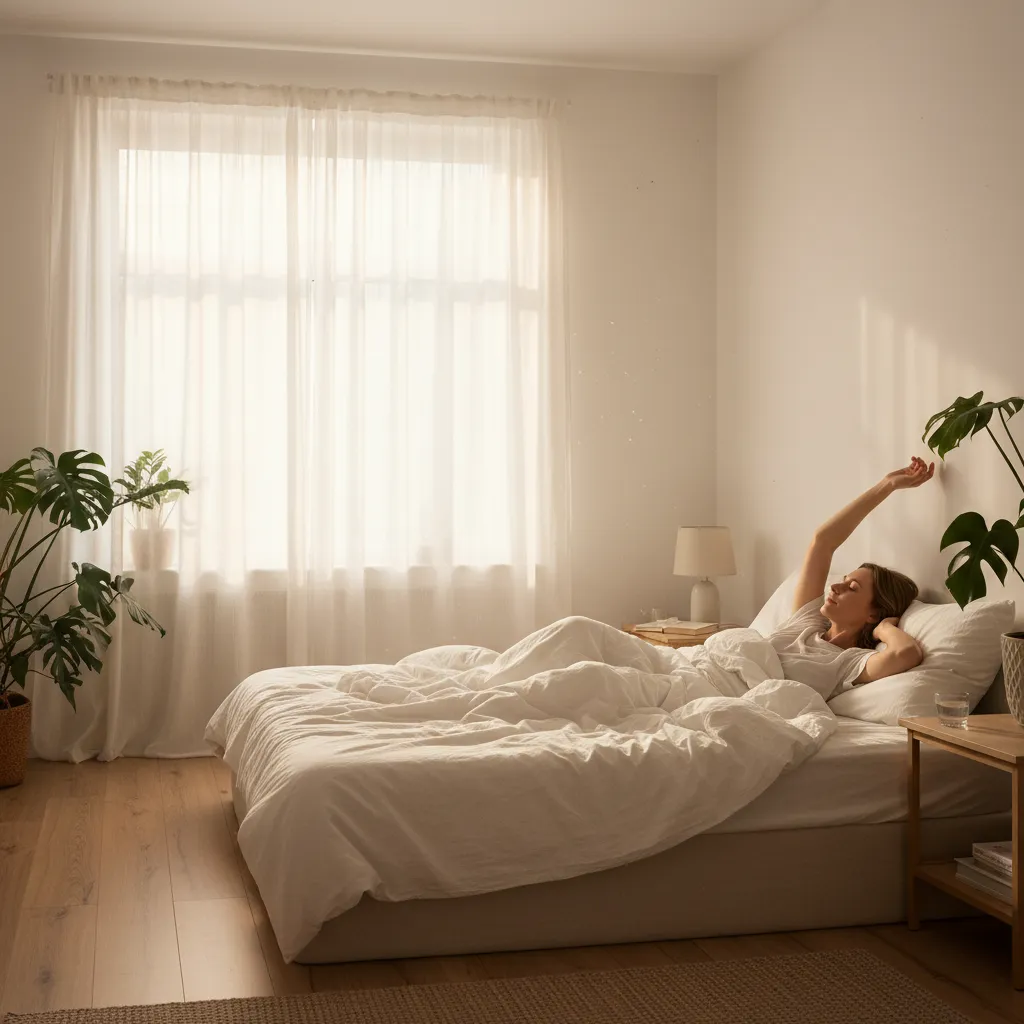
Why Optimizing Light Exposure is Crucial for Sleep
Sleep is not merely a period of inactivity; it's a dynamic, essential process vital for every aspect of human health. When we compromise sleep, particularly deep sleep, we undermine our physical repair, cognitive function, and emotional regulation.
The quality of our sleep directly impacts our waking hours, influencing mood, concentration, decision-making, and even metabolic health. Chronic sleep deprivation, often linked to poor light hygiene, can contribute to serious long-term health issues.
Deep sleep, also known as slow-wave sleep, is the most restorative stage of our sleep cycle. During this phase, the body performs critical functions like tissue repair, hormone release, and immune system strengthening.
Our circadian rhythm, an internal biological clock, is primarily set by light. Exposure to bright light, especially blue light, signals our brain to be awake and alert, while darkness triggers the production of melatonin, the sleep-inducing hormone.
In today's world, we are constantly bombarded with artificial light, particularly from screens, long after the sun has set. This unnatural light exposure confuses our circadian rhythm, delaying melatonin production and making it harder to fall into deep, restorative sleep.
Ignoring the impact of light on our sleep is akin to ignoring the fuel gauge in a car. Eventually, performance declines, and significant problems arise. Prioritizing light hygiene is a foundational step towards optimal health and sustained well-being.
The Science Behind Light and Circadian Rhythm
The human body possesses a master clock, located in the suprachiasmatic nucleus (SCN) of the brain, which orchestrates our circadian rhythm. This rhythm governs not just sleep-wake cycles, but also hormone release, body temperature, and other physiological processes.
The SCN is highly sensitive to light cues received through specialized photoreceptor cells in the retina called intrinsically photosensitive retinal ganglion cells (ipRGCs). These cells contain a photopigment called melanopsin, which is particularly sensitive to blue light wavelengths.
When ipRGCs detect blue light, they send signals to the SCN, which in turn suppresses the production of melatonin by the pineal gland. This is a natural and beneficial process during the day, helping us stay alert and focused.
However, when blue light exposure persists into the evening, after natural sunset, the SCN continues to signal wakefulness. This delays the natural rise of melatonin, pushing back our internal clock and making it difficult to initiate sleep at the desired time.
Conversely, early morning exposure to bright, natural light signals to the SCN that a new day has begun, helping to reinforce a healthy circadian rhythm. This exposure helps solidify the timing of melatonin production later that evening.
Studies have consistently shown that individuals exposed to more natural light during the day report better sleep quality and duration. Conversely, excessive evening light, especially from electronic devices, is linked to shorter sleep duration and reduced deep sleep percentages.
Realistic Benefits of Optimizing Light Habits
Committing to better light habits offers a multitude of tangible benefits beyond just feeling less tired. One of the most significant advantages is a measurable increase in deep sleep duration and quality, enhancing physical recovery and cellular repair.
Improved light hygiene leads to a stronger, more aligned circadian rhythm. This means experiencing more consistent energy levels throughout the day, fewer afternoon slumps, and a natural readiness for sleep as evening approaches.
Cognitive function receives a substantial boost. Better deep sleep supports memory consolidation, problem-solving abilities, and overall mental clarity, directly translating into enhanced productivity and sharper focus during waking hours.
Emotional well-being also benefits greatly. A well-regulated circadian rhythm and sufficient deep sleep are linked to improved mood stability, reduced symptoms of anxiety, and greater resilience to stress, fostering a more positive outlook.
Physically, you can expect enhanced athletic recovery, stronger immune function, and better hormonal balance. Adequate deep sleep is crucial for growth hormone release and regulating hunger hormones, contributing to overall metabolic health.
Finally, integrating smart light habits can lead to a more effective response to environmental demands. Your body becomes better adapted to seasonal light changes and more resilient to occasional disruptions, helping you maintain optimal performance and health.
Limits, Risks, and Misconceptions About Light and Sleep
While optimizing light exposure is a powerful strategy, it's not a magic bullet for all sleep issues. Underlying conditions like sleep apnea, restless legs syndrome, or clinical insomnia require professional medical attention beyond light management.
A common misconception is that all light at night is equally detrimental. While blue and bright white light are highly disruptive, dim red light wavelengths have minimal impact on melatonin production and can be used for essential tasks without significant harm.
Another limit is individual variability. Genetic predispositions, age, and existing health conditions can influence how sensitive an individual is to light and how quickly they respond to interventions. What works perfectly for one person may need slight adjustment for another.
There's also a risk of becoming overly obsessive about light avoidance, leading to social isolation or anxiety around common evening activities. The goal is balance and practical application, not complete elimination of all light after sunset.
Furthermore, light therapy alone cannot compensate for poor sleep hygiene in other areas. Factors like excessive caffeine intake, irregular sleep schedules, inadequate exercise, or a stressful environment will still impede sleep quality, even with perfect light habits.
It's crucial to remember that light is one significant component of a holistic sleep strategy. While its impact is profound, it functions best when integrated within a broader healthy lifestyle, rather than being treated as a sole solution.
Practical Protocols for Optimizing Light Exposure
Start your day with immediate bright light exposure. Within 30-60 minutes of waking, aim for 15-30 minutes of natural outdoor light, even on cloudy days. This powerful signal helps reset your circadian clock, promoting wakefulness and signaling the start of your day.
Maximize your daytime light exposure by spending time outdoors or working near a window. Ample natural light during the day boosts alertness, mood, and sets the stage for healthy melatonin production later. Avoid dim, artificially lit environments as much as possible.
As evening approaches, begin to dim indoor lights gradually. Aim to reduce overall light levels 2-3 hours before your desired bedtime. Use warmer, lower-intensity light sources like lamps with amber or red-spectrum bulbs.
Implement blue light filtering for screens. Activate night shift modes on devices, use blue light filtering glasses, or install screen filters. This mitigates the melatonin-suppressing effects of device use if you must be exposed to screens in the evening. Productivity Hub tools Habits can remind you to activate these settings.
Create a completely dark sleep environment. Ensure your bedroom is as dark as possible, blocking out all external light. Use blackout curtains, eye masks, and cover any LED indicators on electronic devices to prevent even small light intrusions from disrupting deep sleep.
Consider using a wake-up light alarm that gradually brightens your room, mimicking a natural sunrise. This can provide a gentler awakening and reinforce your morning light signal, especially during darker months. Integrate this as a step in your daily routine within Productivity Hub tools ToDo.
Timing, Dosage, and Adaptation Strategies
The timing of light exposure is arguably more important than the intensity. For morning light, aim for within an hour of waking. This sets your circadian rhythm most effectively. If outdoor light isn't immediately possible, a bright light therapy lamp can be a substitute.
Regarding dosage, 15-30 minutes of direct outdoor light exposure in the morning is ideal. For indoor daytime light, the more ambient natural light you receive, the better. Think of it as a constant, gentle signal to your brain to stay alert.
For evening light restriction, the key is consistency. Begin dimming lights and filtering blue light 2-3 hours before your consistent bedtime. This gives your body ample time to begin melatonin production without suppression.
Adaptation to these new habits will take time. Your circadian rhythm won't instantly reset. Expect to feel subtle improvements within a week, with more significant, sustained changes appearing after 3-4 weeks of consistent application.
Consistency is paramount. Sporadic adherence to light protocols will yield inconsistent results. Treat these habits as non-negotiable elements of your daily routine, much like brushing your teeth or eating meals. Use Productivity Hub tools Data to track your adherence and observe the correlation with your sleep metrics.
Adjusting your light environment is an ongoing process. Pay attention to how your body responds to different light exposures and make small, incremental adjustments. For example, some individuals might need stricter blue light filtering than others in the evening.
Integrating Light Habits with Productivity Hub Tools
Productivity Hub offers several tools to seamlessly integrate and track your new light exposure habits, transforming intention into consistent action. Leveraging these features can significantly enhance your success in optimizing deep sleep.
Use the Productivity Hub tools Habits feature to schedule your daily light rituals. Set a recurring habit for 'Morning Outdoor Light Exposure' and 'Evening Light Dimming/Filter Activation.' This provides visual cues and tracking to ensure consistency.
Within Productivity Hub tools ToDo, create specific reminders for 'Turn off overhead lights by 8 PM' or 'Put on blue light blocking glasses' a couple of hours before bed. This ensures you don't miss critical transition points.
Leverage Productivity Hub tools Data to monitor the impact of your light habits on your sleep metrics. If you integrate with wearable sleep trackers, you can observe trends in deep sleep duration, sleep onset latency, and wake after sleep onset, directly correlating with your light interventions.
The Productivity Hub tools AI might provide personalized insights based on your tracked data. For instance, if your deep sleep is consistently low despite morning light, the AI could suggest an earlier evening light cut-off based on observed patterns.
Utilize Productivity Hub tools Settings to configure notifications. Set gentle, non-disruptive alerts for habit completion or reminders to start your evening wind-down routine. These subtle prompts can be invaluable for building new routines and ensuring long-term adherence to your light-optimized sleep schedule.
Common Mistakes to Avoid in Light Hygiene
One of the most frequent mistakes is insufficient morning light exposure. Many individuals simply turn on indoor lights, which lack the intensity and specific wavelengths needed to properly signal the brain to wake up and set the circadian rhythm.
Neglecting daytime light is another common error. Spending the entire day in dim, artificial indoor environments can weaken the circadian signal, making your body less responsive to evening darkness and harder to fall asleep.
A significant mistake involves underestimating the impact of evening blue light. Even a quick glance at a smartphone or tablet in bed can significantly delay melatonin production and disrupt sleep architecture.
Many people fail to create a truly dark sleep environment. Small light leaks from windows, indicator lights on electronics, or even a digital alarm clock can be enough to interfere with deep sleep, as our eyes are incredibly sensitive to light during rest.
Inconsistency is a major pitfall. Applying light hygiene protocols sporadically sends mixed signals to your body, preventing your circadian rhythm from establishing a stable, predictable pattern. Daily adherence is key.
Expecting immediate, drastic results can lead to discouragement. While some improvements may be felt quickly, significant changes in sleep architecture, especially deep sleep, often require consistent effort over several weeks as your body adapts to the new light cues.
Ignoring other sleep hygiene factors while focusing solely on light is also a mistake. Light is powerful, but it's part of a larger ecosystem. Caffeine intake, alcohol, exercise timing, and stress management all play crucial roles in sleep quality.
Mini Quantified Case Studies
Case Study 1: Sarah, 34-year-old Marketing Manager. Sarah consistently struggled with falling asleep before midnight and experienced frequent awakenings. After implementing a strict morning outdoor light protocol (20 minutes within 30 minutes of waking) and using blue light blocking glasses post-sunset for three weeks, her average sleep onset latency decreased from 45 minutes to 18 minutes, and her deep sleep percentage increased by 12% according to her sleep tracker.
Case Study 2: Mark, 47-year-old Software Developer. Mark spent most of his day indoors and often worked on his computer until late evening. He reported feeling perpetually tired despite 7-8 hours of sleep. By switching his office to near a window during the day and consistently using f.lux software on his computer, along with dim red ambient lighting after 9 PM, his sleep efficiency improved from 78% to 89% and he reported feeling significantly more refreshed upon waking.
Case Study 3: Emily, 28-year-old Student. Emily often pulled all-nighters and had an erratic sleep schedule, further complicated by social media use in bed. Her deep sleep was minimal. She committed to 10 minutes of morning light exposure and turning off all screens 90 minutes before a consistent bedtime. Within four weeks, her average deep sleep duration increased by 25 minutes per night, and she reported better concentration during her studies.
Case Study 4: David, 55-year-old Consultant. David traveled frequently and suffered from jet lag and fragmented sleep. He began using a portable light therapy lamp for 25 minutes each morning and strict blackout curtains in hotels. This regimen helped him maintain a more stable circadian rhythm, reducing his jet lag recovery time by almost 50% and improving his perceived sleep quality by one point on a 1-5 scale.
Case Study 5: Olivia, 40-year-old Teacher. Olivia found herself unable to relax in the evenings, leading to restless sleep. By incorporating a gentle evening routine that included dim, warm lighting and no screens for two hours before bed, she noticed her average time in light sleep decreased by 15%, while her deep sleep and REM sleep stages both showed slight increases, indicating more consolidated sleep architecture.
Frequently Asked Questions About Light and Sleep
Q: Is all blue light bad? A: No, blue light is essential during the daytime to promote alertness and regulate your circadian rhythm. It only becomes problematic when encountered in the evening or at night, as it suppresses melatonin production.
Q: Can I use dim indoor lights at night without affecting sleep? A: Dim red or amber lights are generally fine as they have minimal impact on melatonin. Bright white or blue-rich lights, even if dimmed, should be avoided as much as possible in the hours leading up to bedtime.
Q: What about naps and light exposure? A: For short power naps (20-30 minutes), light exposure is less critical. For longer naps (over an hour), it's advisable to nap in a dark room to avoid confusing your circadian rhythm and to ensure deeper, more restorative sleep.
Q: How long does it take to see results from changing light habits? A: You may feel subtle improvements in energy and sleep onset within a few days. Significant changes in deep sleep metrics and overall circadian rhythm alignment typically take 3-4 weeks of consistent effort.
Q: Do smart bulbs that change color temperature help? A: Yes, smart bulbs are excellent tools. Configure them to emit bright, cool white light during the day and gradually shift to dim, warm, amber-toned light in the evenings, automatically aligning with your circadian needs.
Sources & References
- 1
- 2
- 3