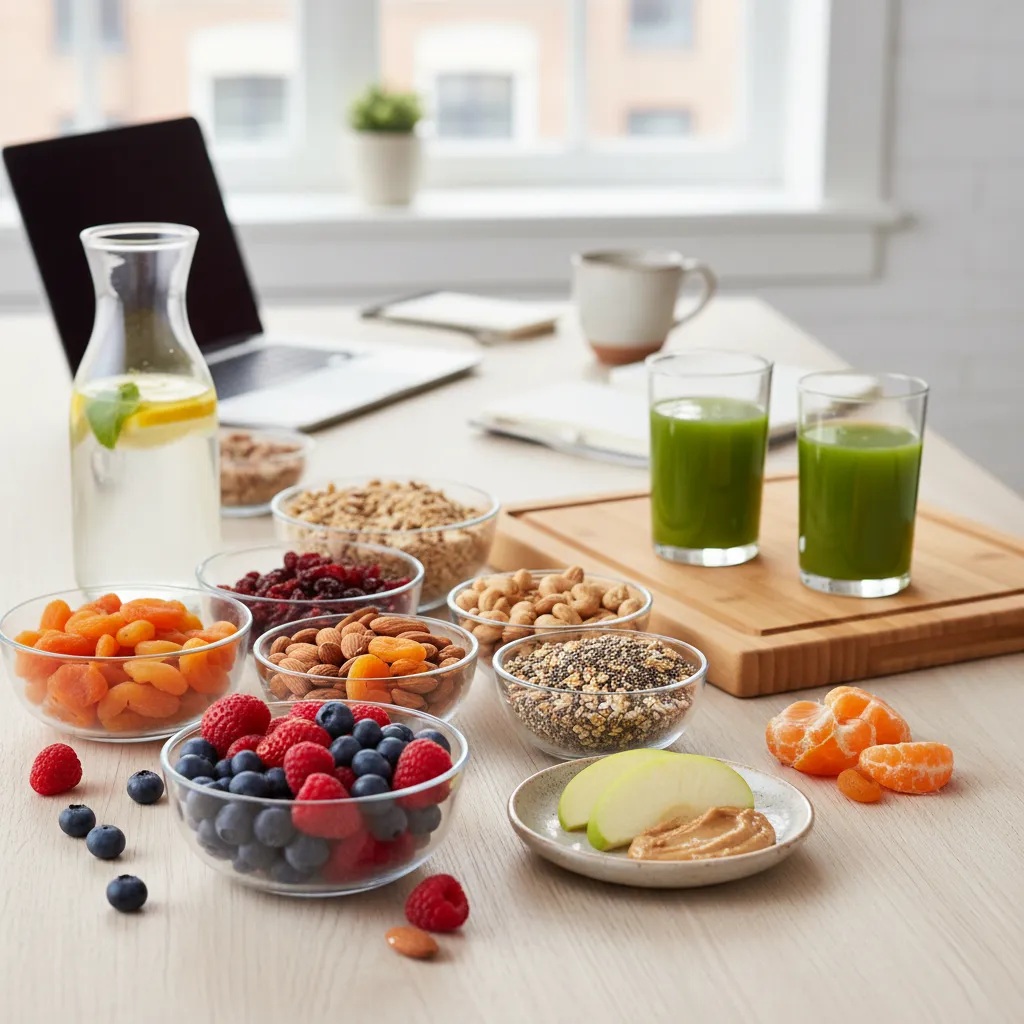
The Science of Stable Energy: What Research Supports
The glycemic index (GI) measures how quickly a food raises blood sugar. High-GI foods cause rapid spikes, followed by sharp drops, whereas low-GI foods lead to a more gradual and sustained release of glucose.
Protein and fiber are critical nutrients for blood sugar stabilization. Protein slows digestion, while fiber forms a gel-like substance in the gut, both contributing to a slower absorption of carbohydrates.
A study published in the American Journal of Clinical Nutrition found that meals rich in protein and fiber significantly improved satiety and regulated post-meal glucose responses compared to high-carbohydrate, low-protein meals.
Neuroscientific studies indicate that fluctuating glucose levels negatively impact the prefrontal cortex, the brain region responsible for decision-making and cognitive control. Consistent glucose supply supports sustained neural activity.
Macronutrient balance, specifically combining carbohydrates with protein and healthy fats, is far more effective for stable energy than consuming any single macronutrient in isolation. This synergy mitigates rapid glucose absorption.
Research into meal timing also suggests that eating smaller, balanced meals and snacks throughout the day can prevent extreme hunger and overeating, further supporting blood sugar regulation and cognitive performance.
Realistic Benefits: Beyond Just Avoiding the Crash
The most immediate benefit of stable energy snacking is the elimination of the dreaded mid-afternoon slump. This means fewer moments of staring blankly at your screen or struggling to recall information.
Sustained focus allows for deeper work, leading to higher quality output and reduced errors. Complex tasks become more manageable when your brain isn't battling glucose highs and lows.
Improved mood stability is another significant advantage. Avoiding sugar crashes often means avoiding the irritability and emotional swings that accompany them, fostering a more positive work environment.
Enhanced decision-making is a direct result of consistent cognitive function. When your brain has a steady fuel supply, you're better equipped to analyze data, solve problems, and make sound judgments.
Over time, adopting these habits can lead to better impulse control regarding food, reducing cravings for sugary fixes. This creates a positive feedback loop, reinforcing healthier eating patterns.
Overall, a strategic approach to snacking contributes to a feeling of greater control over your day and your energy. It empowers you to maintain peak performance without relying on artificial stimulants.
Limits, Risks, or Misconceptions: What to Watch Out For
A common misconception is that "any snack is better than no snack." This can lead to frequent grazing on processed foods that offer minimal nutritional value and still contribute to energy instability.
Over-snacking, even on healthy foods, can lead to excessive calorie intake and weight gain if not mindful of overall daily caloric needs. Portions still matter, even for nutrient-dense options.
Relying solely on snacks to compensate for poor main meals is ineffective. Snacks should complement, not replace, well-balanced breakfast, lunch, and dinner.
Not all "healthy" snacks are created equal. Many granola bars or yogurts can be surprisingly high in added sugars, undermining their supposed benefits for stable energy. Always check labels.
Individual metabolic responses vary. What works perfectly for one person might need slight adjustments for another, especially concerning specific food sensitivities or dietary restrictions.
Practical Protocol: Smart Snack Choices for Sustained Focus
The core principle for smart snacking is to combine protein, fiber, and healthy fats. This trio ensures slow digestion and a gradual release of energy, preventing sharp blood sugar spikes.
Excellent protein sources for snacks include Greek yogurt (plain), cottage cheese, hard-boiled eggs, nuts (almonds, walnuts), seeds (chia, flax, pumpkin), and lean jerky.
Fiber can be found in fruits (berries, apples, pears), vegetables (carrot sticks, bell pepper strips), and whole grains (a small handful of whole-grain crackers).
Healthy fats are crucial for satiety and slowing digestion. Avocados, nuts, seeds, and a small amount of olive oil (e.g., with veggies) are great options.
Consider combining these elements: a handful of almonds with an apple, Greek yogurt with berries and chia seeds, cottage cheese with sliced bell peppers, or whole-grain crackers with avocado.
Productivity Hub's integrated tools can help you track your intake. Using the Productivity Hub tools Data feature, you can log your snacks and meals, observing how different combinations impact your perceived energy levels throughout the day.
Timing, Dosage, or Adaptation: When and How Much to Eat
The ideal time for a snack is generally mid-morning, between breakfast and lunch, and mid-afternoon, between lunch and dinner. These periods naturally correspond with typical energy dips.
Listen to your body's hunger cues. Snacking should prevent extreme hunger, not be a habitual activity regardless of need. If you're genuinely not hungry, don't force a snack.
Portion control is vital. A snack should be substantial enough to bridge the gap between meals without being so large that it constitutes another meal. Think 150-250 calories as a general guideline, adjusted to your activity level.
Adapt your snacking strategy to your daily schedule and activity. If you have an intense workout planned, a slightly more substantial, protein-rich snack beforehand might be beneficial.
Experimentation is key to finding what works best for you. Try different combinations and timings, paying attention to how they affect your focus and energy over the next few hours.
Productivity Hub tools Habits can be useful for establishing a consistent snacking routine. You can set reminders for your planned snack times, helping to integrate these healthy practices into your daily flow until they become second nature.
How to Use It Inside Productivity Hub: Integrating Nutrition for Performance
Productivity Hub offers several features that can support your journey towards stable energy and enhanced focus through nutrition. It's not just for tasks; it's for holistic performance.
Utilize Productivity Hub tools Data to track your food intake and energy levels. Logging your snacks and main meals, alongside notes on how you felt an hour or two later, can reveal powerful patterns.
Create a custom "Snack Ideas" list within Productivity Hub tools ToDo. Populate it with your preferred protein-fiber-fat combinations, making healthy choices easy to recall when hunger strikes.
Leverage Productivity Hub tools Habits to schedule and reinforce healthy snacking routines. Set a recurring habit for a mid-morning and mid-afternoon snack, ensuring consistency.
Explore Productivity Hub tools AI for personalized recommendations. By analyzing your tracked data, the AI could suggest specific snack adjustments or timings based on your performance trends.
Use the Productivity Hub tools Settings to customize notifications for your scheduled snack times, turning proactive nutrition into an effortless part of your daily workflow.
Common Mistakes: Pitfalls to Avoid
Grabbing whatever is convenient: This often leads to highly processed, sugar-laden options like candy bars, pastries, or sugary drinks, which guarantee a crash.
Skipping breakfast: This sets you up for extreme hunger and poor choices later in the day. A balanced breakfast is foundational for stable energy.
Ignoring portion sizes: Even healthy snacks can contribute to calorie surplus if eaten in large quantities. A handful of nuts is beneficial; an entire bag is not.
Not drinking enough water: Dehydration can mimic hunger and fatigue, leading to unnecessary snacking. Often, a glass of water is all you need.
Eating mindlessly while working: This prevents you from truly recognizing satiety cues and often leads to overconsumption without enjoying the food. Take a short break to eat.
Falling for "health halos": Many products marketed as healthy are secretly loaded with sugar or unhealthy fats. Always scrutinize ingredient lists and nutritional information.
Mini Quantified Case Studies: Real-World Impacts
Case Study A: Sarah, Marketing Manager. Sarah often experienced a severe 3 PM slump. By replacing her daily candy bar with plain Greek yogurt and a handful of almonds, her self-reported focus scores increased by 25% in two weeks, and she felt less irritable by end-of-day.
Case Study B: David, Software Developer. David used to skip breakfast and then heavily snack on chips. Introducing a protein-rich breakfast (scrambled eggs) and mid-morning apple with peanut butter led to a 15% reduction in coding errors during his afternoon sessions.
Case Study C: Emily, Consultant. Emily struggled with concentration during long client calls. Switching from a muffin to cottage cheese with bell peppers as her mid-morning snack extended her attention span, allowing her to actively listen and contribute more effectively.
Case Study D: Mark, Entrepreneur. Mark felt constantly drained despite sleeping well. He found that combining his afternoon coffee with a handful of walnuts instead of a cookie prevented the subsequent energy dip, improving his strategic thinking capacity.
These examples, while anecdotal, illustrate a consistent pattern: strategic, balanced snacking significantly impacts cognitive performance and mood. Consistent application yields tangible improvements in daily output.
FAQ: Quick Answers to Common Questions
Q: How soon should I expect to feel a difference after changing my snack habits? A: Many people report feeling more stable energy within a few days to a week. Consistent application is key to noticing significant, lasting improvements.
Q: Are fruit smoothies good for stable energy? A: They can be, but be mindful. Smoothies often concentrate sugars. Add protein (yogurt, protein powder) and fiber (spinach, chia seeds) to slow sugar absorption and prevent spikes.
Q: What about caffeine for focus? A: Caffeine can provide a temporary boost, but it doesn't offer stable energy like balanced nutrition. Over-reliance can lead to jitters and a worse crash. Use it strategically, combined with good food.
Q: I'm always on the go. What are some easy, portable stable energy snacks? A: Hard-boiled eggs, small containers of nuts, seeds, cheese sticks, pre-cut veggies with hummus, single-serving Greek yogurt, or fruit like apples and bananas are excellent choices.
Q: Can these snacks help with weight management? A: Yes, by stabilizing blood sugar and increasing satiety, you're less likely to experience intense cravings or overeat at main meals, which can support healthy weight management goals.
Sources & References
- 1
- 2
- 3