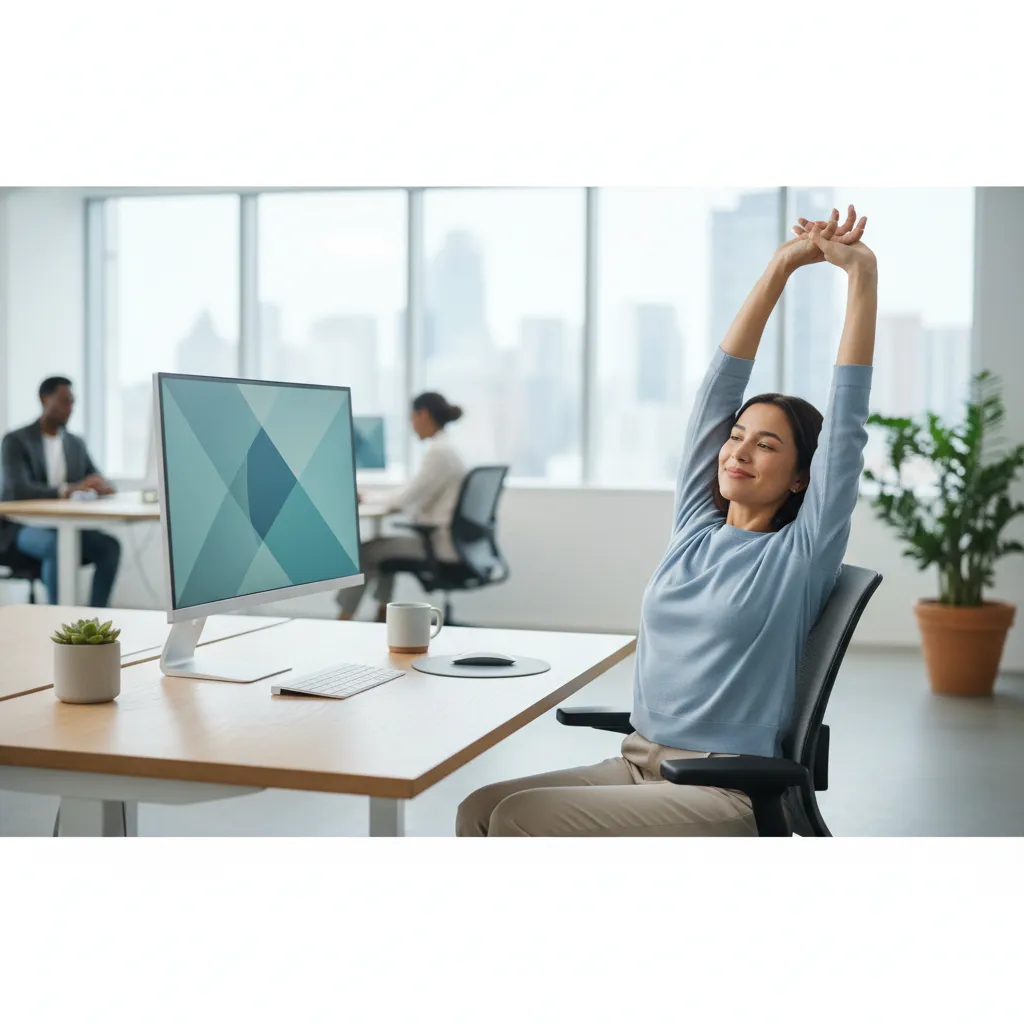
Why the Topic Matters: The Silent Epidemic of Sedentary Work
The modern office environment, characterized by ergonomic chairs and powerful computers, has inadvertently created a silent health crisis: prolonged sitting. Estimates suggest many office professionals spend eight or more hours a day largely motionless.
This extended sedentary behavior is not merely a matter of comfort; it's a significant risk factor for numerous health problems. Beyond the widely discussed issues like heart disease and diabetes, it profoundly impacts musculoskeletal health.
Neck pain, shoulder stiffness, and tension headaches are epidemic among desk workers. These aren't just minor annoyances; they can lead to chronic conditions that reduce productivity, impair concentration, and diminish overall quality of life.
The human body is biomechanically designed for regular motion. When we remain static, our muscles become tight and weak, joints lose their lubrication, and blood flow stagnates, contributing to discomfort and potential injury.
Ignoring these signals can lead to a vicious cycle where pain discourages movement, which in turn exacerbates the pain. Recognizing the pervasive nature of this problem is the first step toward effective mitigation strategies.
The Science Behind Short Bursts: Evidence for Movement Snacks
Research consistently highlights the detrimental effects of prolonged sedentary time, but it also offers a powerful counter-narrative: even brief interruptions to sitting can yield significant benefits. This is the scientific underpinning of movement snacks.
Studies published in journals like the British Journal of Sports Medicine demonstrate that breaking up sedentary periods with just one to five minutes of light activity can improve blood glucose control, reduce blood pressure, and enhance vascular function.
From a musculoskeletal perspective, these micro-breaks are crucial. They encourage joint lubrication, stimulate muscle activity, and alleviate the sustained pressure on discs and soft tissues that occurs during static postures.
Physiologically, movement snacks help to 'reset' your posture and nervous system. They counteract the sustained muscle contractions that lead to stiffness and pain, particularly in the neck and shoulders.
Furthermore, these short bursts of activity are linked to cognitive benefits, including improved focus, enhanced mood, and reduced mental fatigue. A brief walk or stretch can oxygenate the brain and disrupt mental ruts.
The cumulative effect of frequent, short movements throughout the day has been shown to be more effective for certain health markers than a single, longer exercise session for those who are otherwise sedentary. This emphasizes consistency over intensity.
Realistic Benefits You Can Expect from Daily Movement Snacks
Integrating movement snacks into your daily routine offers a surprisingly wide array of tangible benefits, many of which you'll notice almost immediately.
One of the most immediate and appreciated benefits is a significant reduction in neck and shoulder stiffness. Regular micro-movements help to prevent the build-up of tension that often characterizes long workdays.
You can expect improved posture over time, as muscles are re-activated and balance is restored. This leads to a more upright and less strained sitting or standing position.
Beyond physical relief, movement snacks are powerful tools for enhancing mental clarity and focus. Interrupting prolonged periods of concentration with physical activity can 'refresh' your brain, leading to better decision-making and reduced errors.
Individuals often report decreased incidence of tension headaches and fewer instances of eye strain, as these are often exacerbated by static, hunched postures.
By combating the sedentary nature of desk work, you also contribute to a lower risk of chronic diseases associated with inactivity, promoting long-term health and well-being.
Ultimately, movement snacks can lead to increased energy levels throughout the workday, transforming the afternoon slump into a period of sustained alertness and productivity.
Setting Expectations: Limits, Risks, and Common Misconceptions
While movement snacks are incredibly beneficial, it's important to approach them with realistic expectations. They are a powerful supplement to, not a replacement for, regular moderate-to-vigorous physical activity.
A common misconception is that these short bursts of movement must be intense or elaborate. In reality, gentle stretches and light mobility exercises are often the most effective and safest for office settings.
Movement snacks are highly effective for prevention and managing mild discomfort, but they may not instantly cure severe, pre-existing chronic conditions. For persistent or acute pain, consulting a healthcare professional is always recommended.
There are minimal risks associated with gentle movement snacks, but improper form or pushing through pain can lead to minor strain. Always listen to your body and perform movements slowly and within a comfortable range of motion.
Another limit is relying solely on movement snacks to counteract an otherwise completely sedentary lifestyle. For optimal health, a combination of regular structured exercise and frequent movement breaks is ideal.
Your Practical Protocol: Integrating Movement Snacks into Your Day
Integrating movement snacks into your workday is simpler than you might think. The key is to make them a natural and consistent part of your routine, not an added burden.
Start with simple, low-impact movements. Gentle neck rolls (ears to shoulders, chin to chest), shoulder shrugs, arm circles, and wrist stretches are excellent starting points that can be done discreetly at your desk.
Stand up and walk a few steps every hour. Even a quick trip to the water cooler or restroom counts as a movement snack. Consider a standing desk option for part of your day if available.
Incorporate seated stretches like hamstring stretches (extending one leg), gentle spinal twists, or chest openers by clasping hands behind your back.
Vary your movements throughout the day to engage different muscle groups and prevent adaptation. A mix of stretching, light walking, and gentle strength movements like calf raises is ideal.
Productivity Hub users can integrate these movements by setting reminders in their Productivity Hub tools ToDo list, scheduling specific 'movement snack' blocks, or creating a recurring task to 'Stand and Stretch'.
Timing and Dosage: How to Optimize Your Movement Snack Routine
Optimizing your movement snack routine involves finding the right frequency and duration that works best for your body and your work schedule. Consistency is paramount.
A good general guideline is to take a movement snack every 30-60 minutes. This frequent interruption prevents the accumulation of stiffness and maintains a more active physiological state.
Each movement snack doesn't need to be long; 1-2 minutes is often sufficient to make a difference. The goal is disruption of stillness, not an intense workout.
Consider linking your movement snacks to existing natural breaks in your workflow. For example, stand up when your phone rings, stretch before starting a new task, or walk to get a drink after completing a report.
Gradual adaptation is key. If you're new to this, start with a couple of breaks in the morning and afternoon, then slowly increase the frequency as it becomes more natural.
Beyond these micro-breaks, ensure you take at least one longer break (15-20 minutes) during your lunch period for a brisk walk or more substantial movement. This larger 'snack' is equally important.
Tracking your daily movement with Productivity Hub tools Habits can reveal patterns and help you adapt your routine for maximum benefit, showing you where you might be missing opportunities for movement.
Enhancing Your Routine with Productivity Hub Tools
Productivity Hub offers several integrated tools that can significantly streamline and enhance your movement snack routine, transforming passive intention into active habit.
Utilize Productivity Hub tools ToDo to set recurring reminders for your movement snacks. Schedule specific pop-ups every 45 minutes to 'Stand & Stretch' or 'Neck Mobility' to ensure you don't forget.
The Productivity Hub tools Habits feature is invaluable for building consistency. Create a habit for 'Daily Movement Snack' and track your adherence. Visualizing your progress can be a powerful motivator.
Leverage Productivity Hub tools Data to analyze the impact of your movement habits on your overall well-being. Correlate your tracked movement frequency with reported energy levels or reduced discomfort over time.
Explore Productivity Hub tools AI for personalized recommendations. Input your work patterns and common areas of stiffness, and the AI could suggest optimal times and types of movement snacks tailored to you.
Customize notifications and settings within Productivity Hub tools Settings. You can adjust reminder sounds, frequencies, and even integrate with other apps or devices to prompt movement.
By using these features, Productivity Hub becomes more than just a task manager; it transforms into a personal wellness coach, subtly guiding you toward a healthier, more active workday.
Common Mistakes to Avoid on Your Movement Journey
While movement snacks are straightforward, a few common pitfalls can hinder their effectiveness or lead to early abandonment.
The most frequent mistake is inconsistency. It's easy to start strong and then let the habit fade, especially during busy periods. Small, consistent efforts are far more impactful than sporadic intense ones.
Trying to do too much too soon is another common error. Don't attempt to implement an hour of stretching on day one. Start with 30-second movements and gradually increase duration and variety.
Ignoring discomfort or pain during a movement snack can be counterproductive. Movements should feel good or neutral; never push into sharp or increasing pain. This is your body's signal to stop or modify the exercise.
A lack of variety can also lead to diminishing returns. Performing the same neck stretch every hour might neglect other important muscle groups. Mix up your routine to engage your entire body.
Viewing movement snacks as a chore rather than a beneficial self-care practice diminishes motivation. Reframe them as a mini-break, a moment to refresh and recharge your body and mind.
Finally, not incorporating movement snacks into your existing workflow makes them feel like an interruption. Link them to natural transitions, like before a meeting or after sending an email, to make them seamless.
Real-World Impact: Mini Quantified Case Studies
Anna, a software developer, reported a 30% reduction in daily neck stiffness and fewer tension headaches after two weeks of consistently taking 90-second movement snacks every hour.
Mark, a graphic designer, found his afternoon energy slump significantly diminished. By incorporating two-minute walking breaks every 45 minutes, he noted a 20% increase in sustained focus post-lunch.
Dr. Emily, a researcher who spent long hours at her microscope, saw a marked improvement in her shoulder mobility and a 40% decrease in upper back pain within a month of implementing gentle stretches every 30 minutes.
David, a customer support lead, used movement snacks to manage his stress levels during busy periods. His team reported a calmer demeanor, and he personally tracked a 15% reduction in perceived daily stress and reduced shoulder tension.
Sarah, a marketing specialist, increased her daily movement by tracking her snack consistency with an app. This led to better sleep quality and a self-reported 25% reduction in overall body stiffness by the end of each workday.
Frequently Asked Questions About Movement Snacks
Q: How often should I take a movement snack? A: Aim for a short movement snack every 30-60 minutes to effectively counteract prolonged sitting.
Q: What if I don't have much space or a private office? A: Many effective movement snacks, such as neck rolls, shoulder shrugs, and gentle seated twists, can be performed discreetly right at your desk.
Q: Are movement snacks enough to replace my regular exercise routine? A: No, movement snacks are designed to supplement, not replace, your regular moderate-to-vigorous physical activity and structured workouts.
Q: How long until I start seeing or feeling results from incorporating movement snacks? A: Many individuals report immediate relief from stiffness, while more significant, consistent benefits like reduced chronic pain and improved posture typically accrue over several weeks of regular practice.
Q: Can I do specific exercises to target my existing neck pain? A: Gentle neck stretches and rolls are generally beneficial, but for specific or chronic neck pain, it is always best to consult a healthcare professional, physical therapist, or doctor for personalized guidance.
Sources & References
- 1
- 2
- 3