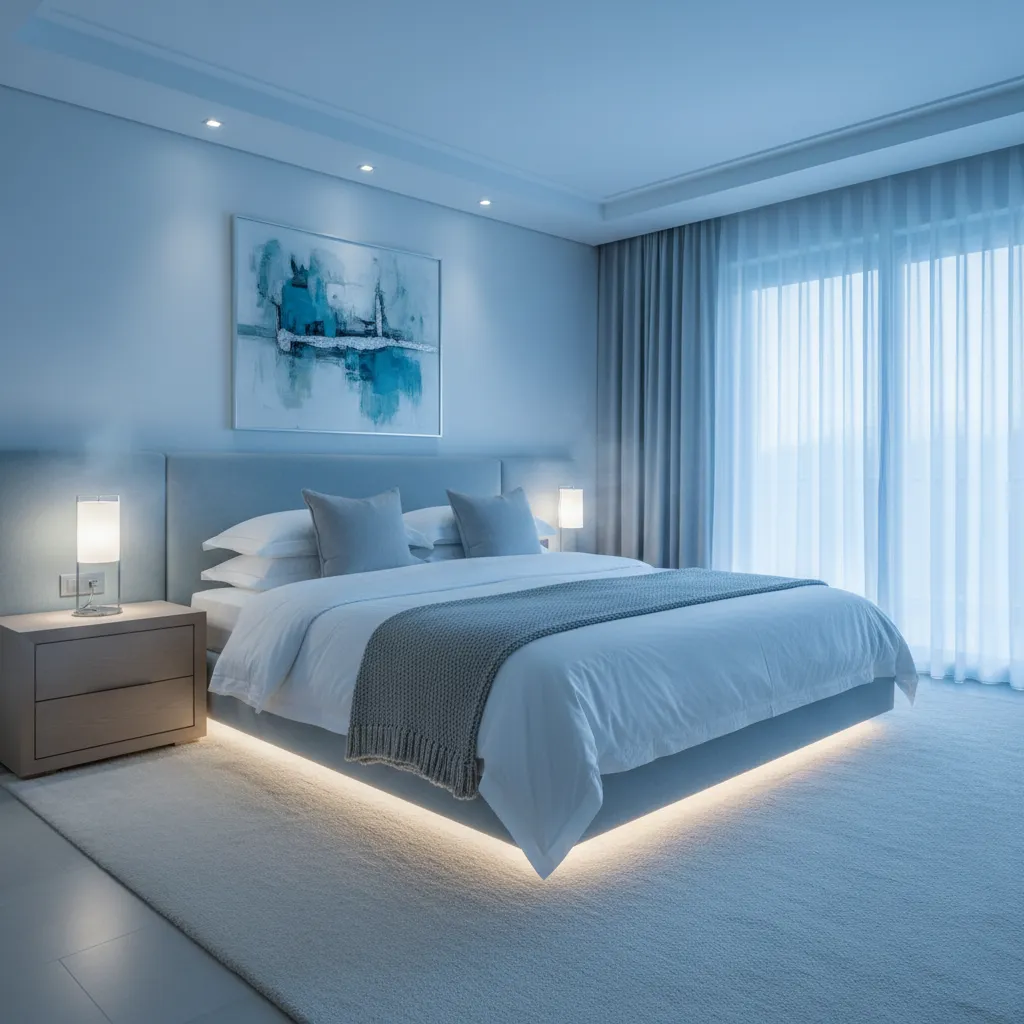
Why Optimal Bedroom Temperature is Crucial for Sleep
Millions worldwide experience chronic sleep deficits, often attributing their struggles to stress, diet, or digital devices. While these factors are significant, the physical environment, particularly bedroom temperature, plays an underestimated role in sleep quality.
Deep sleep is the cornerstone of recovery, where the body repairs tissues, consolidates memories, and strengthens the immune system. Disturbances during this stage can severely compromise these vital processes.
Your body's core temperature naturally drops by one to two degrees Fahrenheit during the night, initiating sleep and sustaining its deeper stages. This nocturnal thermal dip is a fundamental component of your circadian rhythm.
If your bedroom is too warm, your body struggles to achieve this necessary temperature reduction. It expends energy trying to cool down, which can prolong the time it takes to fall asleep and disrupt the continuity of your sleep cycles.
An overly warm sleeping environment leads to more fragmented sleep, reducing the time spent in deep, restorative sleep. This often results in waking up feeling tired, even after a seemingly full night in bed.
Optimizing your bedroom temperature supports this natural physiological process, allowing your body to effortlessly transition into and maintain the deep sleep stages essential for complete physical and mental restoration.
The Science Behind Temperature and Deep Sleep
Numerous scientific studies have established a clear link between environmental temperature and sleep architecture. Research consistently shows that a slightly cooler ambient temperature facilitates faster sleep onset and enhances the quality of deep sleep.
The hypothalamus, a crucial part of the brain, acts as the body's thermoregulatory center and is intricately connected to our sleep-wake cycle. It orchestrates the cooling process necessary for sleep.
Studies using polysomnography, the gold standard for sleep measurement, have demonstrated that individuals sleeping in cooler rooms exhibit longer durations of slow-wave sleep (SWS), which is the deepest stage of non-REM sleep.
This is because a lower ambient temperature reduces the metabolic effort required by the body to shed heat, allowing more energy to be dedicated to the restorative processes that occur during deep sleep.
Conversely, when the bedroom is too warm, the body's thermoregulatory system remains active, working to cool down. This increased physiological activity can suppress SWS and increase the likelihood of light sleep or awakenings.
Even subtle changes in temperature can impact sleep. A deviation of just a few degrees from the optimal range can lead to significant reductions in deep sleep efficiency, highlighting the body's sensitivity to its thermal environment.
Tangible Benefits of an Optimized Sleep Temperature
Beyond simply feeling refreshed, maintaining an optimal bedroom temperature offers a cascade of tangible benefits for overall well-being and productivity. These advantages stem directly from enhanced deep sleep quality.
Improved cognitive function is one primary benefit. Adequate deep sleep is crucial for memory consolidation, learning, and problem-solving, leading to sharper focus and better decision-making during waking hours.
Physical recovery is also significantly boosted. For athletes and active individuals, deep sleep is when muscle repair and growth occur most efficiently. A cooler environment supports this restorative process, reducing soreness and speeding recovery.
Emotional regulation and mood stability are greatly enhanced. Consistent deep sleep helps to regulate neurotransmitters associated with mood, reducing irritability and increasing resilience to stress.
A stronger immune system is another vital outcome. Research indicates that deep sleep plays a critical role in the production of cytokines, proteins that combat infection and inflammation.
Long-term health benefits include better metabolic health and weight management. Poor sleep, often exacerbated by an unsuitable sleep environment, can disrupt hormones like leptin and ghrelin, influencing appetite and metabolism.
Misconceptions and Potential Pitfalls of Temperature Control
While the benefits of a cooler bedroom are clear, it is easy to fall into common misconceptions. One prevalent belief is that 'the colder, the better,' which is not necessarily true for optimal sleep.
An excessively cold bedroom can be just as disruptive as one that is too warm. When the environment is uncomfortably cold, your body might shiver or expend energy to warm up, preventing relaxation and deep sleep entry.
Individual variability is also a critical factor. The 'ideal' temperature range is a general guideline; your personal optimal temperature might be slightly different due to metabolism, age, gender, or health conditions.
Focusing solely on temperature while neglecting other essential sleep hygiene factors is another pitfall. Light exposure, evening routines, and noise levels all interact with temperature to influence sleep quality.
Ignoring humidity can also be detrimental. High humidity, even in a seemingly cool room, can make the air feel muggy and hinder the body's ability to naturally cool through sweat evaporation, thus impacting comfort.
Certain medical conditions, such as thyroid disorders or circulatory issues, can affect thermoregulation. Individuals with these conditions should consult a healthcare professional for personalized advice on sleep environment optimization.
Practical Protocols for Optimizing Bedroom Temperature
Achieving your ideal sleep temperature doesn't require complex machinery, but rather a strategic approach. The generally recommended range for most adults is between 60-67°F (15-19°C), but experimentation is key to finding your personal sweet spot.
Start by setting your thermostat. An air conditioner is the most direct way to control room temperature, allowing for precise adjustments. Consider programming it to activate an hour or two before bedtime.
If AC isn't an option, strategically placed fans can significantly improve airflow and create a cooling effect. Opening windows at night, especially during cooler seasons, provides natural ventilation.
Evaluate your bedding. Opt for breathable, natural fibers like cotton or linen, and consider layering sheets and blankets that can be easily adjusted throughout the night to prevent overheating or becoming too cold.
Consider a cool pre-sleep shower or bath. While seemingly counterintuitive, a warm bath or shower temporarily raises your body temperature, leading to a more pronounced cooling effect afterward as your body works to return to its baseline.
Tracking your sleep environment data might reveal patterns that help fine-tune your approach, a feature well-supported by Productivity Hub tools Data. Consistent monitoring allows you to correlate temperature adjustments with perceived sleep quality.
Even your sleepwear matters. Lightweight, moisture-wicking pajamas can help your body regulate temperature more effectively than heavy or synthetic fabrics.
Timing, Dosage, and Adaptation for Thermal Comfort
The 'dosage' of cool air, or how long your room should be at an optimal temperature before you sleep, is important. Aim to have your bedroom cool down at least 30-60 minutes before you intend to go to bed.
Consistency is paramount. Establishing a routine where your room is consistently cooled at the same time each evening helps reinforce your circadian rhythm, making it easier for your body to anticipate sleep.
Adaptation to your new temperature regime may take a few nights. Don't expect immediate perfection; your body needs time to adjust and register the new environmental cues as conducive to sleep.
Seasonal changes demand adaptation. What works in summer (e.g., lower AC settings) might be too cold in winter. Be flexible and adjust your thermostat or ventilation methods as external temperatures fluctuate.
Pay attention to your body's signals. If you're waking up feeling chilled or sweating, it's a sign that your chosen temperature might be too low or too high, respectively. Make incremental adjustments.
Consistency in your evening routine, including temperature management, can be easily scheduled and monitored using Productivity Hub tools Habits. This helps solidify the practice into a regular part of your pre-sleep ritual.
Leveraging Productivity Hub for Temperature-Optimized Sleep
Productivity Hub offers several integrated tools that can help you systematically optimize your bedroom temperature and track its impact on your deep sleep quality.
Utilize Productivity Hub tools Data to log your sleep duration, perceived quality, and even specific deep sleep percentages if you use a compatible wearable device. Correlate this data with the bedroom temperature you maintained each night.
Set reminders with Productivity Hub tools ToDo to initiate your cooling routine. This could be a reminder to turn on the AC, open a window, or take a cool shower an hour before your scheduled bedtime.
Build a consistent pre-sleep ritual that includes temperature control using Productivity Hub tools Habits. Track your adherence to this habit, observing how consistency impacts your sleep metrics over time.
Analyze trends within Productivity Hub tools Data to identify your personal optimal temperature range. Look for periods where deep sleep scores are highest and note the corresponding environmental conditions.
Productivity Hub tools AI could potentially offer personalized temperature recommendations based on your historical sleep patterns and environmental inputs, optimizing your recovery even further by learning your unique thermal preferences.
By integrating temperature management into your broader sleep strategy within Productivity Hub, you gain a data-driven approach to improving one of the most critical aspects of restorative sleep.
Common Mistakes to Avoid in Temperature Regulation
One frequent error is setting the thermostat arbitrarily without understanding the optimal range. Guessing can lead to temperatures that are either too warm or too cold, both disruptive to sleep.
Ignoring insulation and drafts is another common mistake. Even with a thermostat set correctly, poor window insulation or a drafty room can undermine your efforts and create uneven temperatures.
Failing to account for the impact of body heat can also be an issue. A room might feel cool initially, but body heat from multiple occupants or pets can significantly raise the temperature over several hours.
Forgetting about humidity is a pitfall. High humidity makes the air feel warmer and can impede the body's ability to cool itself through sweating, leading to discomfort even in a moderately cool room.
Over-reliance on external temperature control without addressing internal factors is a mistake. Heavy, late-night meals or intense exercise close to bedtime can elevate core body temperature, making it harder to cool down even in a perfectly chilled room.
Not giving your body sufficient time to adapt to new temperature settings can lead to premature conclusions. Consistency over several nights or weeks is necessary to gauge the true impact.
Neglecting bedding and sleepwear is another oversight. Heavy blankets or non-breathable pajamas can trap heat, negating the benefits of a cool room and causing overheating during the night.
Mini Quantified Case Studies
Case Study 1: Sarah, 34, Marketing Professional. Sarah struggled with fragmented sleep and low energy. She used a sleep tracker and found her deep sleep averaged only 15% of her total sleep. After adjusting her bedroom thermostat from 72°F to a consistent 65°F, her deep sleep percentage rose to 22% within two weeks, reporting significantly improved morning alertness.
Case Study 2: Mark, 47, Software Engineer. Mark often woke up feeling groggy, despite getting 8 hours of sleep. His sleep data showed frequent awakenings during the night. By gradually lowering his bedroom temperature from 68°F to 62°F, he observed a 30% reduction in sleep disturbances and reported feeling more refreshed and focused each morning.
Case Study 3: Elena, 29, Yoga Instructor. Elena experienced night sweats and restless sleep, particularly during warmer months. She adjusted her AC setting from 70°F to 66°F and incorporated lighter, breathable bedding. Her sleep continuity improved dramatically, eliminating night sweats and leading to deeper, more uninterrupted sleep for better physical recovery.
Case Study 4: David, 41, Avid Runner. David was keen to optimize his recovery after intense training sessions. Using a wearable that tracked recovery scores, he noticed inconsistent results. By consistently maintaining his sleep environment at 18°C (64.4°F), his average recovery scores increased by 18%, translating to better performance and reduced injury risk.
Case Study 5: Small Business Initiative. A tech startup implemented a 'Sleep Optimization Challenge,' encouraging employees to maintain their bedroom temperatures between 60-67°F. After one month, 70% of participants reported increased energy levels, with 45% noting a measurable improvement in their deep sleep duration based on personal tracking data.
Frequently Asked Questions About Sleep Temperature
Q1: What is the absolute ideal bedroom temperature for deep sleep? While it varies by individual, the general consensus among sleep experts is a range of 60-67°F (15-19°C). Experiment within this range to find what feels most comfortable and effective for you.
Q2: Can I get used to sleeping in a room that feels too cold at first? Yes, some adaptation is possible, but extreme cold can be counterproductive. Your body shouldn't have to work hard to stay warm, as that also disrupts sleep. Aim for 'comfortably cool,' not 'chillingly cold.'
Q3: Does humidity play a role in sleep temperature? Absolutely. High humidity makes a room feel warmer than the actual temperature and can interfere with your body's natural cooling mechanisms (like sweating). Aim for a relative humidity between 30-50% for optimal comfort.
Q4: Should I use a weighted blanket in a cooler room? Weighted blankets can be beneficial for some, but ensure they don't cause you to overheat. Opt for weighted blankets made from breathable materials or consider a lighter weighted blanket if your room is on the cooler side of the spectrum.
Q5: How quickly can I expect to see improvements in my deep sleep quality after adjusting my bedroom temperature? Many individuals report noticeable improvements in sleep onset and quality within a few nights. However, consistent and sustained benefits, particularly in measurable deep sleep, often become apparent after 1-2 weeks of maintaining an optimized temperature.
Sources & References
- 1
- 2
- 3